The following articles are the most accessed digital object identifier (DOI) manuscripts for Spectroscopy and LCGC International during the month of August 2026. Ten articles are individually ranked here by DOI page views.
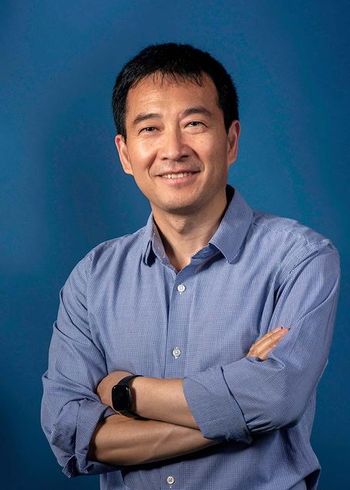
Keith Nelson of MIT has won the 2017 Bomem-Michelson Award.
Keith Nelson of MIT has won the 2017 Bomem-Michelson Award. Nelson was presented with the award on Tuesday, March 7, at Pittcon in Chicago, Illinois.
Nelson received his PhD from Stanford University (Stanford, California). He joined the faculty at MIT following postdoctoral work at UCLA (Los Angeles, California). Among his achievements is the work he did on the discovery of new light–matter interactions and their exploitation for spectroscopy and control of coherent acoustic waves, lattice and molecular vibrations, excitons, spins, and their admixtures with light. Additionally, he has developed novel methods for study of solid-state chemical reactions, crystals near phase transitions, glass-forming liquids, electronic excited-state dynamics, thermal transport, and matter far from equilibrium. Nelson has also pioneered tabletop generation of strong terahertz-frequency fields and nonlinear terahertz spectroscopy.