

Spectroscopy
Latest Content
Feb 13, 2026 | News
Best of the Week: Top 10 Applications of NIR Spectroscopy in Biopharmaceutical Analysis, Trends in Spectroscopy

Advanced Computational Methods in Spectroscopy: A Q&A Guide
Feb 13, 2026

An Inside Look at Heavy Metals in Pet Food
Feb 12, 2026

Study Shows NIRS Can Accurately Authenticate Acorn-Fed Iberian Pigs on Farm
Feb 12, 2026
Previewing Pathways in Spectroscopy: What Does it Mean to be a Product Manager?
Feb 12, 2026






Advertisement
Shorts
0:37
Hunter Andrews on the Winter Conference on Plasma Spectrochemistry
5 hours ago
by
Hunter Andrews

0:52
How Portable DNA Labs Solve Mass Disasters in Real-Time
2 days ago
by
Will Wetzel

0:48
The Benefits of Using GDOES in Bulk and Thin Film Analysis
2 days ago
by
Gerardo Gamez
1:22
How Isotopic Analysis Traces Metals in Biology and Medicine
3 days ago
by
Anika Retzmann

1:16
Looking at Error Propagation and Data Analysis
4 days ago
by
Karl Booksh

0:44
Is Your 'New' Discovery Actually 100 Years Old?
7 days ago
by
Alex Scheeline

0:45
Does Your Water Filter Create Microplastics?
9 days ago
by
Will Wetzel
1:07
The Accumulated Wisdom of How To Do Sample Preparation
11 days ago
by
Alex Scheeline
0:48
How Scientists Diagnose System Failures Using X-ray Maps
12 days ago
by
Johanna Nelson Weker

0:44
The Power of Rotational Spectroscopy
14 days ago
by
Will Wetzel
A Beginner’s Guide to Spectroscopy in Energy Applications
An Overview for New Spectroscopists

Recent Research in Chemometrics and AI for Spectroscopy, Part I
Foundations, Definitions, and the Integration of AI in Chemometric Analysis
Testing a New Deep Learning Model for Petroleum Analysis
An Inside Look

Microplastics Widespread on Catalan Beaches, Study Finds
Read About This Study Here!

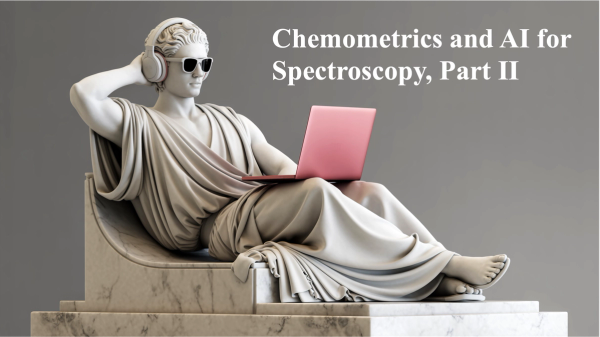
Recent Research in Chemometrics and AI for Spectroscopy, Part II
Emerging Applications, Explainable AI, and Future Trends
Podcasts
Videos


All Content
Advertisement
Advertisement
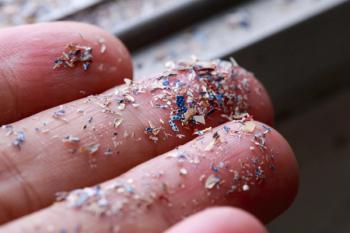
A study in the Journal of Environmental Management shows that wastewater treatment plants in coastal Catalonia remove most microplastics but still release tens of billions of particles annually, with emissions peaking during warmer, tourism-heavy months due to environmental and population-driven pressures.

This dynamic video from the Winter Conference on Plasma Spectrochemistry reveal 2026 trends in plasma MS, imaging, and clinical analysis.
During 2025, near-infrared (NIR) spectroscopy has accelerated its transition from a mature analytical technique into a digitally enabled cornerstone of biopharmaceutical manufacturing and quality control. Advances in miniaturized instrumentation, process analytical technology (PAT), chemometrics, artificial intelligence (AI), and real-time process control technologies have driven NIR spectroscopy into new roles spanning upstream fermentation, downstream processing, raw material characterization, and continuous manufacturing. This article reviews and contextualizes ten influential peer-reviewed publications from 2025 that collectively define the current state and near-term trajectory of NIR spectroscopy in biopharmaceutical analysis.

In an interview recapping the Photonics West Conference, which took place in San Francisco, California in January, Alexis Hobl of CEA-Leti sat down with Spectroscopy to discuss his work integrating quantum cascade lasers (QCLs) with silicon photonic platforms and how it is evolving mid-infrared (MIR) photonics.

Part 2 of our conversation with John Margeson focuses on how Thermo Scientific’s Niton handheld XRF analyzers are engineered to meet the demanding needs of high-volume scrap recycling.
Fourier transform infrared (FT-IR) spectroscopy has undergone a notable evolution in biopharmaceutical analysis over the past three years. Advances in crystal engineering, process analytical technology (PAT), chemometrics, machine learning (ML), and hyphenated analytical platforms have significantly expanded FT-IR’s analytical scope. This article reviews ten of the most influential publications from 2023–2026 that exemplify FT-IR’s growing role across the biopharmaceutical lifecycle, from drug substance design and formulation to manufacturing, quality control, and clinical bioanalysis.
In this video, we preview an upcoming two-part episode of Pathways in Spectroscopy.

If you have downtime at Pittcon 2026, here is how you should spend that time.
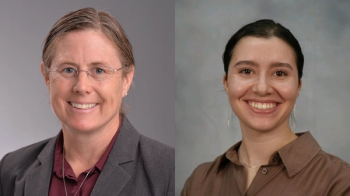
In this interview segment, Kelly Elkins and Jaden Force of Towson University focus to the challenges forensic scientists face, including how to position themselves for a career in this field.
Between 2023 and 2026, Raman spectroscopy transitioned from a supportive analytical technique to a central enabling technology in biopharmaceutical analysis and manufacturing. Advances in artificial intelligence (AI), machine learning (ML), automation, and surface-enhanced Raman spectroscopy (SERS) have expanded Raman’s role from nutrient monitoring to real-time prediction of critical quality attributes (CQAs), inline control of complex bioprocesses, and non-destructive analysis of finished drug products. This article reviews ten of the most influential publications from this period, highlighting how they collectively reshaped expectations for Raman spectroscopy as a process analytical technology (PAT) and a quality-by-design (QbD) tool in modern biopharmaceutical development.
Advertisement

This year’s Emerging Leader in Atomic Spectroscopy Award recipient is Sarah Theiner, whose research is focused on the application of atomic spectroscopy techniques—laser ablation inductively coupled plasma–mass spectrometry (LA-ICP-MS) and single-cell ICP-MS—to expand these analytical techniques as tools for biological and clinical imaging and drug-distribution studies.

A recent study investigated the use of laser-induced breakdown spectroscopy (LIBS) as a viable technique for detecting and quantifying trace technetium-99 (^99Tc) for future molten salt reactor applications, where long-lived fission products must be carefully monitored. Spectroscopy spoke to Hunter Andrews of Oak Ridge National Laboratory (Oak Ridge, Tennessee), corresponding author of the paper resulting from their research, about their findings.
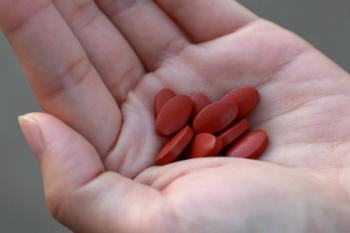
A study from the İzmir Institute of Technology published in Food Chemistry shows that combining FT-IR spectroscopy with chemometric modeling enables rapid, non-invasive screening of iron supplements and protein–iron complexes for their ability to restore cellular iron status in iron deficiency anemia models.
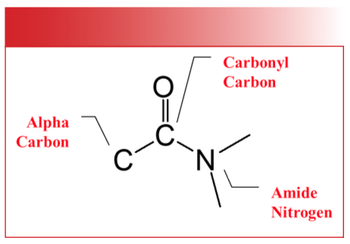
In our ongoing review of infrared spectra, we will study organic nitrogen containing compounds including amides and amines. Amides contain both nitrogen and a C=O group and are found in proteins and polymers. Amines contain carbon, nitrogen, and hydrogen, and are ubiquitous in medicines. As always, concepts will be illustrated with reference spectra.
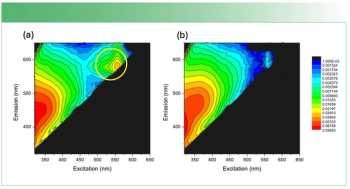
This column will show Raman results and ATEEM fluorescence whose correlations indicate that important information is available non-destructively.
Advertisement
Advertisement
Trending on Spectroscopy Online
1
An Inside Look at Heavy Metals in Pet Food
2
Advanced Computational Methods in Spectroscopy: A Q&A Guide
3
Best of the Week: Top 10 Applications of NIR Spectroscopy in Biopharmaceutical Analysis, Trends in Spectroscopy
4
Studying the Concentration of Microplastics in Wastewater Treatment Plants
5