SPEC PerkinElmer 11.10
|Articles|November 7, 2018

Diane Parry Receives SAS Distinguished Service Award at SciX 2018

Diane Parry received the 2017 SAS Distinguished Service award at the SciX 2018 conference, held on October 21–26 in Atlanta, Georgia.

Diane Parry received the 2017 SAS Distinguished Service award at the SciX 2018 conference, held on October 21–26 in Atlanta, Georgia.


The FACSS Distinguished Service Award is presented to an individual who has demonstrated exceptional long-term service to the FACSS organization. The organization typically chooses a person who has served with excellence in many different capacities and who has contributed to the continuing success of FACSS through consistent dedication and sacrifice.

Parry, who is recently retired from Procter and Gamble and who is currently the treasurer of the Society for Applied Spectroscopy (SAS), has volunteered with SAS and FACSS/SciX in a range of capacities, including as the 2015 SAS president; as a program section creator and organizer; as a three-term SAS parliamentarian from 2008–2011; as the developer of the role of metrician for FACSS from 2004–2014; as the 2006 FACSS governing board chair; and as a workshop co-presenter or presenter to undergraduate students from 1995–2014.

She received her PhD in physical and analytical chemistry from the University of Utah (Salt Lake City, Utah) in 1989, and completed her post-doctoral work at IBM’s Almaden Research Center in San Jose, California, before joining Proctor and Gamble in 1991.



Related to this article

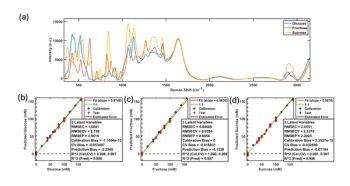
Monitoring Sugar Consumption and Ethanol Production During Yeast Fermentation Using a Raman Plate Reader and Multivariate Analysis
This column shows that a Raman plate reader paired with partial least squares regression can simultaneously quantify glucose, fructose, sucrose, and ethanol in yeast fermentation samples, using turbidity-matched calibration standards to correct for yeast-induced turbidity, and offers a rapid, label-free, high-throughput method for tracking sugar consumption and ethanol production in strain screening, media optimization, and process development.
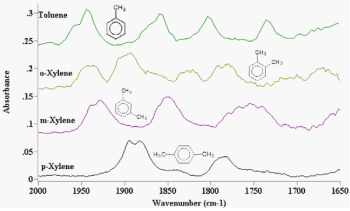
Highly Substituted Benzene Rings—The Rest of the Story II: Spectra
This column, the second installment on highly substituted benzene rings, shows that tri- and tetra-substituted substitution patterns can be distinguished by whether the ring bending peak is present and by the position of the in-phase aryl C-H wagging peak, which shifts according to how many adjacent hydrogens the ring carries.