|Articles|December 11, 2017

Elemental Scientific Acquires Electro Scientific Industries’ Laser Ablation Division

Elemental Scientific, Inc. (ESI), of Omaha, Nebraska, has acquired Electro Scientific Industries’ laser ablation division.

Elemental Scientific, Inc. (ESI), of Omaha, Nebraska, has acquired Electro Scientific Industries’ laser ablation division. The purchase of the division’s New Wave Research (NWR) line of laser ablation systems increases ESI’s portfolio of sample introduction systems for inductively-coupled plasma–atomic emission spectroscopy (ICP-AES) and inductively-coupled plasma mass spectrometry (ICP-MS) systems in trace and metal analysis.

The newly formed entity Elemental Scientific Lasers, LLC, based in Bozeman, Montana, will operate as a wholly-owned subsidiary of Elemental Scientific, Inc.

The laser ablation line acquired by ESI includes the NWR193, NWR213, NWR266, NWRfemto, and NWRimage laser ablation systems along with a series of compatible automation options. 

Sales and marketing manager of the Laser Ablation Division, Ciaran O’Connor, said in a statement, “We’re excited to have the NWR leading laser technology join ESI’s highly respected and successful sample introduction and automation offering for ICP and ICP-MS.”

In another statement, Dan Wiederin, the founder and president of ESI, said, “This acquisition enables us to offer a complete portfolio of sample introduction (liquid and solid) solutions, expand development of ablation techniques, and synergize research and development strengths. We’re delighted to have this technology and the operations-dedicated teams join our company.” 


Related to this article

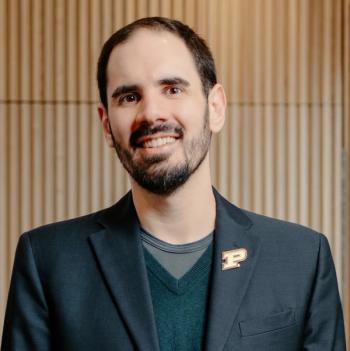
Brandon E. Boor is the Dr. Margery E. Hoffman Associate Professor in the Lyles School of Civil and Construction Engineering at Purdue University. | Photo Credit: © Brandon Boor.
In the second part of our interview with Brandon Boor of Purdue University, he discusses how his team controls experimental variables during cleaning experiments in order to obtain interpretable data.
Scientist With Portable Spectrometer in Natural Field Setting ©  By Tika -chronicles-stock.adobe.com
The bulky bench-top NIR spectrometer is quietly being dismantled and rebuilt as a wafer-scale photonic chip, a self-calibrating algorithm, and a sensor small enough to ride in a shirt pocket. What once demanded a grating, a moving mirror, and a climate-controlled lab now fits inside a handheld module, a bioreactor probe, or a drone payload, and it increasingly figures out what it is looking at on its own.
Sizing Up the Nanoscale: Measuring Nanocluster Aerosol in Indoor Air
In the first part of a multi-part Q&A, Brandon Boor, the Dr. Margery E. Hoffman Associate Professor in the Lyles School of Civil and Construction Engineering at Purdue University, describes the instrumentation and methodology behind measuring nanoparticle size distributions at the nanocluster scale (1–3 nm) and outlines the technical challenges of acquiring reliable, real-time data at these dimensions.
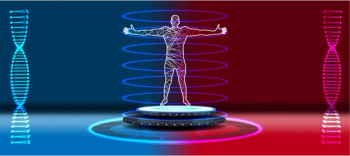
Human body wireframe on glowing platform undergoing futuristic body scan. © sergray(noAIelemens) -chronicles-stock.adobe.com
Jurgen Popp, Thomas Mayerhofer, and colleagues at Leibniz IPHT and Friedrich Schiller University Jena introduce the Personalized Optical Digital Twin (PODT), a Photonics21 contribution to Europe's Virtual Human Twin ecosystem that connects molecular photonics—Raman blood analysis, coherent Raman tissue imaging, and multimodal endomicroscopy—with longitudinal physiology and clinical data. Drawing on the published multicenter INTELLIGENCE trials, the authors argue that technical feasibility and clinical utility must be evaluated separately as the field moves toward Europe's FP10 research agenda.