SPEC PerkinElmer 11.10
|Webcasts|December 3, 2019

Good Water Practices for Reliable LC–MS and ICP-MS Analyses

In this webcast, Dr. Estelle Riche will discuss how water is purified for the most sensitive analytical techniques, will provide guidance on how to select the optimal water purification solution, and will give tips on preventing water contamination for optimal experimental results. Live: Tuesday, Dec. 3, 2019 at 11am EST | 8am PST | 4pm GMT | 5pm CET On demand available after final airing Dec. 3, 2020 Register free

Register free: http://www.chromatographyonline.com/lcgc_w/reliable

Event Overview:

High purity water is essential for trace and ultra-trace analyses, regardless of whether you are analyzing organic molecules or elements. In this webcast, Dr. Estelle Riche will discuss how water is purified for the most sensitive analytical techniques, will provide guidance on how to select the optimal water purification solution, and will give tips on preventing water contamination for optimal experimental results.

Key Learning Objectives:

By joining this webcast, you will:

  • Understand the potential impact of different water contaminants on your LC–MS and ICP-MS analyses

  • Discover how recent advancements in purification technologies provide water suited for the most sensitive analytical techniques

  • Get tips on selecting a water purification system that answers your lab’s range of needs, including reduced environmental impact

Speaker: Estelle Riche, PhD, Global Application Specialist, Milli-Q® Lab Water Solutions, Merck KGaA, Guyancourt, France (Merck KGaA Darmstadt Germany operates as MilliporeSigma in the US and Canada)

Time and Date: Tuesday, Dec. 3, 2019 at 11am EST | 8am PST | 4pm GMT | 5pm CET

On demand available after airing until Dec. 3, 2020.

Sponsor: MilliporeSigma, the life science business of Merck KGaA, Darmstadt, Germany

Register free: http://www.chromatographyonline.com/lcgc_w/reliable


Related to this article

Monitoring Sugar Consumption and Ethanol Production During Yeast Fermentation Using a Raman Plate Reader and Multivariate Analysis
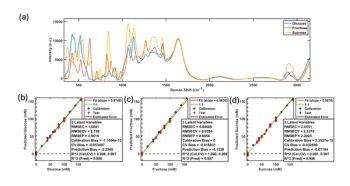
This column shows that a Raman plate reader paired with partial least squares regression can simultaneously quantify glucose, fructose, sucrose, and ethanol in yeast fermentation samples, using turbidity-matched calibration standards to correct for yeast-induced turbidity, and offers a rapid, label-free, high-throughput method for tracking sugar consumption and ethanol production in strain screening, media optimization, and process development.
Highly Substituted Benzene Rings—The Rest of the Story II: Spectra
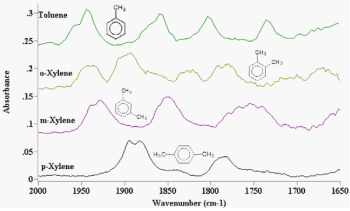
This column, the second installment on highly substituted benzene rings, shows that tri- and tetra-substituted substitution patterns can be distinguished by whether the ring bending peak is present and by the position of the in-phase aryl C-H wagging peak, which shifts according to how many adjacent hydrogens the ring carries.
Healthcare administrator reviewing an insurance policy schedule with a stethoscope on a clipboard, health insurance coverage, medical underwriting, prior authorization, and patient claims processing. | Image Credit: Joi_studio - stock.adobe.com
In a SciX interview, Marc Porter covered a lot of ground, from a student-driven pivot into immunoassays to a baseball analogy for Stokes and anti-Stokes scattering, and shares the open questions he is still chasing.