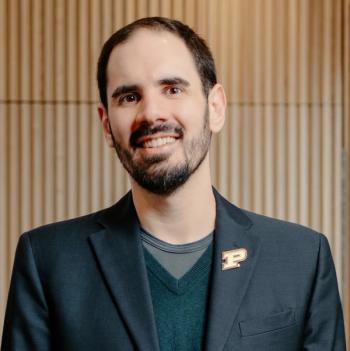
In the second part of our interview with Brandon Boor of Purdue University, he discusses how his team controls experimental variables during cleaning experiments in order to obtain interpretable data.
Lifetime fluorescence is a subset of fluorescence spectroscopy in which the time between excitation and relaxation is measured, rather than just the intensity of the emitted energy. The technique is used primarily in biological applications, but has a number of other uses as well. Lifetime fluorescence is a well-established niche market.
Lifetime fluorescence is a subset of fluorescence spectroscopy in which the time between excitation and relaxation is measured, rather than just the intensity of the emitted energy. The technique is used primarily in biological applications, but has a number of other uses as well. Lifetime fluorescence is a well-established niche market.
Lifetime fluorescence demand by industry - 2008.
Lifetime fluorescence typically measures the time it takes for molecules to fluoresce after being excited by a light source. Frequency domain lifetime fluorescence compares the modulation and phase-shift of the emitted energy relative to the excitation energy instead. An increasingly popular technique within the lifetime fluorescence market is FLIM, which stands for "Fluorescence Lifetime Imaging," and is very useful for examining biological tissues.
Lifetime fluorescence is by far most popular in biological analyses, which accounts for more than half of demand when considering academia, government, and hospital & clinical applications. There is limited application in areas such as electronics for developing LEDs, characterizing polymers in the plastics industry, and identification and characterization of crude oil in the environmental and oil & gas industries.
The total market for lifetime fluorescence was about $18 million in 2008. Despite the global recession, demand is not likely to contract drastically due to its connection to the healthcare, academic, and government areas. Longer-term annual growth is likely to be in the low single digits.
The foregoing data were based on SDi's market analysis and perspectives report entitled Global Assessment Report, 10th Edition: The Laboratory Life Science and Analytical Instrument Industry, September 2008. For more information, contact Stuart Press, Vice President – Strategic Analysis, Strategic Directions International, Inc., 6242 Westchester Parkway, Suite 100, Los Angeles, CA 90045, (310) 641-4982, fax: (310) 641-8851,
over 17 years ago
Productsover 17 years ago
Spectroscopy: Enduring During Uncertain Timesover 17 years ago
Raman Spectroscopy for Biomedical Applicationsover 17 years ago
Hyphenated ICP-MS Techniques for Speciation Analysisover 17 years ago
2009 Salary Survey: Salaries and Stress on the Riseover 17 years ago
Vol 24 No 3 Spectroscopy March 2009 Regular Issue PDF