News|Articles|July 31, 2023

LIBS and EPMA Combination Reveals New Insights into Uranium Mineralization

New research demonstrates the potential of combining LIBS and EPMA for distinguishing and characterizing uranium mineralizations, opening new avenues for environmental protection and ore genesis studies.

In a recent study published in Spectrochimica Acta Part B: Atomic Spectroscopy, researchers demonstrated how laser-induced breakdown spectroscopy (LIBS) can complement electron probe microanalysis (EPMA) in effectively distinguishing and characterizing various types of uranium mineralizations (1). This study is significant because it shines a light into uranium oxidation states, which has implications for geoscience applications.

The study sought to investigate the capabilities of LIBS and EPMA when used in conjunction with each other. The researchers successfully confirmed that the LIBS signal of oxygen is proportional to oxygen content, and that the strength of the oxygen signal is closely linked to the oxidation state of uranium (1). Moreover, the presence of a stronger hydrogen signal in presumed secondary mineralization further supported the assumption that hydrogen is closely related to water (or hydroxyl group) content (1).

The researchers used superimposed images obtained from both LIBS and EPMA, resulting in a clear contrast between primary and secondary uranium mineralizations (1). By comparing the uranium images acquired through the two techniques, they found a perfect match, confirming the accuracy and reliability of their findings. On the other hand, the LIBS image of oxygen revealed something else. It showed that water and hydroxyl groups existed in the mineral phases, confirming that uranophane and other minerals contained hydrogen (1).

Mapping uranium oxidation states can be helpful in environmental protection efforts. By using natural geological samples, scientists can do so, which allows them address and identify potential contamination risks (1). Previously, techniques like electron microprobe (EMP) or laser ablation inductively coupled plasma mass spectrometry (LA-ICP-MS), were commonly employed for studying natural geological samples (1). However, these methods were unsuccessful in providing information about oxidation states. This was especially problematic for light elements such as hydrogen (1).

LIBS and EPMA rectifies these issues and overcomes these limitations. The successful utilization of LIBS and EPMA in tandem marks a crucial milestone in the study of uranium mineralization (1). Using these techniques allows scientists to analyze more elements in geoscience applications. As a result, scientists are able to gain a better understanding of geological processes and suggest process improvements for protecting the environment (1). This achievement is expected to pave the way for more comprehensive studies and applications in environmental monitoring, ore genesis research, and technological advancements related to uranium exploration and utilization.

Reference

(1) Krempl, I.; Novotny, K.; Wertich, V.; et al. Distinguishing secondary uranium mineralizations in uranium ore using LIBS imaging. Spectrochimica Acta Part B: At. Spectrosc. 2023, 206, 106734. DOI: 10.1016/j.sab.2023.106734


Related to this article

Sparks near Reno Nevada – Site of 2026 SciX Conference ©   DTM Media  -chronicles-stock.adobe.com
Wednesday's program at SciX 2026 kept returning to one question: can spectroscopy perform outside the controlled laboratory? Speakers took surface-enhanced Raman scattering (SERS), laser-induced breakdown spectroscopy (LIBS), mid-infrared photonics, chemometrics, and fluorescence excitation–emission matrix (EEM) spectroscopy into clinics, food plants, reactor coolant loops, brine fields, and drinking water supplies.
2026 SciX Conference Summary ©   Bos Amico -chronicles-stock.adobe.com
SciX 2026, the annual conference presented by the Federation of Analytical Chemistry and Spectroscopy Societies (FACSS), ran October 4–9, 2026, at the Nugget Casino Resort in Sparks, Nevada. The program spanned atomic and molecular spectroscopy, mass spectrometry, chemometrics, and bioanalysis. This report follows the meeting day by day, from Monday's clinical Raman plenaries to Friday's closing talks, drawing on the online program and Spectroscopy coverage of award winners, highlighting efforts to move Raman, SERS, LIBS, and single-particle ICP-MS toward clinical, environmental, and field use.
Disco laser light seen from the side | Image Credit: © Soonios Pro - stock.adobe.com
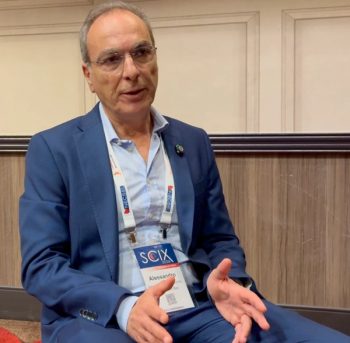
At SciX, Alessandro De Giacomo explains how a 35-member international jury chose three papers: one on correct ICCD use and two applications using LIBS and LA-ICP-MS. He also explains what the selections say about the field.
2026 SciX Conference Innovation ©   Dilok -chronicles-stock.adobe.com
Four finalists for the FACSS Innovation Award presented on the afternoon of October 8, 2026, at SciX 2026. Their work spanned drone-mounted laser-induced breakdown spectroscopy (LIBS), a touch-and-sound virtual reality system for blind scientists, polarized infrared (IR) imaging of shape memory polymers, and an ultrasound-activated plasmonic nanoplatform aimed at Parkinson’s disease.
Infrared Reimagined: How FT-IR Spectroscopy Learned to Read Molecules, ©  Luis Eduardo  -chronicles-stock.adobe.com
FT-IR spectroscopy, long treated as a mature bench technique for confirming a carbonyl stretch or fingerprinting a polymer, has quietly become one of chemistry’s most versatile discovery engines: it now infers molecular structure straight from a spectrum without a reference library, resolves chemistry tens of nanometers wide, and screens a fingerstick of blood for disease in minutes. The last five years of published research show FT-IR moving from a confirmatory tool into a predictive, autonomous, and field-ready analytical platform.