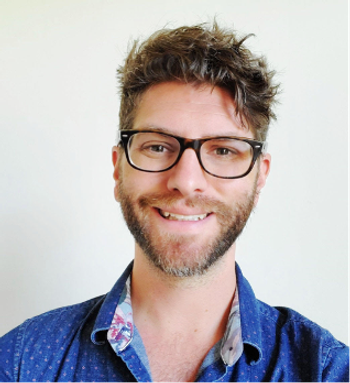
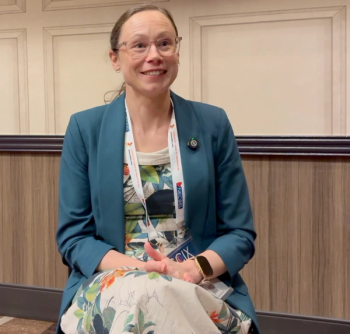
Next, we sat down with Alessandro De Giacomo of the University of Bari Aldo Moro. He argued that laser-induced breakdown spectroscopy (LIBS) researchers understand the plasma well, but know far less about the laser–matter interaction and material ejection that start the process.2 On nanoparticle tagging, he noted that larger particles offer more emitters and greater sensitivity, but can interfere with small targets like exosomes and become impractical in multiplexed analyses.2 Choosing a tag, he said, means balancing sensitivity against target size and tag count.2
Spectroscopy moved beyond the bench. Among the FACSS Innovation Award finalists, De Giacomo flew a calibration-free LIBS sensor on a drone to analyze volcanic ash.3 Kalivas presented a haptic virtual reality system that let blind students classify mid-infrared (MIR) spectra through touch and sound.3 Dabin Kim of NIST tracked molecular alignment in shape memory polymers, and Salah Oudjertli described a nanotransducer that combined plasmon-enhanced spectroscopy with ultrasound to break up protein fibrils linked to Parkinson’s disease.3
Finally, the week as a whole showed Raman, surface-enhanced Raman spectroscopy (SERS), and LIBS pushing toward clinical, environmental, and field use. The big takeaway? Sensitivity is no longer the bottleneck. Robustness to real-world samples, interpretability, and regulatory trust are.4
And that’ll do it for Best of the Week. Thanks for reading, and we’ll see you next week.
References
- Workman, J., Jr. Trust the Algorithm or the Analyst? SciX 2026 Chemometrics Session Challenges Old Assumptions. Spectroscopy Online, 2026. https://www.spectroscopyonline.com/view/trust-the-algorithm-or-the-analyst-scix-2026-chemometrics-session-challenges-old-assumptions (accessed October 14, 2026).
- De Giacomo, A.; Workman, J., Jr.; Wetzel, W. Beyond the Plasma: Alessandro De Giacomo on Laser–Matter Interaction and Nanoparticle Tagging. Spectroscopy Online, 2026. https://www.spectroscopyonline.com/view/beyond-the-plasma-alessandro-de-giacomo-on-laser-matter-interaction-and-nanoparticle-tagging (accessed October 14, 2026).
- Workman, J., Jr. Drones, Haptic Gloves, and Sound-Driven Nanomachines: Is Spectroscopy Outgrowing the Laboratory? Spectroscopy Online, 2026. https://www.spectroscopyonline.com/view/drones-haptic-gloves-and-sound-driven-nanomachines-is-spectroscopy-outgrowing-the-laboratory- (accessed October 14, 2026).
- Workman, J., Jr. SciX 2026 in Sparks: Raman Moves Toward the Clinic, Chemometrics Revisits Its Foundations. Spectroscopy Online, 2026. https://www.spectroscopyonline.com/view/scix-2026-in-sparks-raman-moves-toward-the-clinic-chemometrics-revisits-its-foundations (accessed October 14, 2026).