News|Videos|October 15, 2026

Building Infection Diagnostics That Clinics Will Actually Use

At SciX, Juergen Popp explains why a new infection test must fit hospital workflows, outperform the gold standard, and cost about a euro or less per test. He also describes a host-response test that could change how emergency departments treat suspected sepsis.

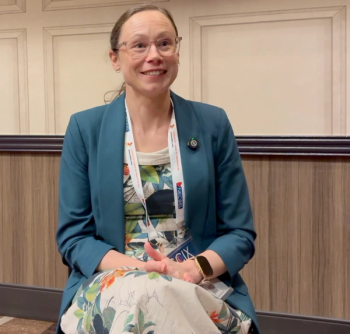
At the 2026 SciX Conference in Sparks, Nevada, Jürgen Popp, who is the Scientific Director of the Leibniz Institute of Photonic Technology (IPHT) in Jena, Germany, and a professor at Friedrich Schiller University Jena, discussed what it takes to move new diagnostic tests for infectious disease out of the laboratory and into clinical practice. In this video segment, Popp outlined the regulatory, workflow, and cost hurdles his team faces and described two tests in development.

According to Popp, the first requirement is compliance with medical device regulations, which demands a robust, stable technique. Just as important is fitting into existing hospital routines. For example, a new infection test has to align with the workflows already in place in clinical chemistry and clinical microbiology laboratories. If it does not, he said, the technique simply will not be used.

The second challenge is economic. A new technique must outperform the current gold standard while also costing less, because it should not add costs. Popp pointed to many industry products that perform well at detecting infection-causing pathogens and antimicrobial resistance but have struggled to gain full market traction because of their high price.

Popp’s group is pursuing two routes. The first examines the pathogens directly, along with their antimicrobial resistance. For that test to succeed commercially, Popp said, the measurement device should cost roughly €5,000 to €10,000, and each test should cost about €1 or less. The current version runs €10 to €15 per test, so production costs must fall to just a cent or two.

The second route analyzes the patient’s host response, a test that does not yet exist. When a patient arrives at the emergency department with signs of severe infection such as sepsis, Popp explained, physicians often administer several classes of antimicrobials at once because the cause is unknown, an approach that can harm the patient. A test that distinguishes fungal, bacterial, and viral infections within 10 to 15 minutes could change how such patients are treated. Although the regulatory path is long, Popp said his team is confident it can succeed.

You can stay up to date with all our coverage of the SciX Conference here: https://www.spectroscopyonline.com/conferences/scix.

Further Reading

(1) Popp, J.; Workman, J., Jr.; Wetzel, W. Jürgen Popp on Bringing Raman Diagnostics From the Laboratory to the Clinic. Spectroscopy Online, 2026. https://www.spectroscopyonline.com/view/jurgen-popp-on-bringing-raman-diagnostics-from-the-laboratory-to-the-clinic (accessed October 15, 2026).



Related to this article

Sparks near Reno Nevada – Site of 2026 SciX Conference ©   DTM Media  -chronicles-stock.adobe.com
Wednesday's program at SciX 2026 kept returning to one question: can spectroscopy perform outside the controlled laboratory? Speakers took surface-enhanced Raman scattering (SERS), laser-induced breakdown spectroscopy (LIBS), mid-infrared photonics, chemometrics, and fluorescence excitation–emission matrix (EEM) spectroscopy into clinics, food plants, reactor coolant loops, brine fields, and drinking water supplies.