February 2025

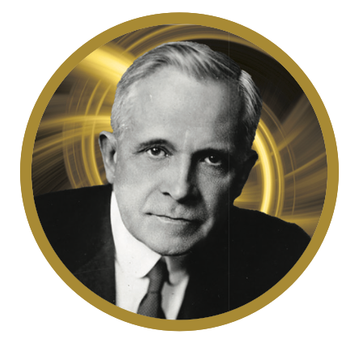
Benjamin T. Manard has won the 2025 Emerging Leader in Atomic Spectroscopy Award for his pioneering research in nuclear material characterization and isotope ratio analysis, with expertise in advanced atomic spectrometry techniques such as inductively coupled plasma optical emission spectroscopy (ICP-OES), inductively coupled plasma mass spectrometry (ICP-MS), and laser ablation.

Hand holding a glowing AI sphere symbolizing the power and potential of artificial intelligence. | Image Credit: © lucegrafiar - stock.adobe.com.

This “Chemometrics in Spectroscopy” column traces the historical and technical development of these methods, emphasizing their application in calibrating spectrophotometers for predicting measured sample chemical or physical properties—particularly in near-infrared (NIR), infrared (IR), Raman, and atomic spectroscopy—and explores how AI and deep learning are reshaping the spectroscopic landscape.

Microscope image of modified DNA strands displayed on advanced digital equipment in a biotech lab. Generated with AI. | Image Credit: © Sukifli.D - stock.adobe.com.

In this column, I describe what I believe may be the origin of this fluorescence emission and support my conjecture with some measurements of polycyclic aromatic hydrocarbons (PAHs). Understanding the origin of these interfering backgrounds may enable you to design experiments with less interference, avoid the laser illuminations that make things worse, or both.

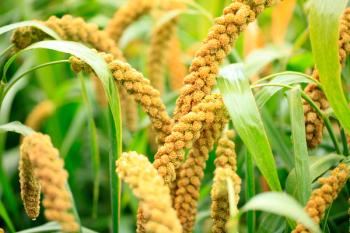
Foxtail millet | Image Credit: © zhengzaishanchu - stock.adobe.com.

The study developed an effective mid-infrared spectroscopic identification model, combining principal component analysis (PCA) and support vector machine (SVM), to accurately determine the geographical origin of five types of millet with a recognition accuracy of up to 99.2% for the training set and 98.3% for the prediction set.