Analytically Speaking Podcast

Welcome to “Analytically Speaking,” the podcast from LCGC International and Spectroscopy. Here in Episode #47, podcast host Dr. Jerry Workman speaks with Dr. Thomas Mayerhöfer from the Leibniz Institute of Photonic Technology (Leibniz IPHT) in Jena, Germany, and Friedrich Schiller University Jena, about “the other half” of the Beer–Lambert law: dispersion theory, the concentration law of the refractive index, and refractive-index and complex-valued chemometrics. Dr. Mayerhöfer, who first joined the podcast for Episode #29 on the history and theory of infrared spectroscopy, returns to explain how Beer’s law falls out of dispersion theory as a limiting case, why the refractive index obeys a concentration law of its own that was mainstream physical chemistry before about 1920 (and helped confirm the Kekulé structure of benzene), and how new refractive-index and complex-valued chemometric methods — in combination with PLS — can outperform conventional absorbance-based calibration by up to an order of magnitude.
In this episode, podcast co-hosts Dr. Dwight Stoll and Dr. James Grinias talk with Professor Kelly Hines. Dr. Hines is an associate professor in the Department of Chemistry at the University of Georgia in Athens.

In this episode of Analytically Speaking, explore the intersection of forensic science and cannabis research with Brent Wilson as he shares insights on analytical chemistry and standards.

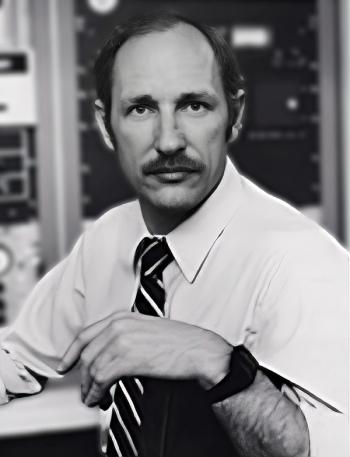
Bruce R. Kowalski

In this Icons of Spectroscopy article, Executive Editor Jerome Workman Jr. delves into the life and impact of Bruce Kowalski, an analytical chemist whose major contributions to chemometrics helped establish the field of applying advanced quantitative and qualitative mathematics to extract meaningful chemical information from complex datasets. Kowalski’s visionary approach to chemical data analysis, education, and software development has transformed the landscape of modern analytical chemistry for academia and industry.

Courtroom in session ©  Kamonwan - stock.adobe.com

A review by researchers from Curtin University comprehensively explores how chemometrics can revolutionize forensic science by offering objective and statistically validated methods to interpret evidence. The chemometrics approach seeks to enhance the accuracy and reliability of forensic analyses, mitigating human bias and improving courtroom confidence in forensic conclusions.