LC-MS

Latest News


Halvorsen-Figure-1_web.jpg

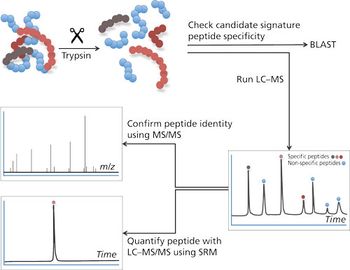
There is growing interest in the determination of endogenous proteins in biological samples for diagnostic purposes, because a concentration increase or decrease of such proteins can allows us to monitor the state of a pathological condition such as cancer. Immunocapture LC–MS/MS analysis combines the workflow of conventional immunological assays with LC–MS analysis. This article describes typical challenges, such as cross reactivity and the mass spectrometer’s dynamic range, as well as the advantages of isoform differentiation and multiplexing.

Witkiewicz-Figure-1_web.jpg

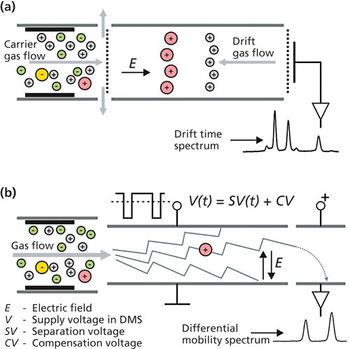
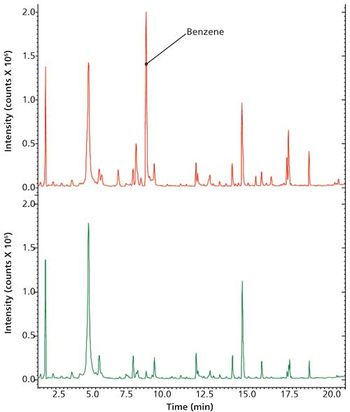
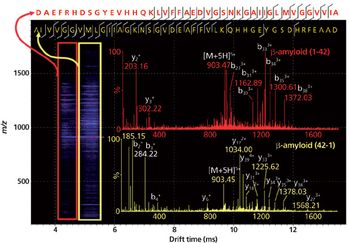
Interest in connecting ion mobility spectrometry (IMS) to GC and especially to LC is now growing. One favorable property of IMS is that it can work with ambient pressure and can be easily connected to a gas or liquid chromatograph. Analytical applications of GC–MS and LC–MS are very different and encompass investigations into food, medical science, environment, drugs of abuse, chemical warfare agents, and explosives.

In drug development, quantitative determination of a candidate drug and its metabolites in biofluids is an important step. The standard technique for quantitative metabolite profiling is radiolabeling followed by HPLC with radiodetection, but there are disadvantages to this approach, including cost and time, as well as safety and ethical concerns related to administering radiolabeled compounds to humans. Frank Vanhaecke and his research group at Ghent University have been developing an alternative technique, and he recently spoke to us about this work.

Table2-web.jpg

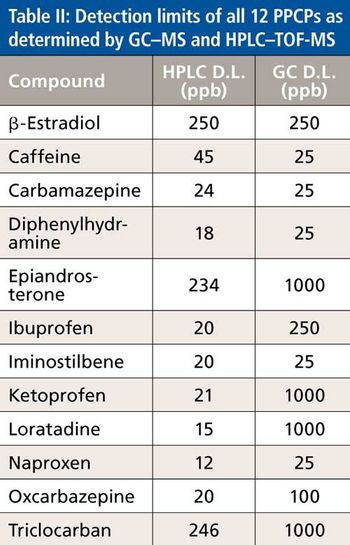
Water samples were obtained from the Tar River and a local water treatment plant in eastern North Carolina in spring 2013 and fall 2015 to monitor the presence of a panel of pharmaceutical and personal care products (PPCPs). Samples were extracted by solid phase extraction (SPE) or liquid-liquid extraction and analyzed for parent PPCPs and their metabolites by liquid chromatography-time of flight mass spectrometry (HPLC-TOFMS) and gas chromatography-mass spectrometry (GC-MS). Both extraction and detection methods were compared by their recoveries and detection limits for each compound. Many parent PPCPs and their metabolites were detected including: carbamazepine, iminostillbene, oxcarbazepine, epiandrosterone, loratadine, β-estradiol, triclosan, and others. Liquid-liquid extraction was found to give overall superior recoveries. Furthermore, HPLC-TOFMS gave lower detection limits than GC-MS. Library searching of additional peaks identified further compounds with biological activity. Additionally, the effectiveness of the treatment plant on the removal of the compounds of interest is discussed.


Table2-web-1.jpg

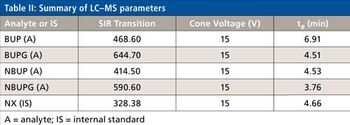
An LC-MS method has been developed for simultaneous quantification of buprenorphine and its three metabolites, namely norbuprenorphine, buprenorphine glucuronide, and norbuprenorphine glucuronide Chromatographic separation was achieved on a C18 column with a gradient of acetonitrile and ammonium acetate buffer (25 mM, pH 6.6). The method run time was 7.5 min. Quantification was performed by selected ion monitoring of [M+H]+ ions of norbuprenorphine glucuronide (590), norbuprenorphine (414), buprenorphine glucuronide (644) and buprenorphine (468). Naloxone (328) (328ng/mL) was used as an internal standard. The samples were processed by protein precipitation and extraction recovery was ≥95% with minimal observed matrix effects (

Sambasiva-fig04-web.jpg

Moxidectin formulations help to reduce hair loss and irritation due to parasite worms in animals. So Estimation of Moxidectin in hair is important to evaluate therapeutic levels, distribution & accumulation, however estimation is also useful to evaluate harm to birds when they eat animal hair. Hence Moxidectin estimation is required for pharmacokinetic as well as environmental exposure study. Objective of the present work is to develop a rapid, selective method for the estimation of Moxidectin in Cattle Hair by LC-MS/MS. Oxcarbazepine used as a internal standard. Moxidectin extracted from cattle hair by liquid-liquid extraction using Sorenson’s Buffer as digestion solvent for incubation & methyl tert-butyl ether as an extraction solvent. Detection was performed over the range 0.026 to 1.000 ng/mG using MRM in positive polarity at unit resolution under turbo ion spray whereas separation was achieved on Kinetex 100 x 4.6 mm, 5u EVO C18 100A column with Methanol : 10mM Amonium formate pumped as gradient flow with 4.50min run time. Q1 is 640.45 whereas Q3 is sum of 528.50 and 498.50. Validation parameters shown reliable results. Method is applied for the estimation of Moxidectin in cattle Hair.

Medana-figure06-web.jpg

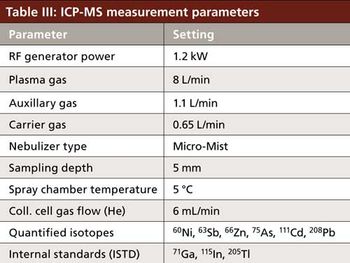
The purpose of this study was the development of various analytical MS methods to investigate the chemical composition of e-liquids used in electronic cigarettes and characterize their quality. Low-quality nicotine (the main active compound), glycerol, propylene glycol (solvents), or flavors could greatly increase the toxicity. The search of alkaloid contaminants of nicotine was performed by LC–MS-MS after a deep study of fragmentation pathways by high resolution ESI-MS. A fully validated method for quantitation of organic polar impurities such as cotinine, anabasine, myosmine, nornicotine, and N-nitroso-nornicotine and nicotine itself was developed using MS coupled to UHPLC. To evaluate organic volatile toxicants, headspace from e-cigarette refill liquids was sampled by SPME to perform GC–MS analysis. Finally, heavy metal residues as inorganic toxicants were determined by ICP-MS after simple dilution. A number of cases of contamination by metals (mainly arsenic) was detected.

Delobel_Fig05_revised.jpg

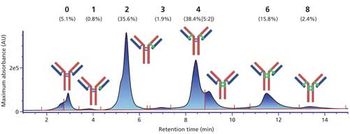
We have developed a range of analytical workflows using mass spectrometry, in a regulated environment, to support pharmaceutical companies in the development and control of their monoclonal antibodies (mAbs) and antibody-drug conjugates (ADCs). High-resolution mass spectrometry is a powerful tool for the analysis of antibodies, but is not readily compatible with a number of chromatographic techniques using high-salt mobile phases. Herein, we present the development and use for marketed mAbs and ADCs of 2D LC–MS via an online desalting step. We demonstrate the importance of such a setup for the determination of drug:antibody ratio (DAR), and the analysis of molecularity, fragmentation, and charge variants (deamidation, oxidation), notably under stress conditions. We discuss the advantages of 2D LC–MS in a regulated environment.

Siluk_fig1_web.jpg

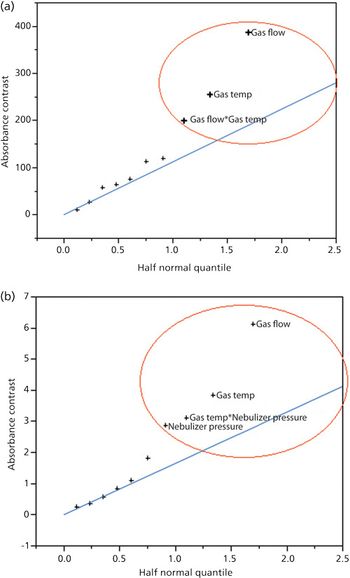
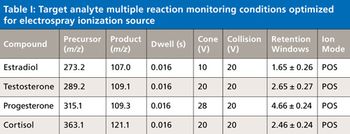
Simultaneous quantification of metabolites in biological fluids, where they are present at different concentration levels, is usually a challenging analytical task. One of the steps that should be undertaken to increase analytical method efficiency is optimization of the electrospray ionization source (ESI), which can be especially helpful in increasing method sensitivity of agents with poor ionization characteristics. We present here a step-by-step ESI optimization strategy with the use of the design of experiments (DoE. This multivariate statistical approach allows effective evaluation of the effects of multiple factors and interactions among factors on a given response in a minimum number of experimental runs.

Khvataeva_Tables5_webR.jpg

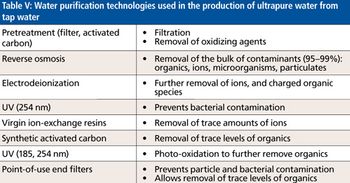
Ionic contaminants in the water used in UHPLC analyses with MS detection method lead to adduct formation and reduced analytical signals because of ion suppression. In MS, the preferred ion type is the protonated molecular ion, especially in peptide analysis, since the partially mobile proton charge enables more meaningful fragmentation analysis, as compared to a sodiated peptide ion.