SPEC PerkinElmer 10.13
|Webcasts|November 17, 2021

Analysis of Fuels and Additives Using ICP-OES and ED-XRF

**Wednesday, November 17th, 2021 at 11am EST| 10am CST | 8am PST** Laboratories today are under more pressure than ever before to process more samples per day, attain lower detection limits and lower operating costs. This webinar will highlight new advances in ICP-OES and ED-XRF technology that will address these points and explain how the latest designs have revolutionized the techniques and offered a dramatic increase in performance for all types of fuels and additives.

Register Free: http://www.spectroscopyonline.com/spec/fuels

Event Overview:

Spectrometric analyzers in petrochemical laboratories must take on some challenging tasks. Diverse samples may contain a wide range of elements in varying concentrations, including a number that are notoriously difficult to test and measure. This webinar will discuss the analysis of fuels and additives by energy-dispersive X-ray fluorescence (ED-XRF) and inductively coupled plasma–optical emission spectroscopy (ICP-OES) to solve analytical challenges for quality control and showing compliance to specifications. This webinar will cover the full range from crude oil to conventional fuels like gasoline and diesel to biofuels. In addition to fuels, it will review the analysis of additives and show how instrumental advances in these two techniques enable superior performance.

Learning Objectives:

  • Selecting the correct ICP-OES analyzer for ultimate productivity
  • New advances in plasma viewing and optical design
  • How ICP-OES and ED-XRF advances in technology can offer superior performance
  • Low sulfur and chlorine analysis capabilities along with the other essential elements required for quality control and showing compliance to specifications
  • Latest technology advances

Who Should Attend:

  • ​​Researchers
  • Quality control and quality assurance managers
  • Lab Managers/supervisors
  • Lab Director
  • Project Leaders
  • Technicians/Research Assistants

Register Free: http://www.spectroscopyonline.com/spec/fuels


Related to this article

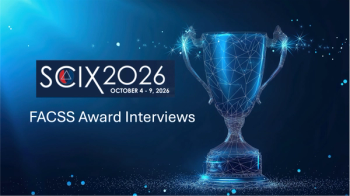
FACSS 2026 Award Interviews ©  Erin -chronicles-stock.adobe.com
Eight FACSS award winners at SciX 2026, One LIBS trailblazer. Forty-eight questions. And not one of them is a softball. Award season in spectroscopy usually means polite applause, a plaque, and a photo. We're not completely interested only in the award sessions. The eight scientists honored at SciX 2026 in Sparks, Nevada, along with LIBS researcher Alessandro De Giacomo, are pushing Raman into operating rooms, flying LIBS on drones, reading chemistry off Mars, and tracing toxic metals downwind of industrial sites. Their work makes big claims. In the coming days, Spectroscopy will sit down with eight of these researchers and ask whether those claims hold up. The interviews that follow won't just celebrate. They'll press on the gaps between simulation and experiment, between the lab bench and the clinic, and between a clever paper and an instrument someone will actually buy and use.
Spectral Frontiers: Past the Diffraction Limit (FT-IR Spectroscopy)
Fourier-transform infrared (FT-IR) spectroscopy, long the workhorse of molecular fingerprinting, is being reinvented by photothermal detection schemes and quantum cascade laser (QCL) sources that push spatial resolution and analysis speed far beyond classical dispersive and interferometric limits. New instrumentation such as optical photothermal infrared (O-PTIR) microscopy and laser direct infrared (LDIR) chemical imaging is enabling sub-micron, label-free chemical mapping of biological, environmental, and pharmaceutical samples. This article reviews the latest FT-IR-adjacent technologies, recent patents, and research driving the field, featuring perspectives from the scientists and instrument developers advancing the technique.