SPEC PerkinElmer 11.10
|Webcasts|October 20, 2021

Elemental Analysis of Food Using ICP-OES

Wednesday, October 20, 2021 at 11am EDT| 8am BST| 4pm GMT|5pm CESTLaboratories today are under more pressure than ever before to process more samples per day, attain lower detection limits and lower operating costs. This webinar will highlight new advances in ICP-OES technology that will address these points and explain how the latest designs have revolutionized the techniques and offered a dramatic increase in performance across all markets and applications.

Register Free: http://www.spectroscopyonline.com/spec_w/foods

Event Overview:

In the last few decades, food quality and safety has become a major topic of public interest. Stringent legislation setting maximum levels of contaminants in foodstuffs has been introduced. Particularly, heavy metals are strictly regulated: Maximum levels of lead, cadmium, inorganic tin and total mercury in food have been defined worldwide. Inductively coupled plasma–optical emission spectroscopy (ICP-OES) is a potent technique for the analysis of foodstuffs as it combines the possibility to analyze trace elements as well as major and minor compounds required for quality control. In this webinar, we will be showing how food analysis can be conducted using modern ICP-OES instrument. We will discuss appropriate sample preparation as well as figures of merit.

Key Learning Objectives:

  • Selecting the correct ICP-OES analyzer for ultimate productivity
  • New advances in plasma viewing and optical design
  • How ICP-OES can measure heavy metals in foodstuffs along with other elements
  • Importance of analyzing trace elements as well as major and minor compounds
  • Sample preparation overview
  • Latest technology advances

Who Should Attend:

  • Researchers
  • Quality control and quality assurance managers
  • Lab managers/supervisors
  • Lab director
  • Project leaders
  • Technicians/research assistants

Register Free: http://www.spectroscopyonline.com/spec_w/foods


Related to this article

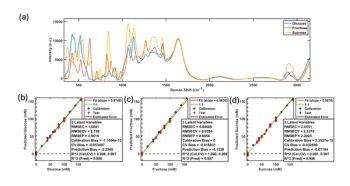
Monitoring Sugar Consumption and Ethanol Production During Yeast Fermentation Using a Raman Plate Reader and Multivariate Analysis
This column shows that a Raman plate reader paired with partial least squares regression can simultaneously quantify glucose, fructose, sucrose, and ethanol in yeast fermentation samples, using turbidity-matched calibration standards to correct for yeast-induced turbidity, and offers a rapid, label-free, high-throughput method for tracking sugar consumption and ethanol production in strain screening, media optimization, and process development.
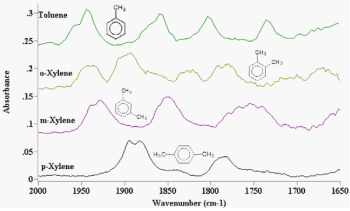
Highly Substituted Benzene Rings—The Rest of the Story II: Spectra
This column, the second installment on highly substituted benzene rings, shows that tri- and tetra-substituted substitution patterns can be distinguished by whether the ring bending peak is present and by the position of the in-phase aryl C-H wagging peak, which shifts according to how many adjacent hydrogens the ring carries.
Healthcare administrator reviewing an insurance policy schedule with a stethoscope on a clipboard, health insurance coverage, medical underwriting, prior authorization, and patient claims processing. | Image Credit: Joi_studio - stock.adobe.com
In a SciX interview, Marc Porter covered a lot of ground, from a student-driven pivot into immunoassays to a baseball analogy for Stokes and anti-Stokes scattering, and shares the open questions he is still chasing.