Register Now: Advances in Spectroscopy for Pharma and Biopharmaceutical Analysis Symposium
|Webcasts|May 3, 2022

Expanding the Capabilities of Handheld 785 nm Raman

Tuesday, May 3rd, 2022 at 11am EDT | 8am PDT | 10am CET | 3pm GMT A whole world of broader application becomes possible as 785 nm Raman devices evolve with the extraction (“XTR”) of Raman data. Learn about how powerful the combination of fluorescence-rejection and low-power sampling in a handheld Raman system can be in both traditional and new markets.

Register Free: https://www.spectroscopyonline.com/spec_w/Handheld

Event Overview:

Handheld 785 nm Raman spectroscopy is a well-established material identification technique, most notably in the pharmaceutical and defense and security markets. New capabilities are expected to expand applications to chemicals, dyes, food and beverage, research and education, SERS development and implementation, and nutraceutical and dietary supplements. Improvements to 785 nm spectrometer design, fluorescence mitigation, and sampling capabilities will drive increased Raman presence in corresponding markets. Topics discussed in this webinar include:

  • Benefits of 785 nm Handheld Raman
  • XTR: a novel fluorescence rejection technique for improved 785 nm performance
  • Novel and flexible sampling capabilities for handheld Raman, including robot-mounted, no-contact, and standoff data collection

Key Learning Objectives:

  • Discuss the relationships between wavelength and design, signal-to-noise ratios and resolution, and Raman sampling
  • Discover how the extraction (“XTR”) of Raman data is used to remove fluorescence from the 785 nm Raman spectra
  • Learn how expanded applications for handheld Raman appeal to new markets

Who Should Attend:

  • Handheld Raman Users
  • Raman Spectroscopy Users and Researchers
  • Quality Control Managers
  • Drug Enforcement Personnel
  • Chemical Identification Personnel
  • Anyone Who Requires On-Site Material Identification

For any questions please contact Preranna Singh: psingh@mjhlifesciences.com

Speakers

Travis Thompson
Technical Specialist
Metrohm Raman

Mr. Travis Thompson is Technical Specialist at Metrohm Raman. Travis graduated from the University of Wyoming with a BS in Chemistry. He has worked in various capacities with Raman spectroscopy during the past 16 years, including work in SERS development, applications, product development, sales, and sales support roles.

Register Free: https://www.spectroscopyonline.com/spec_w/Handheld


Related to this article

A robotic arm in an automated agricultural setting, carefully processing a conveyer belt with tomatoes and leafy greens for food production. | Image Credit: © Donnangelo - stock.adobe.com
Croatian researchers outline how optical emission spectroscopy (OES) can track reactive species and plasma parameters in real time, giving processors a path to move cold plasma treatments from the laboratory to production lines.
Spectroscopy Top 10 DOI Articles of the Month (October 2026)
The following articles are the most accessed digital object identifier (DOI) manuscripts for Spectroscopy and LCGC International during the month of October 2026. Nine articles are individually ranked here by DOI page views; the seventh-highest entry (99 views) was recorded against the bare LCGC North America journal-level DOI rather than an individual article and is therefore not attributable to a single manuscript.
Mapping Molecular Mobility Pixel by Pixel
Garth Simpson of Purdue University explains how patterned photobleaching and spatial Fourier transforms can turn a single-point measurement into a diffusion coefficient at every pixel in the field of view.
Optical and Electronic Instrument Components,  ©  ridwan -chronicles-stock.adobe.com
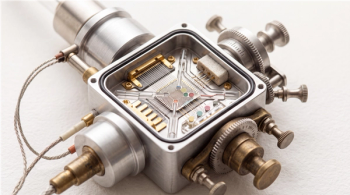
The updated and expanded 2026 edition of Spectroscopy's Instrument Components Terminology Guide defines the sources, detectors, optical and dispersive elements, sampling hardware, physical constants, and unit conversions used across UV-vis, NIR, IR, Raman, X-ray, and atomic spectroscopic instrumentation, with new terms reflecting component developments reported between 2022 and 2026.