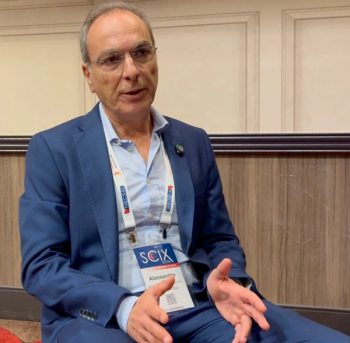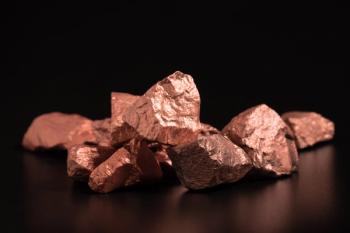
At SciX, Kevin Wilkinson of the Universite de Montreal explains how faster data acquisition and new software have cut analysis time and how a particle’s chemical composition can link arsenic-bearing emissions back to a copper refinery’s processes.
It always seems to be the case that time flies when you are either busy or having a good time, so as we reach this, the last day of Spectroscopy's and LCGC's coverage from ASMS 2010 from Salt Lake City, we certainly hope that time has flown for all of you. However, before everyone heads off to their next destination tomorrow, whether that be home or another industry event, there is still a great deal of science and technical material to take in.
It always seems to be the case that time flies when you are either busy or having a good time, so as we reach this, the last day of Spectroscopy’s and LCGC’s coverage from ASMS 2010 from Salt Lake City, we certainly hope that time has flown for all of you. However, before everyone heads off to their next destination tomorrow, whether that be home or another industry event, there is still a great deal of science and technical material to take in.
This afternoon in particular, the session “MS in Environmental Toxicology” looks very interesting. Kicking off at 2:30 pm in Ballroom BDF with a presentation by EPA scientist Susan Richardson titled “Linking mass spectrometry with toxicology for emerging water contaminants,” this session promises to bring attendees information on one of the hottest topics in the industry right now: water safety and regulations. Following Dr. Richardson’s presentation will be a talk from a team comprised of scientists from the University of Alberta, Canada, and the University of British Columbia, Canada. Their presentation, “Arsenic interaction with proteins and detecting arsenic-binding proteins in human cells using mass spectrometry and affinity chromatography” gets to the very heart of the issue, with arsenic being one of the single greatest toxic threats to the water supply in the world today. Several other excellent presentations follow, so you certainly can’t go wrong allocating some of your time here.
Finally, we would like to wish all of this year’s conference-goers safe travels getting to your next destination. We hope you have enjoyed this daily resource on all that was happening in Salt Lake City as much as we have enjoyed bringing it to you. It has certainly been our pleasure bringing you these daily reports, and please look for additional show coverage throughout the year from Spectroscopy and LCGC. Bon voyage!