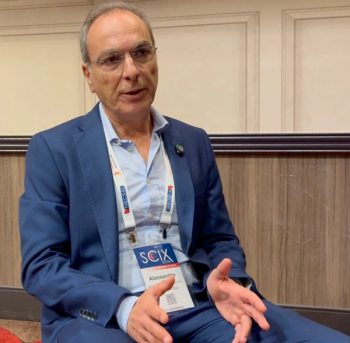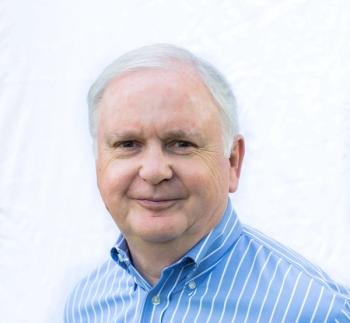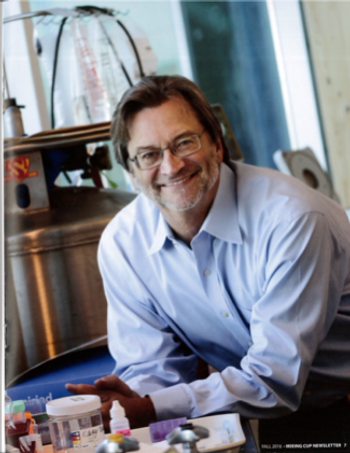
Marc Porter describes how his group’s surface science work led to SERS-based immunoassays, why reproducibility and pre-analytics decide whether a test reaches the clinic, and the questions he still wants to answer.
At the fringe of the infrared spectrum is the terahertz region, which until recently was not significantly utilized for spectroscopy.
At the fringe of the infrared spectrum is the terahertz region, which until recently was not significantly utilized for spectroscopy. The properties of terahertz spectroscopy make it useful for applications in a variety of industries, with many major companies already adopting the technique. The entrance of new competitors and very strong growth of the technique portend its growth into a major segment of the molecular spectroscopy market.
Laboratory terahertz spectroscopy demand by industry for 2012.
The terahertz region of the electromagnetic spectrum lies between the far infrared region and the microwave region, and includes wavelengths of about 0.1–1.0 mm. Terahertz spectroscopy is somewhat complementary to other spectroscopy techniques, as a number of compounds have unique fingerprints in the terahertz region, including some narcotics, explosives, and various polymorphic forms of active pharmaceutical ingredients (APIs). A variety of common materials, as well as human tissue, are semitransparent to terahertz radiation, and it is non-ionizing, making it safe for human exposure. A wide variety of commercial terahertz spectrometers are already on the market, including conventional frequency-domain systems, time-domain systems, imaging systems, and portable instruments.
For laboratory applications, terahertz spectroscopy is quickly being adopted by major companies for both quality analysis and product development. Intel's adoption of the technique validates its usefulness in the semiconductor and electronics industries. A number of major pharmaceutical manufacturers are now using the technique for both development and QA–QC of solid dosage forms. There is significant exploration of terahertz spectroscopy for clinical and medical applications, although much of this work is currently based in academic laboratories.
Global laboratory demand for terahertz spectroscopy was nearly $20 million in 2012, with at least six major competitors now offering commercial instruments. Although 2013 may be a challenging environment for this market, demand is still likely to see mid single-digit growth before returning to strong double-digit growth in 2014.
The foregoing data were based on SDi's market analysis and perspectives report entitled Global Assessment Report, 12th Edition: The Laboratory Life Science and Analytical Instrument Industry, October 2012. For more information, visit
about 13 years ago
Considerations of Grating Selection in Optimizing a Raman Spectrographabout 13 years ago
Speciation Analysis Using HPLC–ICP-MS: Arsenic in Riceabout 13 years ago
Vol 28 No 10 Spectroscopy October 2013 Regular Issue PDF