Mammals require dietary-based polyunsaturated fatty acids (PUFA) such as docosahexaenoic acid (DHA), eicosapentaenoic acid (EPA) and arachidonic acid (AA) for many biological processes, including normal functioning of the retina and brain. Fourier transform infrared (FTIR) imaging with high spatial resolution is a suitable tool to investigate the PUFA distribution in tissue sections from animal models of disease, providing comprehensive information of the biochemical components on the subcellular scale.
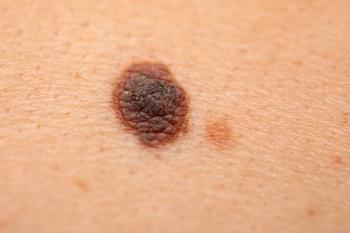
Discover how handheld Raman spectroscopy is helping distinguish skin cancer from normal tissue, courtesy of researchers from Florida Atlantic University.
FT-IR spectroscopy, long treated as a mature bench technique for confirming a carbonyl stretch or fingerprinting a polymer, has quietly become one of chemistry’s most versatile discovery engines: it now infers molecular structure straight from a spectrum without a reference library, resolves chemistry tens of nanometers wide, and screens a fingerstick of blood for disease in minutes. The last five years of published research show FT-IR moving from a confirmatory tool into a predictive, autonomous, and field-ready analytical platform.