SPEC PerkinElmer 10.13
|Articles|June 2, 2004

Spectroscopy Supplements

  • Special Issues-06-02-2004
  • Volume 0
  • Issue 0

Raman Spectroscopy for Homeland Defense Applications (PDF)

Raman spectroscopy is used routinely by the agencies tasked with homeland defense, and current research using surface enhanced Raman spectroscopy shows promise for the detection of chemical warfare agents and other toxic chemicals. This article overviews some of the latest developments in the field.


Related to this article

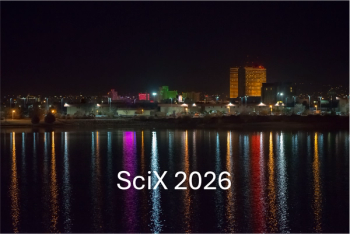
Sparks near Reno Nevada – Site of 2026 SciX Conference ©   DTM Media  -chronicles-stock.adobe.com
Wednesday's program at SciX 2026 kept returning to one question: can spectroscopy perform outside the controlled laboratory? Speakers took surface-enhanced Raman scattering (SERS), laser-induced breakdown spectroscopy (LIBS), mid-infrared photonics, chemometrics, and fluorescence excitation–emission matrix (EEM) spectroscopy into clinics, food plants, reactor coolant loops, brine fields, and drinking water supplies.
FACSS 2026 Award Interviews ©  Erin -chronicles-stock.adobe.com
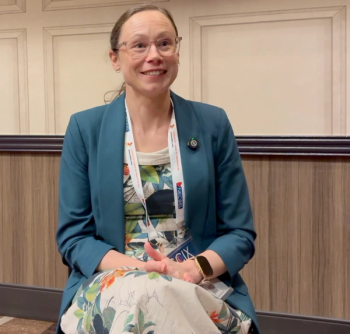
Eight FACSS award winners at SciX 2026, One LIBS trailblazer. Forty-eight questions. And not one of them is a softball. Award season in spectroscopy usually means polite applause, a plaque, and a photo. We're not completely interested only in the award sessions. The eight scientists honored at SciX 2026 in Sparks, Nevada, along with LIBS researcher Alessandro De Giacomo, are pushing Raman into operating rooms, flying LIBS on drones, reading chemistry off Mars, and tracing toxic metals downwind of industrial sites. Their work makes big claims. In the coming days, Spectroscopy will sit down with eight of these researchers and ask whether those claims hold up. The interviews that follow won't just celebrate. They'll press on the gaps between simulation and experiment, between the lab bench and the clinic, and between a clever paper and an instrument someone will actually buy and use.