SPEC PerkinElmer 11.10
News|Articles|December 22, 2025

Spectroscopy Blog Submission Form

Listen
0:00 / 0:00

Key Takeaways

  • The blog series aims to feature voices from various stages of academic and professional development in spectroscopy.
  • Submissions can address a broad spectrum of topics, from technical aspects like method development to personal experiences such as conference reflections.
SHOW MORE

Below is the submission form for the Spectroscopy Blog. Any undergraduate, graduate, or postdoctoral student is welcome to submit, as well as interns or young professionals in spectroscopy.

To submit a blog proposal, please click here to access the form.

We are currently accepting submissions for our online blog series that spotlights the voices of undergraduate, graduate, and post-doctoral researchers in spectroscopy, as well as interns or young professionals in spectroscopy.

These blog entries can cover important topics in analytical spectroscopy, including, but not limited to, method development, applications, sample preparation, data analysis, new technology, education, artificial intelligence (AI), instrumentation, and business, but they can also cover topics such as reflection pieces about attending conferences, networking experiences, and other lighter topics that may appeal to a wide audience.

We encourage potential authors to develop their own topics that they are passionate about and believe Spectroscopy readers will enjoy.


Related to this article

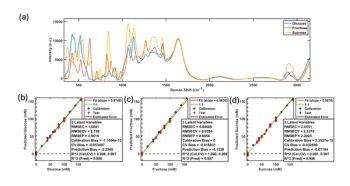
Monitoring Sugar Consumption and Ethanol Production During Yeast Fermentation Using a Raman Plate Reader and Multivariate Analysis
This column shows that a Raman plate reader paired with partial least squares regression can simultaneously quantify glucose, fructose, sucrose, and ethanol in yeast fermentation samples, using turbidity-matched calibration standards to correct for yeast-induced turbidity, and offers a rapid, label-free, high-throughput method for tracking sugar consumption and ethanol production in strain screening, media optimization, and process development.
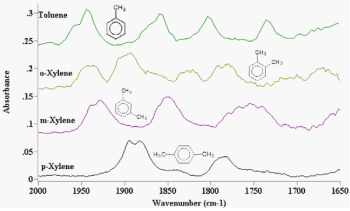
Highly Substituted Benzene Rings—The Rest of the Story II: Spectra
This column, the second installment on highly substituted benzene rings, shows that tri- and tetra-substituted substitution patterns can be distinguished by whether the ring bending peak is present and by the position of the in-phase aryl C-H wagging peak, which shifts according to how many adjacent hydrogens the ring carries.
Healthcare administrator reviewing an insurance policy schedule with a stethoscope on a clipboard, health insurance coverage, medical underwriting, prior authorization, and patient claims processing. | Image Credit: Joi_studio - stock.adobe.com
In a SciX interview, Marc Porter covered a lot of ground, from a student-driven pivot into immunoassays to a baseball analogy for Stokes and anti-Stokes scattering, and shares the open questions he is still chasing.
Ingots of pure copper or pink gold on a black background. | Image Credit: Phawat - stock.adobe.com
At SciX, Kevin Wilkinson of the Universite de Montreal explains how faster data acquisition and new software have cut analysis time and how a particle’s chemical composition can link arsenic-bearing emissions back to a copper refinery’s processes.
Spectral Frontiers: Seeing the Unseeable Microspectroscopy
Microspectroscopy, the marriage of spectroscopic chemical identification with microscopic spatial resolution, has advanced from Perkin-Elmer's first commercial infrared microspectrometer in 1953 to today's nanoscale AFM-IR probes, synchrotron-brightness infrared beamlines, and compact hyperspectral tissue imaging devices being developed for AI-assisted cancer detection.