|Articles|August 31, 2017

Supplementary Information: Optimized ICP-MS Analysis of Elemental Impurities in Semiconductor-Grade Hydrochloric Acid

These tables and figure are supplementary information to the article "Optimized ICP-MS Analysis of Elemental Impurities in Semiconductor-Grade Hydrochloric Acid."

These tables and figure are supplementary information to the article "Optimized ICP-MS Analysis of Elemental Impurities in Semiconductor-Grade Hydrochloric Acid," which was published in the September 2017 supplement issue Applications of ICP & ICP-MS Techniques for Today’s Spectroscopists to Spectroscopy (1).

 

Reference

  • K. Neubauer and E. Pruszkowski, Spectroscopy32(s9), 17–26 (2017).

Related to this article

Curated 2026 Evergreen Content from Spectroscopy. ©  Chanakarn -chronicles-stock.adobe.com
Spectroscopy's editors gather 143 evergreen articles from 2026, including tutorials, terminology guides, technique reviews, application surveys, peer-reviewed research and the magazine's long-running columns, and organize them by subject so readers can build lasting knowledge one topic at a time.
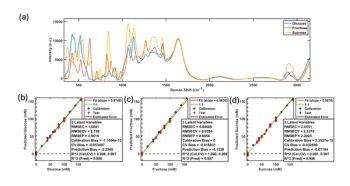
Monitoring Sugar Consumption and Ethanol Production During Yeast Fermentation Using a Raman Plate Reader and Multivariate Analysis
This column shows that a Raman plate reader paired with partial least squares regression can simultaneously quantify glucose, fructose, sucrose, and ethanol in yeast fermentation samples, using turbidity-matched calibration standards to correct for yeast-induced turbidity, and offers a rapid, label-free, high-throughput method for tracking sugar consumption and ethanol production in strain screening, media optimization, and process development.