|Webcasts|November 9, 2022

Acid Digestion Made Easy – Streamlined Sample Preparation for ICP and AAS Analysis

Wednesday, November 9th 2022 at 10am PT | 1pm ET | 5pm GMT | 7pm CET Fast and easy ICP and AAS analysis is only possible with fast and easy sample preparation. This webinar will show you how acid digestion is now easier than ever.

Register Free: https://www.spectroscopyonline.com/spec_w/digestion

Event Overview:

Accurate and effective sample preparation is still the key issue for precise analysis with ICP-OES, ICP-MS, or AAS. Although microwave digestion techniques have developed from simple but error-prone systems into a valuable tool for the daily analytical workflow, many users are still struggling during their daily digestion tasks, especially with difficult samples.
This webinar takes you on the tour from an unknown sample to a successful digestion, highlighting the relevant method parameters and practical considerations. Valuable tips & tricks how to avoid common pitfalls during acid digestion experiments will round off this webinar.

Key Learning Objectives:

  • Why sample digestion is important in ICP and AAS analysis
  • How to approach an unknown sample
  • Relevant method parameters, and how to select them
  • Tips and tricks for improved digestion results

Speakers:

Dr. Christian Trampitsch
Product Competence Expert,
Analytical and Synthetic Chemistry
Anton Paar

Dr. Christian Trampitsch obtained his degree in chemistry at the Graz University of Technology. He is currently the product competence expert in analytical and synthetic chemistry at Anton Paar Headquarters, where he has worked for more than 15 years in the field of sample preparation. Dr. Trampitsch is involved in application development as well as R&D projects and has gained wide-spread experience in this topic.

Times and Dates:

Wednesday, November 9th 2022 at 10am PT | 1pm ET | 5pm GMT | 7pm CET

Sponsor:

Anton Paar

Register Free: https://www.spectroscopyonline.com/spec_w/digestion

Related to this article

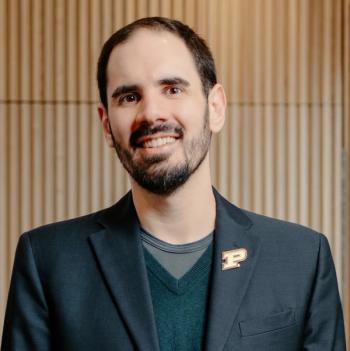
Brandon E. Boor is the Dr. Margery E. Hoffman Associate Professor in the Lyles School of Civil and Construction Engineering at Purdue University. | Photo Credit: © Brandon Boor.
In the second part of our interview with Brandon Boor of Purdue University, he discusses how his team controls experimental variables during cleaning experiments in order to obtain interpretable data.
Scientist With Portable Spectrometer in Natural Field Setting ©  By Tika -chronicles-stock.adobe.com
The bulky bench-top NIR spectrometer is quietly being dismantled and rebuilt as a wafer-scale photonic chip, a self-calibrating algorithm, and a sensor small enough to ride in a shirt pocket. What once demanded a grating, a moving mirror, and a climate-controlled lab now fits inside a handheld module, a bioreactor probe, or a drone payload, and it increasingly figures out what it is looking at on its own.
Sizing Up the Nanoscale: Measuring Nanocluster Aerosol in Indoor Air
In the first part of a multi-part Q&A, Brandon Boor, the Dr. Margery E. Hoffman Associate Professor in the Lyles School of Civil and Construction Engineering at Purdue University, describes the instrumentation and methodology behind measuring nanoparticle size distributions at the nanocluster scale (1–3 nm) and outlines the technical challenges of acquiring reliable, real-time data at these dimensions.
Human body wireframe on glowing platform undergoing futuristic body scan. © sergray(noAIelemens) -chronicles-stock.adobe.com
Jurgen Popp, Thomas Mayerhofer, and colleagues at Leibniz IPHT and Friedrich Schiller University Jena introduce the Personalized Optical Digital Twin (PODT), a Photonics21 contribution to Europe's Virtual Human Twin ecosystem that connects molecular photonics—Raman blood analysis, coherent Raman tissue imaging, and multimodal endomicroscopy—with longitudinal physiology and clinical data. Drawing on the published multicenter INTELLIGENCE trials, the authors argue that technical feasibility and clinical utility must be evaluated separately as the field moves toward Europe's FP10 research agenda.