Register Now: Advances in Spectroscopy for Pharma and Biopharmaceutical Analysis Symposium
|Webcasts|September 7, 2021

Advances in FT-IR and UV-Vis: No Need for Cells in Liquid Sample Analysis

This webcast will highlight the benefit of advanced sampling technologies in achieving fast, easy, and reliable measurements of liquid samples in comparison with the traditional liquid cells used for FTIR and UV-Vis measurements.

Dates & Times: 

  • Session 1: Europe: Tuesday, September 7, 2021 at 9am EDT | 8am CDT | 2pm BST | 3pm CEST
  • Session 2: North America: Tuesday, September 7, 2021 at 4pm EDT | 3pm CDT | 1pm PDT 
  • Session 3: Asia: Tuesday, September 7, 2021 at 10:30am IST | 1pm CST | 2pm JST | 3pm AEST

Register Free: http://www.spectroscopyonline.com/spec_w/liquid

Event Overview:

Advances in FTIR and UV-Vis sampling interfaces have eliminated the need for transmission cells and cuvettes and offer considerable time and cost savings. Conventionally measuring liquids requires the use of a demountable or flow cell mounted in a transmission accessory for FTIR and the use of expensive glass or quartz cuvettes for UV-Vis. The use of these cells and cuvettes is time consuming and can be inefficient and error prone. This webcast will show fast, easy and reliable ways to measure liquid samples using FTIR and UV-Vis, completely eliminating the need for cells. The Cary 630 FTIR allows fast liquid sample analysis with the unique DialPath module in comparison with the traditional liquid cell. The use of the Cary 60 UV-Vis with fiber optic probes eliminates the need for cuvettes in UV-Vis applications.

Key Learning Objectives:

  1. The use of the innovative DialPath sampling devices for the analysis of liquid samples, with some examples of liquid samples that are measured in pharmaceutical laboratories
  2. The performance of the DialPath is equal or better compared to the traditional way of using flow or demountable cells
  3. The fiber optic dip probe for UV-Vis measurements eliminates the need for cuvettes leading to higher sample throughput, less cleaning and cross-contamination, and ultimately boosting efficiency

Who Should Attend:

  • Pharma/biopharma QA/QC laboratory analysts and laboratory managers
  • Food industry laboratory analysts and laboratory managers
  • Chemical and Energy laboratory analysis and laboratory managers
  • Academia

Speaker: 

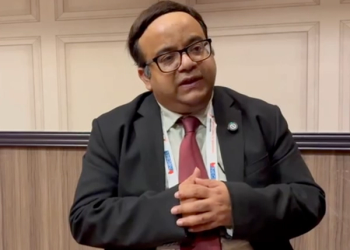
Dr Wesam Alwan
Applications Scientist – Molecular Spectroscopy
Agilent Technologies Inc.

Register free: http://www.spectroscopyonline.com/spec_w/liquid


Related to this article

A robotic arm in an automated agricultural setting, carefully processing a conveyer belt with tomatoes and leafy greens for food production. | Image Credit: © Donnangelo - stock.adobe.com
Croatian researchers outline how optical emission spectroscopy (OES) can track reactive species and plasma parameters in real time, giving processors a path to move cold plasma treatments from the laboratory to production lines.
Spectroscopy Top 10 DOI Articles of the Month (October 2026)
The following articles are the most accessed digital object identifier (DOI) manuscripts for Spectroscopy and LCGC International during the month of October 2026. Nine articles are individually ranked here by DOI page views; the seventh-highest entry (99 views) was recorded against the bare LCGC North America journal-level DOI rather than an individual article and is therefore not attributable to a single manuscript.
Mapping Molecular Mobility Pixel by Pixel
Garth Simpson of Purdue University explains how patterned photobleaching and spatial Fourier transforms can turn a single-point measurement into a diffusion coefficient at every pixel in the field of view.
Optical and Electronic Instrument Components,  ©  ridwan -chronicles-stock.adobe.com
The updated and expanded 2026 edition of Spectroscopy's Instrument Components Terminology Guide defines the sources, detectors, optical and dispersive elements, sampling hardware, physical constants, and unit conversions used across UV-vis, NIR, IR, Raman, X-ray, and atomic spectroscopic instrumentation, with new terms reflecting component developments reported between 2022 and 2026.