|Webcasts|July 21, 2022

Allowing You to do More with Less: The TRS100 Transmission Raman System

Author(s)Agilent

Thursday, ​​​​July 21st, 2022 at 11am EDT|8am PDT|4pm BST|5pm CEST Learn about the use of molecular spectroscopy techniques – transmission Raman spectroscopy (TRS) and laser direct infrared (LDIR) – for solid-state analysis in pharmaceutical formulation development.

Register free: https://www.spectroscopyonline.com/spec_w/trs100

Event Overview:

The Agilent TRS100 Raman system is ideal for fast assay of tablets, capsules, and other dosage forms. Transmission Raman technology from Agilent enables simple method-development and deployment in QC applications. It is easy to implement in analytical laboratories and production areas, and has regulatory approvals for content uniformity (CU), assay, and identification (ID) applications

Key Learning Objectives:

  • How TRS100 can improve the operational efficiency of solid dose analysis in the QC Lab
  • TRS workflows for quantitative tablet and capsule analysis
  • TRS revolutionizes content uniformity testing that avoid all sample preparation, achieving results in less than 15 minutes.
  • TRS can be used for R&D formulation development and crystallinity application with low ~1%w/w LOD
  • Key value drivers for implementation of spectroscopy, cost saving resource saving and sustainability drivers can be achieved with this technology.

Who Should Attend:

  • Pharma QC scientists, laboratory managers
  • Technology Innovators
  • Manufacturing QC Scientists
  • Manufacturers of solid oral dose forms
  • R&D of solid oral dose formulations

Speakers

Julia Griffen
Transmission Raman Product Manager
Agilent Technologies, Inc.

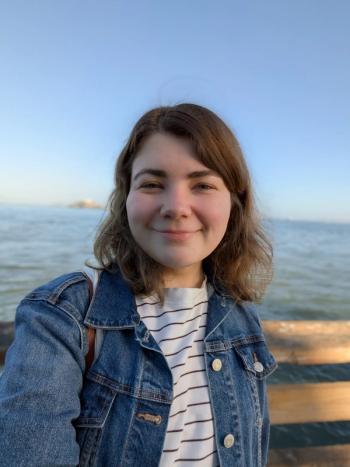
Julia Griffen (PhD in Chemistry, University of Bath) is currently the Product manager for the Agilent’s Transmission Raman product. Julia has worked in the field of Raman Spectroscopy for over 8 years where she started her career as an applications scientist for Cobalt light Systems. In this time Julia has built an excellent knowledge of the technology, published peer reviewed articles, and considered and expert of the technology.

Register free: https://www.spectroscopyonline.com/spec_w/trs100


Related to this article

Highlights from What’s Nu October 2026
In this Q&A, we recap the October edition of “What’s Nu,” which covered topics such as how novel spectroscopic and analytical methods are transforming environmental monitoring, medical treatment, and accessibility in scientific research.
Education distance learning, e-learning, and online learning are all types of personal development. | Image Credit: © ipuwadol - stock.adobe.com
In this segment of our SciX interview with Kevin Wilkinson, a professor of environmental chemistry at the Université de Montréal, discusses extending lead isotope work to greater distances and explains why graduate students need adaptability, critical judgment, and coding skills more than expertise in any single instrument.
Atoms Don't Lie–The Remaking of Atomic Spectroscopy, © Hallie -chronicles-stock.adobe.com
Atomic spectroscopy has quietly gone from counting elements in bulk to counting single nanoparticles, imaging tissue at the micrometer scale, and reading Martian rocks from several meters away. The instruments got smaller, the software got smarter, and the questions they can now answer got a lot more interesting.