Modern paints and varnishes are complex mixtures and the optimization of the material properties is an important task. One of the most essential variables is the curing which should in most cases take place in a reasonably short time span that can range from a fraction of a second to many days. It is difficult to evaluate the degree of the curing and its completeness by visual inspection. Therefore, an unbiased and reliable quantitative analysis is needed in quality control but also in R&D to optimize the varnish or the curing method respectively.
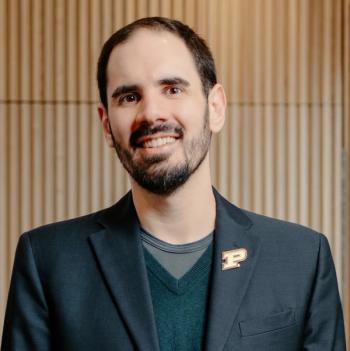
In the second part of our interview with Brandon Boor of Purdue University, he discusses how his team controls experimental variables during cleaning experiments in order to obtain interpretable data.
An upcoming interview with Ji-Xin Cheng, a Theodore Moustakas Distinguished Professor in Photonics and Optoelectronics at Boston University, will highlight his ongoing work in coherent Raman scattering microscopy.
The bulky bench-top NIR spectrometer is quietly being dismantled and rebuilt as a wafer-scale photonic chip, a self-calibrating algorithm, and a sensor small enough to ride in a shirt pocket. What once demanded a grating, a moving mirror, and a climate-controlled lab now fits inside a handheld module, a bioreactor probe, or a drone payload, and it increasingly figures out what it is looking at on its own.
In the first part of a multi-part Q&A, Brandon Boor, the Dr. Margery E. Hoffman Associate Professor in the Lyles School of Civil and Construction Engineering at Purdue University, describes the instrumentation and methodology behind measuring nanoparticle size distributions at the nanocluster scale (1–3 nm) and outlines the technical challenges of acquiring reliable, real-time data at these dimensions.
Jurgen Popp, Thomas Mayerhofer, and colleagues at Leibniz IPHT and Friedrich Schiller University Jena introduce the Personalized Optical Digital Twin (PODT), a Photonics21 contribution to Europe's Virtual Human Twin ecosystem that connects molecular photonics—Raman blood analysis, coherent Raman tissue imaging, and multimodal endomicroscopy—with longitudinal physiology and clinical data. Drawing on the published multicenter INTELLIGENCE trials, the authors argue that technical feasibility and clinical utility must be evaluated separately as the field moves toward Europe's FP10 research agenda.