News|Videos|August 25, 2025

From Raman to Chemometrics: Discover the Pioneers Who Revolutionized Modern Spectroscopy

Every discipline has its visionaries—the individuals whose discoveries, inventions, and persistence change the way we see the world. In spectroscopy, those giants gave us more than just theories or instruments. They gave us the very language we use to interpret light and translate it into knowledge about the universe, our materials, and even ourselves.

That’s what the Icons of Spectroscopy series is all about: shining a spotlight on the pioneers whose work laid the foundation for modern analytical science. Their stories aren’t just history lessons—they are reminders of how curiosity, persistence, and bold thinking shape entire fields.

Take C.V. Raman, who in 1928 identified a “new kind of radiation” while studying scattered light. The discovery of the Raman effect provided experimental proof for quantum theory and earned him the Nobel Prize. Or Albert Michelson, whose interferometer didn’t just measure light with unprecedented accuracy—it set the stage for modern FT-IR spectroscopy.

Equally vital is Clara Craver, a trailblazer who built the essential IR spectral libraries that scientists still rely on today. Her work proved that groundbreaking science and entrepreneurial drive could go hand in hand. And then there is Bruce Kowalski, who recognized that the explosion of data in spectroscopy required a new approach. By defining and advancing chemometrics, he helped turn raw numbers into meaningful chemical insight, opening doors for generations of researchers.

Individually, their contributions were transformative. Together, they created a progression that defines our field today: from precision measurement to quantum discovery, from trusted reference libraries to the algorithms that power modern data analysis. This is the direct lineage of the analytical toolkit we all use.

Understanding where spectroscopy is headed means honoring the path it has taken. The Icons of Spectroscopy remind us that progress is never the work of one mind alone—it is a continuum of brilliance, passed from one generation to the next.

Explore the full series and dive deeper into the stories of these remarkable figures here.


Related to this article

2026 SciX Conference Summary ©   Bos Amico -chronicles-stock.adobe.com
SciX 2026, the annual conference presented by the Federation of Analytical Chemistry and Spectroscopy Societies (FACSS), ran October 4–9, 2026, at the Nugget Casino Resort in Sparks, Nevada. The program spanned atomic and molecular spectroscopy, mass spectrometry, chemometrics, and bioanalysis. This report follows the meeting day by day, from Monday's clinical Raman plenaries to Friday's closing talks, drawing on the online program and Spectroscopy coverage of award winners, highlighting efforts to move Raman, SERS, LIBS, and single-particle ICP-MS toward clinical, environmental, and field use.
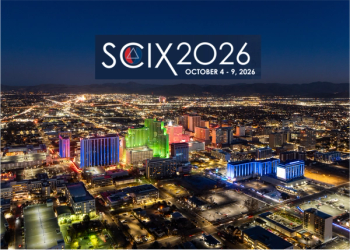
Sparks near Reno Nevada – Site of 2026 SciX Conference ©   DTM Media  -chronicles-stock.adobe.com
Wednesday's program at SciX 2026 kept returning to one question: can spectroscopy perform outside the controlled laboratory? Speakers took surface-enhanced Raman scattering (SERS), laser-induced breakdown spectroscopy (LIBS), mid-infrared photonics, chemometrics, and fluorescence excitation–emission matrix (EEM) spectroscopy into clinics, food plants, reactor coolant loops, brine fields, and drinking water supplies.
2026 SciX Conference Innovation ©   Dilok -chronicles-stock.adobe.com
Four finalists for the FACSS Innovation Award presented on the afternoon of October 8, 2026, at SciX 2026. Their work spanned drone-mounted laser-induced breakdown spectroscopy (LIBS), a touch-and-sound virtual reality system for blind scientists, polarized infrared (IR) imaging of shape memory polymers, and an ultrasound-activated plasmonic nanoplatform aimed at Parkinson’s disease.
NIR Spectroscopy of the Brain and Other Complex Analyses, ©   Navaporn  -chronicles-stock.adobe.com
Near-infrared spectroscopy has quietly stopped being a niche calibration exercise and started acting like an autonomous diagnostic partner, reading consciousness in an injured brain, steering a fermenter without a human hand, and hunting invisible plastic in a glass of water. The tool chemists once used to check moisture in grain is now fusing with artificial intelligence to make decisions no spectrometer could make alone.
FACSS 2026 Award Interviews ©  Erin -chronicles-stock.adobe.com
Eight FACSS award winners at SciX 2026, One LIBS trailblazer. Forty-eight questions. And not one of them is a softball. Award season in spectroscopy usually means polite applause, a plaque, and a photo. We're not completely interested only in the award sessions. The eight scientists honored at SciX 2026 in Sparks, Nevada, along with LIBS researcher Alessandro De Giacomo, are pushing Raman into operating rooms, flying LIBS on drones, reading chemistry off Mars, and tracing toxic metals downwind of industrial sites. Their work makes big claims. In the coming days, Spectroscopy will sit down with eight of these researchers and ask whether those claims hold up. The interviews that follow won't just celebrate. They'll press on the gaps between simulation and experiment, between the lab bench and the clinic, and between a clever paper and an instrument someone will actually buy and use.