Revisiting Spectroscopy’s State of the Industry poll published last year indicates the direction the field is going, and how spectroscopists can succeed in a competitive job market.
Revisiting Spectroscopy’s State of the Industry poll published last year indicates the direction the field is going, and how spectroscopists can succeed in a competitive job market.
A heartfelt farewell reflecting on the meaningful work, community, and accomplishments achieved during my time at Spectroscopy.
Spectroscopy is rapidly evolving, and professionals who build expertise in AI-driven analytics, automation, and high-demand sectors like pharma, biotech, and materials science will be best positioned to advance their careers despite industry-wide talent and budget challenges.
Damodaran Krishnan Achary explains how experimental NMR and computational chemistry work together to reveal the structure, dynamics, and reaction mechanisms of complex systems like ionic liquids.
Damodaran Krishnan Achary of University of Pittsburgh highlights how modern NMR education is shifting toward real-world samples and interdisciplinary applications, reflecting the needs of industry and materials science researchers.
The University of Pittsburgh professor discusses how diffusion, relaxation, multinuclear, and ultra-high-resolution NMR experiments can be strategically applied to probe structure, dynamics, and interactions in complex chemical systems.
Damodaran Krishnan Achary discusses how advanced NMR techniques reveal the unique structure, cation–anion interactions, and dynamic behavior of ionic liquids, providing insights that other analytical methods cannot capture.
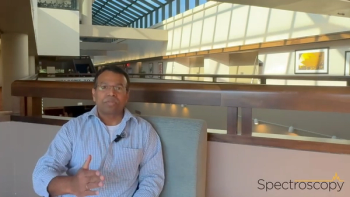
Damodaran Krishnan Achary discusses how modern NMR spectroscopy enables interdisciplinary research, from biomolecular studies to solid-state materials, and emphasizes the importance of staying current with advanced techniques and experimental strategies.

AlphaFold and similar tools don’t replace NMR—they amplify its power, freeing it to reveal the dynamic “dance” of molecules that static structures alone can never show.
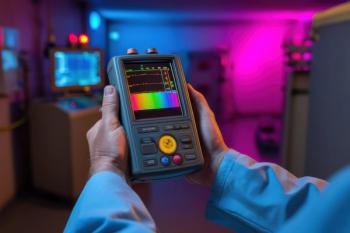
At the Eastern Analytical Symposium, Adam Hopkins of Metrohm highlighted how modern spectroscopy must balance precision with usability, showing that instruments optimized for real-world workflows often succeed more through practicality than perfection.
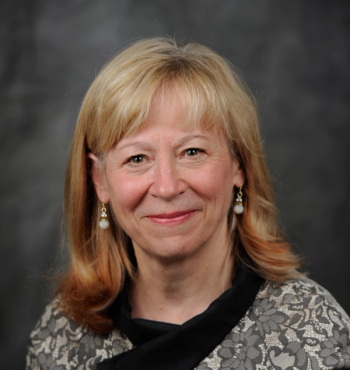
Geraldine L. Richmond, Presidential Chair in Science at the University of Oregon, has been awarded the 2025 NYSAS Gold Medal for her pioneering research on molecular interactions at liquid interfaces.
At the Eastern Analytical Symposium, Zachary Rhoden of Penn State shared practical strategies for training the next generation of analytical chemists through hands-on labs, small-scale experiments, model-building, and peer mentorship.
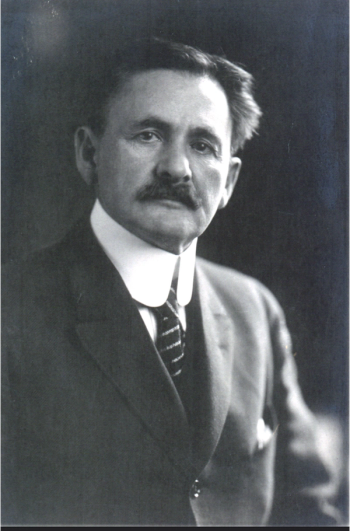
This video in the Icons of Spectroscopy series highlights the life and scientific achievements of Albert A. Michelson, the first American Nobel Laureate in the sciences. It traces his journey from his early years in the American West and his education at the U.S. Naval Academy to his groundbreaking experiments measuring the speed of light. We explore his invention of the Michelson interferometer, its role in the famous Michelson–Morley experiment, and its lasting influence on modern optical and spectroscopic methods, including astronomy.
Leading experts from Covalent Metrology, PerkinElmer, IAS, and Linde identify the top efficiency and purity challenges facing semiconductor manufacturers and reveal how advances in spectroscopy and automation are reshaping fabrication, contamination control, and process precision across the industry.
Elemental analysis using ICP-OES and ICP-MS is essential across the lithium-ion battery lifecycle—ensuring safety, performance, traceability, and sustainable recycling from mining to manufacturing and end-of-life recovery.
In this interview segment, Prashant K. Jain, a G. L. Clark Professor of Physical Chemistry at the University of Illinois Urbana-Champaign (UIUC), recaps his award plenary talk that he delivered at the SciX Conference this year.
Analytica USA, debuting September 10–12 in Columbus, Ohio, combines a trade exhibition with a scientific conference for analytical science.
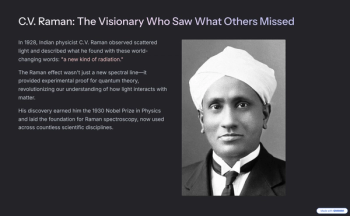
The Icons of Spectroscopy series shines a spotlight on the pioneers whose work laid the foundation for modern analytical science.
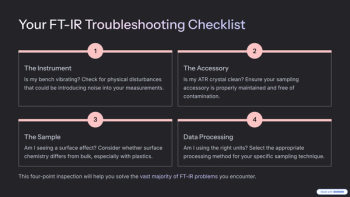
Learn how to troubleshoot FT-IR spectroscopy. From noisy spectra to ATR errors, discover four common FT-IR problems and simple fixes.
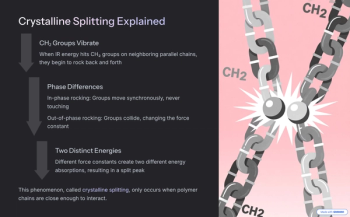
Why polyethylene’s IR spectrum splits—unveiling crystallinity, side chains, and polymer structure in HDPE, LDPE, and LLDPE.

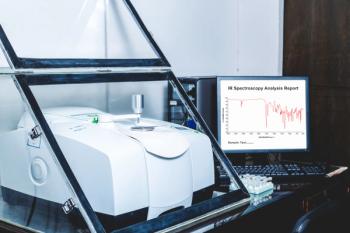
Showcase spectroscopy products that are advancing the future of analytical chemistry.
Growing U.S.-based drug manufacturing is creating new demands—and opportunities—for analytical chemists.
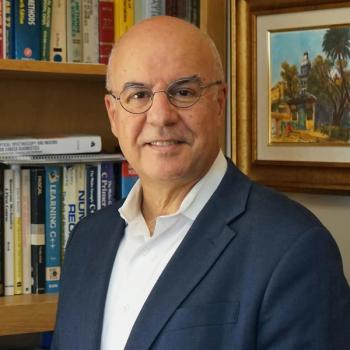
Noureddine Melikechi, dean of the Kennedy College of Sciences and professor at the University of Massachusetts Lowell, shares his work on the early detection of diseases like epithelial ovarian cancer and Alzheimer’s.
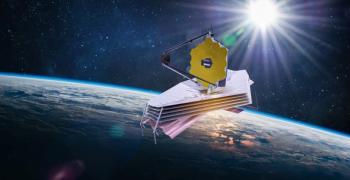
Macarena Garcia Marin, an astrophysicist and instrument scientist for the European Space Agency, highlights the role spectroscopy techniques have played in the pivotal research done on the James Webb Telescope since its launch in 2021.
Noureddine Melikechi, dean of the Kennedy College of Sciences at the University of Massachusetts Lowell, discusses his work analyzing spectroscopic data collected by the Chemistry Camera (ChemCam) aboard NASA’s Curiosity Rover.
Spectroscopy sat down with Gabi Wenzel, SAO visiting scientist at the Center for Astrophysics, to discuss how spectroscopy is being used to explore the molecular universe.
Gabi Wenzel, visiting scientist at the Center for Astrophysics, reflects on the interdisciplinary nature of astrochemistry and emphasizes the importance of maintaining openness in collaborative, cross-disciplinary work.
In this interview, Gabi Wenzel, SAO visiting scientist at the Center for Astrophysics, explores how high-resolution cavity-enhanced Fourier Transform microwave (FTMW) spectroscopy advances her research.
January 18th 2024
May 2nd 2025
October 28th 2024