
|Articles|July 1, 2004

Spectroscopy

  • Spectroscopy-07-01-2004

FT-IR Spectroscopy: An Advanced Tool for Studying Biomedical Problems (PDF)

The authors describe several applications of FT-IR spectroscopy in the biomedical sciences, including characterization of healthy and neoplastic human skin samples affected by two kinds of cancers, and examination of liver damage and regeneration caused by carbon tetrachloride.

Related to this article

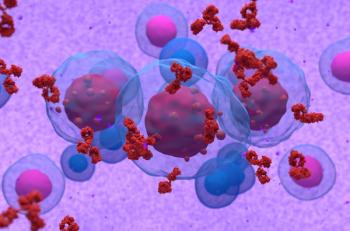
Update: AI and Machine Learning for Spectral Analysis. ©   Mehbubakhatun-chronicles-stock.adobe.com
Artificial intelligence (AI) has moved from a supporting role in molecular spectroscopy to the center of how spectra are interpreted. Between 2023 and 2026, machine learning models began proposing full molecular structures from routine NMR spectra, learning chemistry from millions of unlabeled mass spectra, predicting UV–vis absorption from structure alone, and steering workflows in autonomous laboratories. This review covers those advances, the push for explainable models, and what still limits routine adoption.