|Articles|April 30, 2021

greateyes Vacuum CCD Cameras

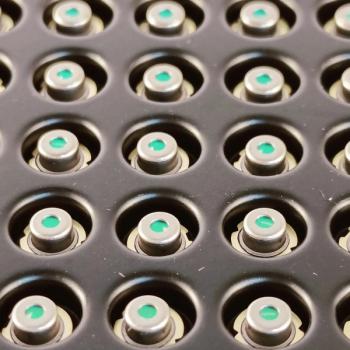
The ELSE and ALEX CCD cameras by greateyes integrate cutting-edge low-noise electronics and ultra-deep cooling technology within a compact design and vacuum compatibility.

Both have multiple readout speeds supporting pixel rates from 50 kHz up to 5 MHz and true 18-bit AD conversion that allows users to exploit the full dynamic range of the CCD sensor for highest performance and SNR. The ELSE supports ultraviolet, visible spectroscopy, and near infrared applications while the ALEX is for applications in the vacuum ultraviolet, extreme ultraviolet, and X-ray range up to 20 keV. Choose from spectral sensitivities and flange types to find the best solution for your X-ray imaging or spectroscopic application.

Axiom Optics
Boston, MA
www.axiomoptics.com


Related to this article

Brandon E. Boor is the Dr. Margery E. Hoffman Associate Professor in the Lyles School of Civil and Construction Engineering at Purdue University. | Photo Credit: © Brandon Boor.
In the second part of our interview with Brandon Boor of Purdue University, he discusses how his team controls experimental variables during cleaning experiments in order to obtain interpretable data.
Scientist With Portable Spectrometer in Natural Field Setting ©  By Tika -chronicles-stock.adobe.com
The bulky bench-top NIR spectrometer is quietly being dismantled and rebuilt as a wafer-scale photonic chip, a self-calibrating algorithm, and a sensor small enough to ride in a shirt pocket. What once demanded a grating, a moving mirror, and a climate-controlled lab now fits inside a handheld module, a bioreactor probe, or a drone payload, and it increasingly figures out what it is looking at on its own.
Sizing Up the Nanoscale: Measuring Nanocluster Aerosol in Indoor Air
In the first part of a multi-part Q&A, Brandon Boor, the Dr. Margery E. Hoffman Associate Professor in the Lyles School of Civil and Construction Engineering at Purdue University, describes the instrumentation and methodology behind measuring nanoparticle size distributions at the nanocluster scale (1–3 nm) and outlines the technical challenges of acquiring reliable, real-time data at these dimensions.