SPEC PerkinElmer 11.10
|Articles|June 2, 2004

Spectroscopy Supplements

  • Special Issues-06-02-2004
  • Volume 0
  • Issue 0

How Using Raman Spectroscopy and SIMPLISMA Can Accelerate the Study of Polymorphs: A Case Study Using Carbamazepine (PDF)

The authors show how a multivariate curve resolution algorithm, called SIMPLe-to-use Interactive Self-modeling Mixture Analysis (SIMPLISMA), can facilitate the quantitative and qualitative analysis of difficult samples, and apply the algorithm to a technically challenging Raman spectra series for carbamazepine polymorphs.


Related to this article

Spectroscopy Top 10 DOI Articles of the Month (September 2026)
The following articles are the most accessed digital object identifier (DOI) manuscripts for Spectroscopy and LCGC International during the month of September 2026. Nine articles are individually ranked here by DOI page views; the third-highest entry (186 views) was recorded against the bare journal-level DOI rather than an individual article and is therefore not attributable to a single manuscript.
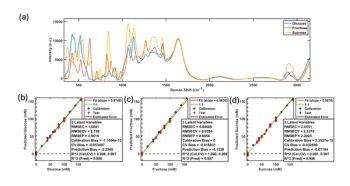
Monitoring Sugar Consumption and Ethanol Production During Yeast Fermentation Using a Raman Plate Reader and Multivariate Analysis
This column shows that a Raman plate reader paired with partial least squares regression can simultaneously quantify glucose, fructose, sucrose, and ethanol in yeast fermentation samples, using turbidity-matched calibration standards to correct for yeast-induced turbidity, and offers a rapid, label-free, high-throughput method for tracking sugar consumption and ethanol production in strain screening, media optimization, and process development.
Healthcare administrator reviewing an insurance policy schedule with a stethoscope on a clipboard, health insurance coverage, medical underwriting, prior authorization, and patient claims processing. | Image Credit: Joi_studio - stock.adobe.com
In a SciX interview, Marc Porter covered a lot of ground, from a student-driven pivot into immunoassays to a baseball analogy for Stokes and anti-Stokes scattering, and shares the open questions he is still chasing.
Highlights from What’s Nu October 2026
In this Q&A, we recap the October edition of “What’s Nu,” which covered topics such as how novel spectroscopic and analytical methods are transforming environmental monitoring, medical treatment, and accessibility in scientific research.
Atoms Don't Lie–The Remaking of Atomic Spectroscopy, © Hallie -chronicles-stock.adobe.com
Atomic spectroscopy has quietly gone from counting elements in bulk to counting single nanoparticles, imaging tissue at the micrometer scale, and reading Martian rocks from several meters away. The instruments got smaller, the software got smarter, and the questions they can now answer got a lot more interesting.