News|Videos|February 6, 2026
Kelly Elkins and Jaden Force Discuss the State of Forensics
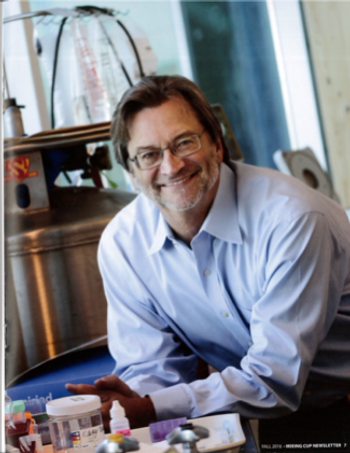
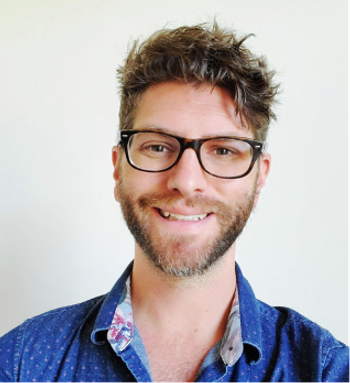
In a recent interview, we sat down with Kelly Elkins, a Professor of Chemistry at Towson University and Jaden Force, a Graduate Research Assistant at Towson University, to talk about the state of forensics and how they apply spectroscopic techniques in their research.
Advertisement
Advertisement
The American Academy of Forensic Sciences (AAFS) Conference is an annual professional event that brings together researchers, industry professionals, and instrument vendors under one roof to talk about the latest trends and advancements in forensic science. This year, AAFS will be taking place in New Orleans, Louisiana, from February 9–14, 2026 (1).

Related to this article

At SciX, Jay Kitt describes the experiment he ran on his own that launched his cytochrome c research, and explains why putting a number on peptide–lipid interactions matters.

Jürgen Popp explains how head and neck surgeons in Jena use a Raman probe to locate tumor borders, why the technique could replace frozen section biopsies, and why optical tools must adapt to clinical workflows rather than the other way around.

At SciX, Marc Porter explains how a Thanksgiving batting lesson led him to compare a bat meeting a ball to light scattering off a molecule, and how his group is using simulations to test whether the analogy holds.

Alessandro De Giacomo argues that grounding students in scientific fundamentals, rather than rushing them toward applications, is what makes breakthrough ideas possible.

In this SciX interview segment, Siddhartha Das explains how his group’s simulations revealed a nanochannel scenario that produces energy and boosts flow at the same time. This overturns the classical electroviscous trade-off without breaking the laws of thermodynamics.

At SciX, Juergen Popp explains why a new infection test must fit hospital workflows, outperform the gold standard, and cost about a euro or less per test. He also describes a host-response test that could change how emergency departments treat suspected sepsis.

Jay Kitt of the University of Utah explains that his group’s platform for quantitative Raman measurements inside chromatographic particles didn’t come from a search for signal enhancement. It grew out of a decade of chromatography and biochemistry research.
Advertisement
Advertisement