News|Videos|February 3, 2026

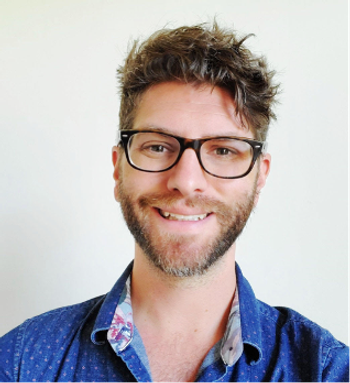
Tom Spudich Discusses the State of Forensic Analysis

Author(s)Will Wetzel
Fact checked by: John Chasse

Discover insights from Tom Spudich on forensic science advancements and challenges as AAFS 2026 approaches in New Orleans.

Forensic science is important because it uses scientific methods to uncover objective evidence that helps solve crimes and identify perpetrators. By ensuring evidence is analyzed accurately and fairly, it supports the justice system in protecting the innocent and holding the guilty accountable.

The advancement of this field requires both core scientific principles of forensic disciplines and expert practitioners who bring them to life. This year, the American Academy of Forensic Science (AAFS) Conference will explore these two pillars in New Orleans, Louisiana, as part of the conference’s main theme “Back to Basics: The Fundamentals of Forensic Science” (1).

The “Back to Basics” theme keeps the focus on what makes forensic science achieve significant breakthroughs. The renewed commitment to standards development, the neutral application of the scientific method, and allegiance to science over advocacy is essential for growing the field and propelling forensics to greater heights (1). Just as critical is the focus on practitioners, whose expertise, judgment, and well-being form the foundation of the justice system (1).

In a preview of the upcoming AAFS Conference, Spectroscopy magazine sat down with Tom Spudich, Director of the Forensic Sciences Master’s Program and Professor of Analytical Chemistry at Southern Illinois University Edwardsville.


Spudich’s research spans forensic and analytical science, with a strong emphasis on developing faster, more cost-effective methods and instrumentation (2). His work includes collaborating with the Library of Congress to analyze metal content in historical paper to extend paper lifetimes and enable forensic source attribution (2). Additional projects involve using low-cost Raman spectroscopy for bacterial identification, advancing separation science methods for blood alcohol analysis, and exploring fiber-optic detection systems as forensic analytical sensors (2).

In this video, we ask Spudich about the state of the industry, including the challenges forensic analysts are facing, the spectroscopic tools that are being used in his own forensic research, and what he will be discussing at the upcoming conference.

Spudich’s insights into the state of forensic science help set the stage for what is to come in New Orleans.

Join us as we explore the state of forensic science heading into AAFS 2026 in New Orleans, Louisiana.

References

  1. American Academy of Forensic Sciences, President's Spotlight—Back to Basics. AAFS.org. Available at: https://www.aafs.org/article/presidents-spotlight-back-basics (accessed 2026-01-23).
  2. Southern Illinois University Edwardsville, Tom Spudich. SIUE.edu. Available at: https://www.siue.edu/arts-and-sciences/chemistry/faculty-staff/spudich.shtml (accessed 2026-01-23).

Newsletter

Get essential updates on the latest spectroscopy technologies, regulatory standards, and best practices—subscribe today to Spectroscopy.