SPEC PerkinElmer 10.13
Feature|Articles|September 8, 2023

Previewing the Cannabis Science Conferece: Autumn Phillips Discusses Cannabis Testing for Heavy Metals with ICP-OES

One of the Cannabis Science Conference (CSC) Fall speakers is Autumn Phillips, who works as a Research Chemist and Chemical Hygiene Officer at Inorganic Ventures. She shares more about her background in cannabis science in this conference preview.

* This article was first published on our sister brand Cannabis Science and Technology website as a preview to the Cannabis Science Conference (CSC) Fall 2023. Read more about CSC 2023 here *

Cannabis Science Conference (CSC) Fall will be taking place in Providence, Rhode Island September 20–22nd. CSC Fall features several exciting tracks: analytical science, cultivation, medical cannabis, and psychedelics. With expert speakers coming in from around the country, we thought it was a great opportunity to introduce some of them and get a sneak peek into their presentations. Let’s meet Autumn Phillips, a Research Chemist and Chemical Hygiene Officer at Inorganic Ventures. She received two bachelor’s degrees from Virginia Tech in Chemistry and Biochemistry in 2016. Autumn has worked at Inorganic Ventures for seven years and her experience includes techniques in ICP-OES, ICP-MS, and ion chromatography analysis, as well as complex sample digestions and purifications. Autumn will be co-presenting with Dr. Sergei Leikin in the analytical track at the upcoming Cannabis Science Conference Fall with a talk titled “Analysis of Cannabis Products for Arsenic, Cadmium, Mercury, and Lead by ICP-OES: Meeting the DL Challenge” which is taking place September 21st in Providence, Rhode Island. Here, she shares a little about her science background and how he got involved cannabis testing as well as a preview of what to expect from her exciting talk!

Can you tell us about your background and how you got involved with cannabis testing?

Autumn Phillips: Yes, I'm currently a research chemist at Inorganic Ventures, which is a certified reference materials provider in Christiansburg, Virginia. I started out with the company right after I graduated from Virginia Tech in 2016. I received a dual bachelor's degree in chemistry and biochemistry and then I started here in August right after my graduation that spring. My first four years were spent in the manufacturing department where I was performing different reactions and purifications. Our main goal is to achieve the highest quality and highest purity products, so that was what I was working on my first four years here. After that I spent about a year as a technical support chemist. In that role, I was helping customers with troubleshooting issues in their labs and improving their processes—things of that nature. Then for about two years now I've been in the R&D department. We work on a lot of projects for developing new products and different method developments as well as improving our in-house processes.

I first got involved with cannabis testing when Dr. Sergei Leikin from Texas Scientific Products reached out to us about partnering on developing a method for ICP-OES testing of cannabis. We were looking for heavy metals in cannabis products and I was really excited to get to partner with them on that. That was kind of my first introduction to cannabis testing and I've definitely learned a lot along the way, so I'm excited to see where that takes me.

What are you most looking forward to at the Cannabis Science Conference Fall 2023?

Phillips: I'm really looking forward to just meeting and talking with other scientists and professionals in this industry. I've been to a couple of the Cannabis Science Conferences the last couple of years and I've always learned a lot from hearing such a diversity of different voices and different professions. I'm really looking forward to just learning from everyone.

Can you give us a preview of what you’ll be discussing in your talk?

Phillips: Yes, we'll be going over the method that we developed for analyzing heavy metals and in cannabis products using ICP-OES instrumentation. We used a couple of different ICP-OES instruments, so we’ll discuss some of the different challenges of using one versus the other and just general challenges that we ran into that we can help other analysts overcome when they undergo their analysis.

Stay tuned for more with Autumn Phillips with our live video conference coverage taking place September 21-22, 2023 or join us in person to hear Autumn and Sergei’s presentation and many others at the Cannabis Science Conference Fall in Providence, RI. Register today with code SUMMER40 to save 40%: https://bit.ly/3pIBuJp!


Related to this article

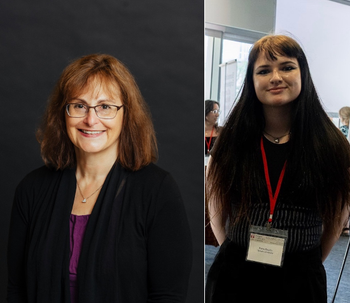
Nancy Pleshko (left) is a Laura H. Carnell Professor Emerita in Temple University's Department of Bioengineering. Petra A. Baylin (right) is a research assistant in the Tissue Imaging and Spectroscopy Lab at Temple University. Photo Credits: © Nancy Pleshko and Petra Baylin
As part of our coverage of the SciX 2026 Conference, Nancy Pleshko and Petra Baylin of Temple University sat down with Spectroscopy to talk about their recent study, explaining how Fourier transform infrared (FT-IR) imaging of ultra-high weight molecular polyethylene (UHMWPE) implants permits oxidation evaluation throughout the sample yielding insight into failure.
NIR Spectroscopy of the Brain and Other Complex Analyses, ©   Navaporn  -chronicles-stock.adobe.com
Near-infrared spectroscopy has quietly stopped being a niche calibration exercise and started acting like an autonomous diagnostic partner, reading consciousness in an injured brain, steering a fermenter without a human hand, and hunting invisible plastic in a glass of water. The tool chemists once used to check moisture in grain is now fusing with artificial intelligence to make decisions no spectrometer could make alone.
FACSS 2026 Award Interviews ©  Erin -chronicles-stock.adobe.com
Eight FACSS award winners at SciX 2026, One LIBS trailblazer. Forty-eight questions. And not one of them is a softball. Award season in spectroscopy usually means polite applause, a plaque, and a photo. We're not completely interested only in the award sessions. The eight scientists honored at SciX 2026 in Sparks, Nevada, along with LIBS researcher Alessandro De Giacomo, are pushing Raman into operating rooms, flying LIBS on drones, reading chemistry off Mars, and tracing toxic metals downwind of industrial sites. Their work makes big claims. In the coming days, Spectroscopy will sit down with eight of these researchers and ask whether those claims hold up. The interviews that follow won't just celebrate. They'll press on the gaps between simulation and experiment, between the lab bench and the clinic, and between a clever paper and an instrument someone will actually buy and use.
Spectral Frontiers: Past the Diffraction Limit (FT-IR Spectroscopy)
Fourier-transform infrared (FT-IR) spectroscopy, long the workhorse of molecular fingerprinting, is being reinvented by photothermal detection schemes and quantum cascade laser (QCL) sources that push spatial resolution and analysis speed far beyond classical dispersive and interferometric limits. New instrumentation such as optical photothermal infrared (O-PTIR) microscopy and laser direct infrared (LDIR) chemical imaging is enabling sub-micron, label-free chemical mapping of biological, environmental, and pharmaceutical samples. This article reviews the latest FT-IR-adjacent technologies, recent patents, and research driving the field, featuring perspectives from the scientists and instrument developers advancing the technique.