Register Now: Advances in Spectroscopy for Pharma and Biopharmaceutical Analysis Symposium
News|Articles|April 30, 2026

Metrohm USA Launches Dual-Laser and Multi-Excitation Raman Systems for Lab and QC Applications

Listen
0:00 / 0:00

Key Takeaways

  • Configurable excitation on i‑Raman NxG (532/785/1064 nm) enables laboratories to tailor performance to matrix-driven fluorescence risk and signal requirements rather than redesigning workflows around fixed hardware.
  • Dual-path architecture in i‑Raman Duo enables single-scan access to fingerprint and high-wavenumber windows, supporting applications such as moisture assessment and polymer/formulation differentiation without reconfiguration.
SHOW MORE

Metrohm USA has introduced two new laboratory Raman spectrometers—the i-Raman NxG and i-Raman Duo—targeting researchers and quality control teams who require more detailed chemical characterization than standard identification systems provide.

In a recent press release, Metrohm USA, a scientific instrument manufacturer based in Riverview, Florida, announced the release of two new, Raman spectroscopy-based products for its customers. Both these products, the i-Raman NxG and the i-Raman Duo, are designed to to be used across research, development, and routine quality workflows in industries including pharmaceuticals, polymers, and materials science.1,2

What is the i-Raman NxG and what is it designed to do?

The i-Raman NxG is a single-laser system offered in three excitation wavelengths, which are 532, 785, and 1064 nm.1 This assortment of excitation wavelengths is designed to offer analytical laboratories the ability to select a configuration suited to their sample types under analysis.

This manufacturing decision (that is, the choice of wavelength) reflects a common practical consideration that we observe in Raman spectroscopy method development: shorter wavelengths offer higher sensitivity, but they can induce fluorescence in many samples, while longer wavelengths reduce fluorescence at the cost of signal intensity.1 The NxG is designed to address this tradeoff by letting teams match the instrument to their materials rather than adapting their workflows to a fixed setup.1 In addition, the system includes a fiber-optic sampling interface intended to accommodate varied sample geometries.

What is the i-Raman Duo and what is it designed to do?

Meanwhile, when it comes to the i-Raman Duo, which is the second Raman-based instrument Metrohm announced, this system takes a different approach. By routing two laser paths through a single spectrometer, the i-Raman Duo is designed to capture both the fingerprint region and the high-wavenumber stretching region in a single scan.2 According to the company, this design eliminates the need to swap gratings or use an interferometer to access both spectral windows.2 The capability is relevant for applications where detecting moisture content, polymer structure changes, or formulation differences is critical because this information often requires multiple measurements or instrument configurations on conventional systems.2

Does both the i-Raman Duo and the i-Raman NxG run on SpecSuite?

Yes. Both instruments are designed to run on SpecSuite, which is Metrohm's updated software platform that supports data acquisition, method development, and validated routine analysis within a single environment. The unified platform is intended to reduce the need for retraining when methods move from exploratory research into regulated or production-scale use.

“Scientists need powerful, versatile tools that reveal chemical information clearly, even in complex samples," Ed Colihan, President and CEO of Metrohm USA, said in a press release. “With the i‑Raman NxG and Duo, researchers can probe their materials more deeply, monitor reactions with more confidence, and scale methods into routine use more easily, all within a unified software ecosystem.”

The two new systems sit alongside Metrohm's existing Raman lineup, which includes modular OEM components, the PTRam process development platform, and the 2060 Raman analyzer for inline process monitoring, which is a portfolio the company says is designed to carry methods from bench-scale research through to continuous manufacturing environments.

What does this announcement mean for Metrohm?

This announcement shows that Metrohm is continuing to develop new Raman instruments. As their portfolio in Raman spectroscopy expands, Metrohm is continuing to provide instrumentation for all types of manufacturing environments. This news comes after the company announced the launch of its new facility in Houston, Texas, positioning itself in a region that is growing, especially in the oil and gas, environmental testing, and petrochemical industries.3

References
  1. Metrohm, i-Raman NxG. Metrohm. Available at: https://www.metrohm.com/en_us/products/raman-spectroscopy/i-raman-nxg.html (accessed 2026-04-30).
  2. Metrohm, i-Raman Duo. Metrohm. Available at: (https://www.metrohm.com/en_us/products/2/9540/29540060.html (accessed 2026-04-30).
  3. Wetzel, W.; Spectroscopy Staff. Houston, We Don’t Have a Problem! Metrohm USA Opens New Facility in Space City. Spectroscopy. Available at: https://www.spectroscopyonline.com/view/houston-we-don-t-have-a-problem-metrohm-usa-opens-new-facility-in-space-city (accessed 2026-04-30).


Related to this article

Pittsburgh, Pennsylvania, USA. Beautiful Pittsburgh at twilight. | Image Credit: © checubus - stock.adobe.com
Organized by CPACT, the April 27 to 29 meeting at the Marriott Pittsburgh City Center will bring together scientists, engineers, and vendors across the process industries, with keynotes on PAT, Raman, and NIR applications and an abstract deadline of December 7, 2026.
Curated 2026 Evergreen Content from Spectroscopy. ©  Chanakarn -chronicles-stock.adobe.com
Spectroscopy's editors gather 143 evergreen articles from 2026, including tutorials, terminology guides, technique reviews, application surveys, peer-reviewed research and the magazine's long-running columns, and organize them by subject so readers can build lasting knowledge one topic at a time.
Monitoring Sugar Consumption and Ethanol Production During Yeast Fermentation Using a Raman Plate Reader and Multivariate Analysis
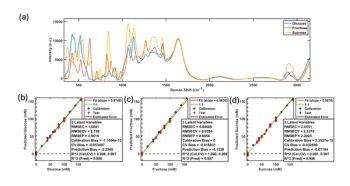
This column shows that a Raman plate reader paired with partial least squares regression can simultaneously quantify glucose, fructose, sucrose, and ethanol in yeast fermentation samples, using turbidity-matched calibration standards to correct for yeast-induced turbidity, and offers a rapid, label-free, high-throughput method for tracking sugar consumption and ethanol production in strain screening, media optimization, and process development.