SPEC PerkinElmer 11.10
|Articles|January 12, 2016

Nico Omenetto Wins 2016 Winter Conference Award in Plasma Spectrochemistry

Nicoló Omenetto, a professor of chemistry at the University of Florida, received the 2016 Winter Conference Award in Plasma Spectrochemistry today at the Winter Conference in Tucson, Arizona.

Nico Omenetto, right, receives the Winter Conference Award in Plasma Spectrochemistry from Lothar Rottman of Thermo Fisher Scientific, the award's sponsor.

Nicoló Omenetto, a professor of chemistry at the University of Florida, received the 2016 Winter Conference Award in Plasma Spectrochemistry today at the Winter Conference in Tucson, Arizona.

The award, judged by an international selection committee and sponsored by Thermo Fisher Scientific, recognizes achievements in conceptualization and development of novel instrumentation as well as the elucidation of fundamental events or processes involved in plasma spectrochemistry. The award also acknowledges the authorship of significant research papers or books that have had an influential role in new advancements as well as outstanding applications that open new fields of use for plasma spectrochemistry.

Omenetto’s work in spectrochemistry began in 1964 with his doctoral work at the University of Padova, Italy, and continued at the European Community Joint Research Centre at Ispra before he moved to the University of Florida. Omenetto’s research interests are the theory and applications of atomic and molecular spectroscopic analysis methods with particular emphasis on use of tunable lasers and development of techniques including atomic and molecular fluorescence, atomic ionization, photo-thermal, photo-fragmentation, and laser induced breakdown spectroscopy (LIBS). He has also investigated fundamental diagnostic studies in atom reservoirs such as flames and plasmas, improving the characterization of the interaction between the laser and the atomic and molecular systems. The focus of his recent research is the development of LIBS as a quantitative analytical method. His applications have focused on environmentally important topics.

In addition to having his contributions recognized by the scientific community, Omenetto received a $5000 prize, a certificate, and trophy. The first award was presented during the 2010 Winter Conference. Previous awardees include Gary M. Hieftje (2014), J. Sabine Becker (2012), and Ramon M. Barnes (2010).  



Related to this article

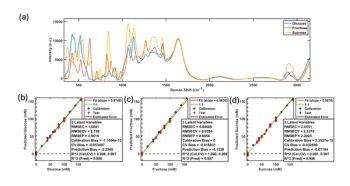
Monitoring Sugar Consumption and Ethanol Production During Yeast Fermentation Using a Raman Plate Reader and Multivariate Analysis
This column shows that a Raman plate reader paired with partial least squares regression can simultaneously quantify glucose, fructose, sucrose, and ethanol in yeast fermentation samples, using turbidity-matched calibration standards to correct for yeast-induced turbidity, and offers a rapid, label-free, high-throughput method for tracking sugar consumption and ethanol production in strain screening, media optimization, and process development.
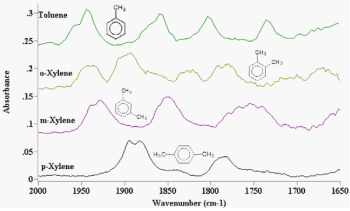
Highly Substituted Benzene Rings—The Rest of the Story II: Spectra
This column, the second installment on highly substituted benzene rings, shows that tri- and tetra-substituted substitution patterns can be distinguished by whether the ring bending peak is present and by the position of the in-phase aryl C-H wagging peak, which shifts according to how many adjacent hydrogens the ring carries.
Healthcare administrator reviewing an insurance policy schedule with a stethoscope on a clipboard, health insurance coverage, medical underwriting, prior authorization, and patient claims processing. | Image Credit: Joi_studio - stock.adobe.com
In a SciX interview, Marc Porter covered a lot of ground, from a student-driven pivot into immunoassays to a baseball analogy for Stokes and anti-Stokes scattering, and shares the open questions he is still chasing.
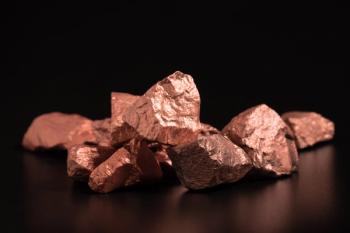
Ingots of pure copper or pink gold on a black background. | Image Credit: Phawat - stock.adobe.com
At SciX, Kevin Wilkinson of the Universite de Montreal explains how faster data acquisition and new software have cut analysis time and how a particle’s chemical composition can link arsenic-bearing emissions back to a copper refinery’s processes.
Spectral Frontiers: Seeing the Unseeable Microspectroscopy
Microspectroscopy, the marriage of spectroscopic chemical identification with microscopic spatial resolution, has advanced from Perkin-Elmer's first commercial infrared microspectrometer in 1953 to today's nanoscale AFM-IR probes, synchrotron-brightness infrared beamlines, and compact hyperspectral tissue imaging devices being developed for AI-assisted cancer detection.