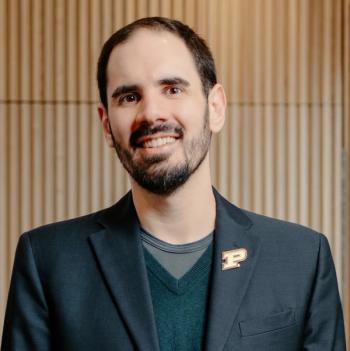
In the final part of our conversation with Brandon Boor of Purdue University, he explains the respiratory deposition model his team used to analyze indoor particle exposure.
Succeeding as an applications manager means multitasking, presenting, and learning new spectroscopies at a high level. Jennifer Ferguson explains.
How does someone succeed as an Applications Manager?
As part of our coverage of the Spring SciX Conference, we sat down with Jennifer “Jenny” Ferguson, an Applications Manager at Renishaw, who sat down with us for a wide-ranging interview, including shedding light on the latest advancements in lithium-ion battery analysis and what she does in her job at Renishaw.1,2
This “Pathways in Spectroscopy” clip builds off last week’s episode. In this clip, Ferguson discusses the technical and soft skills that are required to succeed in her role as an Applications Manager.
Spectroscopy: Could you provide some insight into the technical and soft skills that are generally required to serve in your position?
Jennifer “Jenny” Ferguson: There's a lot of different skills needed. I've mentioned a wide range of different things that we get involved in, which does mean that you're always developing your skills. We can't all be amazing at everything, but as long as you are willing to learn and have an enthusiasm for developing new skills, that's one of the most important things, obviously.
In terms from a technical point of view, a really strong knowledge of spectroscopy, Raman spectroscopy, and optics is really important or can be useful within this job. Then, you can understand how the impact of these different decisions that you're making when you're doing your experimental setup is going to have on your Raman data. Most of our team have studied Raman before they came here. Most of us have PhDs in Raman spectroscopy, but not everyone does. As I say, if you want to learn about these things, because there's a wide range of application areas, there's something that interests everyone.
And in terms of soft skills, you need quite good people skills, because we work a lot with people, where we do customer training, demonstrations, analysis of samples. And then presentation skills are really important. So being able to take sort of complex analytical data and present that back to people in a really meaningful way for them, that's really important as well. And then we also present a lot of conferences, such as SciX, Spring SciX, and many other conferences that are a little bit more application specific as well, so presentation skills are really important Multitasking is a big skill in this one as well, so that you can be working on a lot of different things at one time as well and not lose your mind a little bit. Doing all these different things, it makes the job really interesting, and definitely a fun one to have, that's for sure.