A recent conversation with Kevin Wilkinson, a professor of environmental chemistry at the Université de Montréal, sheds light on why no single signature can separate engineered nanoparticles from natural ones.
March 29, 2022, 1PM EST | 10 AM PST | 12 PM CST | 7 PM CET
Register Free:
Event Overview:
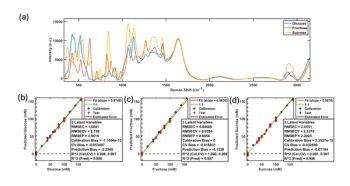
Raman spectroscopy is a powerful tool that delivers insights about reaction dynamics, blending and other processes. However, it is an under-utilized tool in industries like chemical, personal care, petrochem and even pharma, to a degree. Raman spectroscopy not only complements FTIR, which is used every day in labs around the world, but also provides similar qualitative and quantitative chemical information while having the advantage of being easier to use. Modern Raman instruments can be as simple to start up and interpret as FTIR systems and are easier to integrate into production or in situ experiments.
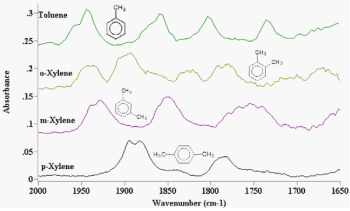
In this webinar, Dr. Adam J. Hopkins and Elena Hagemann will demonstrate the utility of Raman spectroscopy for both quantitative and qualitative applications. They will look at case studies for isomerization monitoring, carbon analysis and quantification of chemical systems. These studies will show how Raman spectroscopy has evolved from something that requires great effort and expense to something small, simple and cost-effective.
Key Learning Objectives:
Who Should Attend:
For any questions please contact Preranna Singh: psingh@mjhlifesciences.com
Speakers
Adam Hopkins
Spectroscopy Product Manager
Metrohm USA
Adam Hopkins is the Spectroscopy Product Manager at Metrohm USA. He has nearly 20 years of experience as a vibrational spectroscopist. He received his Ph.D. in chemistry from the University of Oregon where he studied nonlinear optical spectroscopy under Geraldine Richmond. Prior to joining Metrohm USA, Adam worked developing spectroscopic solutions for standoff and noncontact sensing applications using laser induced breakdown and Raman spectroscopy. Dr. Hopkins is a member of the American Chemical Society, the Society for Applied Spectroscopy, the Coblentz Society and SPIE. He is the author of 19 papers and proceedings and is the author of three patents.
Elena Hagemann
Applications Specialist Spectroscopy
Metrohm USA
Elena Hagemann is an Applications Specialist Spectroscopy at Metrohm USA in Riverview, Florida. She earned her master’s degree in Analytical and Bioanalytical Chemistry at the Applied University of Aalen, Germany, where she completed her studies with her Master thesis focused on Karl Fischer titration, NIR spectroscopy and multivariate data analysis. Elena joined the Metrohm Group in August 2013 and started with Metrohm USA in January of 2018, focusing on Raman and NIR spectroscopy. She performs internal as well as customer training.
Register Free: