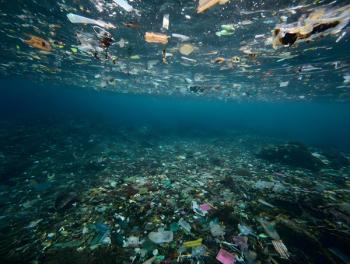
An upcoming talk at SciX 2026 Conference will describe a new multimodal platform using laser ablation inductively coupled plasma–mass spectrometry (LA-ICP-MS) elemental mapping that can detect nanoparticles and microplastics in biological tissue.
This first installment of Research Profiles in Spectroscopy Series features The University of California, Santa Barbara (UCSB) Petrochronology Research Group and its advances in laser ablation ICP-MS, isotope geochemistry, and petrochronology. Led by John Cottle, Andrew Kylander-Clark, and Morgan Adamson, the group has developed innovative spectroscopic methods that combine high-resolution isotopic dating with trace-element analysis to better understand petrochronology processes, including mountain building, crustal evolution, and complex geological processes.
Progress in science is rarely the result of singular, celebrated breakthroughs alone. More often, it is built steadily through the work of many—those whose innovations, methods, and quiet rigor have shaped the analytical tools and techniques we rely on today. In the fields of vibrational and atomic spectroscopy, generations of scientists have advanced our understanding of light interaction with matter through persistent refinement of theory, instrumentation, and applications.
This series, Research Profiles in Spectroscopy, honors those contributors whose work has left a lasting imprint on their respective disciplines. These are the scientists whose research, developments, and insights have improved the precision of our spectroscopic measurements, the reach of our technologies, and the clarity of our interpretations.
Each profile in this series focuses not on personal biography, but on scientific impact—detailing the techniques they developed, the problems they solved, and the influence they’ve had on modern spectroscopic practice. By recognizing their contributions, we hope to preserve their legacies and provide context for the ongoing revolution of spectroscopy.
In tracing these professional paths, Research Profiles in Spectroscopy aims not only to acknowledge past achievements but also to inspire a deeper appreciation for the collaborative and cumulative nature of scientific progress.
John Cottle: Dr. John Cottle, a Professor of Geology at the University of California Santa Barbara, is a leading expert in geochronology, geochemistry, and tectonics, focusing on how continental crust is formed and modified in regions like the Himalaya, Antarctica, and New Zealand. Cottle has pioneered several Laser Ablation-based ICP-MS geochronologic techniques and helped to found the field of petrochronology. His research uses these novel Laser Ablation methods to reconstruct the thermal and deformational histories of metamorphic and magmatic rocks. This provides crucial data on the rates and timescales of tectonic processes, such as mountain building, crustal deformation, the evolution of continental magmatic systems, and the formation of mineral deposits.
Andrew Kylander-Clark: Dr. Andrew Kylander-Clark is a Senior Development Engineer and director of the Laser Ablation Split-Stream (LASS) Facility in the Department of Earth Science at the University of California, Santa Barbara. His research focuses on isotopic geochemistry, geochronology, and metamorphic petrology, with particular emphasis on understanding the pressure-temperature-time evolution of ultrahigh-pressure terranes and advancing analytical methods for in-situ isotope analysis. Kylander-Clark has played a key role in developing and refining laser ablation split-stream (LASS) techniques that enable simultaneous collection of U-Pb geochronology and trace-element data, a method now widely adopted in isotope geochemistry laboratories worldwide. His research integrates high-precision isotopic measurements with field and petrologic observations to investigate the rates and mechanisms of subduction, metamorphism, and exhumation in collisional orogens.
Morgan Adamson: Morgan is a National Science Foundation Graduate Research Fellow and UCSB Regents Fellow in the Department of Earth Science at the University of California, Santa Barbara. Her PhD research interests are centered on developing novel laser ablation techniques for improved high-spatial-resolution analysis of minerals for geochemical and geochronological investigations. Morgan is currently optimizing a Time-Of-Flight ICP Mass Spectrometer for use in Earth Science research. She was awarded a 2026 International Atomic Spectrometry Student Award for her recent publication in Chemical Geology that explores laser-generated zircon particles and their impact on U–Pb geochronology, offering a new framework for understanding matrix effects and analytical bias in laser ablation mass spectrometry. Her interdisciplinary approach integrates material science, plasma physics, and geochemistry to improve the precision and accuracy of time- and spatially resolved measurements.
1. What fundamental scientific questions or challenges originally drove your research in spectroscopy?
As geologists, our research aims to decode the history, structure, and material behavior of Earth’s crust, particularly in regions like the Himalaya, Norway, North America, and New Zealand, settings where continental plates collide, the crust is thickened, and large mountain belts are produced. Understanding the timing, duration, and physical conditions of these processes is central to reconstructing how continents evolve through time. A key challenge in addressing these questions lies in quantifying the rates and sequences of deformation, metamorphism, and magmatism during orogenesis. To do this, we rely heavily on isotope geochronology—the precise measurement of the radioactive decay of elements such as U, Th, Rb, and Lu to their child products (Pb, Sr, Hf, respectively). These isotopic systems provide time constraints on when minerals crystallized, cooled, or recrystallized, allowing us to link ages directly to geologic processes. Spectroscopy, particularly laser ablation inductively coupled plasma mass spectrometry (LA-ICP-MS), plays a central role in this effort. This technique allows us to analyze isotopic and trace-element variations at the micron scale within single minerals, revealing complex histories of growth, diffusion, and metamorphic overprinting. The fundamental scientific challenge that initially drove our interest in spectroscopy was how to resolve these fine-scale isotopic and chemical variations accurately and reproducibly to reconstruct the tectonic development of mountain belts. Ultimately, the motivation was (and remains) to use spectroscopic tools not just for obtaining precise dates, but to extract meaningful temporal and chemical information from natural materials and tell a coherent story about the evolution of Earth’s crust through time.
2. How would you summarize your group’s most significant contribution to advancing spectroscopic science?
At UC Santa Barbara, our group has been at the forefront of developing and applying novel LA-ICP-MS techniques that have transformed how we extract and interpret geochronologic and geochemical information from minerals. We pioneered methods including single-shot laser ablation, which allows us to probe extremely small domains within individual crystals at 50-100nm spatial resolution, and the split-stream laser ablation split stream method, where the ablated material is simultaneously analyzed by two (or even three) different mass spectrometers. This approach enables us to measure isotopic ratios and trace-element compositions from the exact same ablation volume, eliminating spatial and analytical mismatches that previously limited precision and interpretability. These innovations played a significant role in establishing the field of petrochronology, which integrates mineral chemistry with isotopic dating to reconstruct the pressure–temperature–time–deformation history of rocks. Rather than treating dates as isolated time points, petrochronology allows us to place ages within the broader context of mineral growth, metamorphic reactions, and magmatic evolution.
Our work at UCSB has demonstrated how spectroscopic precision and spatial resolution can reveal the temporal evolution of complex geologic systems, from deciphering zircon and monazite growth during Himalayan metamorphism, to tracking magma assembly in the Sierra Nevada, to constraining the rates of ore deposit formation. These advances have not only improved the accuracy and efficiency of in situ geochronology but also redefined how we interpret isotopic data in the context of real geologic processes.
Our group’s most significant contribution has been to show that spectroscopy is not just a tool for measurement, but a means of connecting atomic-scale isotopic information to the evolution of entire mountain belts.
3. What key techniques, methodologies, or theoretical frameworks from your research have significantly advanced vibrational or atomic spectroscopy?
I feel like this question is somewhat answered above, but…
Our work has focused primarily on advancing atomic spectroscopy through innovations in laser ablation ICP-MS and its integration with petrological and geochronological frameworks. One of the most significant methodological advances has been the development and refinement of the Laser Ablation Split Stream method, where material from a single laser ablation event is divided between two mass spectrometers. Typically, this involves a multicollector ICP-MS for isotopic measurements (U/Pb dates, or Lu/Hf and Sm/Nd tracer ratios) and a quadrupole ICP-MS for U/Pb dates and/or trace-element analysis. This flexible configuration has dramatically improved both temporal resolution and geochemical context, allowing us to obtain isotopic ages and chemical fingerprints from the same microscale domain within a mineral.
From a theoretical standpoint, our research has emphasized the quantitative coupling of isotope systematics with mineral thermodynamics and diffusion kinetics. This integration provides a framework for interpreting spectroscopic data in terms of crystal-chemical processes, rather than simply as isotopic ratios. For example, by combining trace-element thermometry with U/Pb we can reconstruct not just when a mineral formed, but under what physical conditions and at what rate it evolved.
These developments have advanced atomic spectroscopy in two major ways: first, by improving analytical precision, accuracy, and spatial fidelity in isotope and trace-element measurements; and second, by embedding those measurements within a quantitative petrologic and thermodynamic framework.
4. Can you share a pivotal research challenge your group overcame, and the insight or innovation that made it possible?
One pivotal challenge our group faced was how to obtain robust geochronologic and geochemical data from highly complex, zoned minerals, especially those that record multiple episodes of growth, metamorphism, and alteration. Traditional in situ analytical approaches often produced mixed or ambiguous signals, making it difficult to distinguish between primary and secondary isotopic domains. The breakthrough came with our development of split-stream LA-ICP-MS, which allowed simultaneous collection of U/Pb isotopic ages and trace-element data from the same microscopic volume. This innovation eliminated the spatial mismatch that previously limited our ability to interpret isotopic data in context. By combining this with carefully calibrated analytical routines, we could isolate distinct mineral domains and directly link their ages to specific chemical and metamorphic events. This advance fundamentally changed how we interpret complex mineral histories. It allowed us to see the temporal and chemical evolution of a crystal as a continuous history, rather than as a series of disconnected data points. The insight gained from overcoming this challenge not only improved analytical precision but also helped establish petrochronology as a framework for integrating time, temperature, and chemistry to unravel the evolution of mountain belts and crustal systems.
5. In what ways have your discoveries changed how spectroscopy is practiced or interpreted in academic research?
Our work has helped shift the practice of spectroscopy in the geosciences from a purely analytical exercise to an integrative interpretive science. Traditionally, spectroscopic data, including isotopic ratios or elemental concentrations, were treated as standalone measurements. Through the development of split-stream LA-ICP-MS and the emergence of petrochronology, we demonstrated that these data gain far greater meaning when directly tied to the textural, chemical, and metamorphic context of the minerals being analyzed. The methods we developed have since found applications well beyond geology, including in biology, environmental science, and materials research, where high-resolution spatial and isotopic data are essential for understanding compositional heterogeneity. In collaboration with instrument manufacturers (e.g., Nu Instruments, ESL Lasers), our group also implemented hardware and software modifications to mass spectrometers that improved signal stability, reduced washout times, and optimized data synchronization between multiple detectors. These innovations have enhanced analytical precision and sensitivity across a range of spectroscopic platforms. As a result, our work has not only transformed how spectroscopy is applied within Earth science but also influenced broader analytical strategies in other disciplines, expanding the reach of laser-based spectroscopy from rocks and minerals to tissues, materials, and environmental systems.
6. How have your approaches improved measurement precision, resolution, or interpretability in the lab or field?
The LASS method, by enabling simultaneous collection of isotopic and trace-element data from the exact same volume, eliminated the spatial mismatches that previously limited interpretability, allowing us to directly link a precise age with a specific chemical fingerprint. This has been coupled with dramatic improvements in spatial resolution, down to 50-100 nanometers with single-shot techniques, allowing us to probe incredibly fine-scale mineral domains that were previously inaccessible. These advances have transformed interpretability; rather than treating isotopic dates as isolated points, we can now place them within a continuous chemical and textural history, reconstructing the complete pressure-temperature-time-deformation evolution of a rock and turning complex spectra into coherent narratives of mountain building and crustal evolution.
7. How have collaborations—within your institution or across scientific disciplines—influenced the direction and success of your work?
Collaborations have been absolutely central to the direction and success of our work. Our lab functions not just as a research group, but as a global analytical hub, supporting scientists from around the world who come (or log in remotely!) to obtain isotopic and geochemical data from a wide range of minerals, rock types, and geologic settings. These collaborations span disciplines, from tectonics and petrology to planetary science, materials research, and even biology, reflecting our commitment to applying spectroscopic methods as broadly as possible.
We make a point of being open to new users, new ideas, and new types of measurements, because each collaboration brings unique challenges that push the boundaries of what our instruments and methods can do. Many of our most significant technical developments (e.g., new data reduction strategies, improved analytical protocols, and instrument modifications) have emerged directly from problems posed by collaborators. This dynamic, user-driven model has not only expanded the scientific reach of our lab but also ensured that we continue to evolve in step with emerging research questions. In many ways, our most important advances have come from the synergy between technique development and collaborative exploration, a cycle where we learn from our users as much as they benefit from our analytical expertise.
8. What strategies have you found most effective for integrating expertise across spectroscopy, chemistry, physics, and data science?
We operate our lab as an open, collaborative hub that is driven by the diverse scientific problems brought to us by users from a wide range of disciplines. This user-driven model naturally forces the integration of these fields; for instance, a petrology collaboration requires us to combine the physics of laser ablation, the chemistry of isotopic systems, and advanced data science to interpret complex signals. Amn example of this synthesis is our work with the new Time-Of-Flight ICP-MS, a project that sits at the intersection of all these disciplines: the TOF technology itself represents a spectroscopic and physical advancement, which we are applying to understand mineral chemistry, and the large, coherent datasets it generates require us to employ the latest data science tools to map and investigate chemical relationships at an unprecedented scale and speed. This approach ensures that technical innovation is constantly challenged and refined by real-world scientific questions, creating a natural and productive cycle of interdisciplinary problem-solving.
9. In which scientific areas has your research had the greatest impact?
TOF is a great example of integrating our expertise in spectroscopy, chemistry, physics, and data science, because we can collect massive, consistent datasets of minerals in short order. Being able to make chemical maps of all elements of all minerals in a single rock at rapid speed allows us to use the lasted data science tools to investigate how these minerals react chemically to changes in their chemical and physical surroundings. Never before have we had access to this large and coherent a dataset.
10. How have your methods shaped teaching, training, or curriculum development in spectroscopy?
We use our lab facility at UC Santa Barbara extensively in both undergraduate and graduate courses, where students gain direct, hands-on experience with laser ablation systems, mass spectrometers, and data interpretation workflows. This practical exposure allows students to see how spectroscopic principles translate into real-world applications and links theory with the complexities of natural materials. At the graduate level, we integrate method development and data analysis into our curriculum, encouraging students to design their own analytical strategies, optimize parameters, and critically evaluate uncertainties. Many student-led projects in the lab evolve into new techniques or protocols that are later adopted more broadly, reinforcing the idea that education and innovation are closely linked. A major goal of our teaching mission is to train the next generation of Earth scientists to think analytically and quantitatively about geologic problems. By working directly with state-of-the-art spectroscopic instrumentation, students develop not only technical proficiency but also a deeper understanding of how to extract and interpret meaningful signals from complex datasets. In this way, the lab serves as both a classroom and a research incubator, ensuring that spectroscopy remains an integral part of Earth science education at UC Santa Barbara.
11. Did any unexpected discoveries emerge from your work that led to new scientific directions?
I’m not sure if any of these are unexpected, but some highlights:
REE Mineralization: Petrochronological studies identified previously unrecognized REE mineralization in Proterozoic gneiss at Music Valley and the age of carbonatite-hosted deposits at Mountain Pass. These findings revealed complex temporal and spatial relationships between REE-bearing minerals and host rocks, challenging existing models and suggesting new avenues for exploration and resource assessment.
Himalayan Metamorphism: LASS geochronology revealed multiple, previously unrecognized metamorphic episodes, prompting a reevaluation of tectonic models for the region.
Oman Ophiolite: Petrochronology revealed that high-temperature metamorphism of metasediments and mafic restites occurred earlier and over a more extended period than previously thought, providing new insights into subduction, oceanic crust formation, and tectonic evolution.
Norway Ultrahigh Pressure Metamorphism: ‘Campaign style’ analysis of multiple minerals (zircon, titanite, monzaite, rutile) to elucidate the tectonic processes and timing associated with UHP metamorphism in this giant metamorphic terrane.
U/Pb Carbonate Geochronology: Demonstrated that U/Pb dating can be applied to low-U minerals like calcite, identified limitations of traditional methods, and led to new LA-ICP-MS imaging approaches—expanding applications to carbonates, fracture-filling veins, and paleoclimate studies.
Split-Stream LA-ICP-MS: Enabled simultaneous isotopic and trace-element analysis, uncovering hidden growth zones and inspiring the conceptual framework of petrochronology.
12. What do you see as the most significant unresolved scientific challenges in spectroscopy?
One of the most significant unresolved challenges in laser ablation geochronology is expanding the range of minerals and materials that can be analyzed accurately. Many common geochronometers like zircon and monazite are well-characterized, but measuring new or less-studied minerals remains difficult, especially those with complex zoning, low U or Pb contents, or challenging matrices. Developing robust protocols for these materials is essential for broadening the applicability of geochronology. Another ongoing challenge is reducing analytical uncertainties while maintaining high spatial resolution. Even small improvements in precision can dramatically improve our ability to reconstruct the timing and rates of geologic processes. At the same time, there is a need to increase throughput by making analyses faster without compromising quality so that we can handle the growing demand for high-resolution data from complex mineral systems. Cost and accessibility are also major considerations for us. High-end instruments and consumables are expensive, so making labs and workflows more affordable, efficient, and environmentally sustainable is critical for the future of the field. This includes reducing energy use and designing instruments with lower environmental impact. Addressing these challenges will ensure that laser ablation geochronology remains both cutting-edge and widely accessible.
13. How is your group preparing to tackle future opportunities or paradigm shifts in the field?
A central focus of our recent work has been to expand our lab with a new generation time-of-flight mass spectrometer coupled to a laser ablation system that can operate at up to 1 kHz repetition rate and with ultrashort washout times (~1 ms). This system offers the potential to acquire very rapid, high-resolution isotopic and trace-element data across complex mineral domains at the micron scale. This instrument system is the current focus of Morgan’s PhD research and is aimed at addressing both the fundamental limitations of U/Pb geochronology and the broader goal of improving spatial and temporal resolution of in situ analysis. By way of background, LA-TOF-ICP-MS represents a significant step forward because it can collect complete mass spectra in real time, enabling simultaneous measurement of isotopic and elemental data at acquisition rates far beyond traditional scanning instruments. This allows us to explore new analytical frontiers, from ultra-high-density mapping of mineral growth zones to real-time full characterization of single laser pulses. Beyond instrumental innovation, we continue to refine every stage of our workflow, from laser ablation physics and signal processing to data reduction and interpretation, ensuring that our methods remain at the cutting edge of petrochronology.
14. What advice would you offer to early-career researchers aiming to make lasting contributions to spectroscopy?
For Earth scientists aiming to make meaningful contributions to spectroscopy, our advice is to start by identifying important geological questions or problems, then work backward to develop the techniques and analytical approaches needed to answer them. Don’t let the limitations of current methods constrain your curiosity. Sometimes the most impactful advances come from asking the questions first and inventing new ways to measure or analyze to solve them. The goal should be to link method development directly to real-world geoscience problems so as to produce results that are scientifically meaningful and broadly applicable.
15. When future generations look back, what aspect of your work would you most like to be recognized for?
We would like our work to be recognized for pioneering approaches that expanded both the power and accessibility of laser-based geochronology methods. This includes the development of the split-stream technique, which allowed simultaneous isotopic and trace-element measurements at high spatial resolution, and our commitment to keeping the lab open to a wide range of users, fostering collaborations that challenged us to develop new techniques. We also hope our contributions are seen in the training and mentorship of students, equipping the next generation of Earth scientists with hands-on experience in innovative analytical methods. We would like our legacy to reflect a combination of technical innovation, collaborative spirit, and educational impact, showing that spectroscopy can both advance science and empower the scientists of the future.