News|Videos|August 13, 2026

Studying Polycyclic Aromatic Hydrocarbons Under Astrophysical Conditions

In this preview of the upcoming American Chemical Society (ACS) Fall 2026 Meeting, we sat down with Pavithraa “Pavi” Sundararajan, a postdoctoral fellow at NASA Ames Research Center, previews her upcoming talk on polycyclic aromatic hydrocarbons (PAHs).

Later this month, the American Chemical Society (ACS) will be hosting their Fall 2026 Meeting in the McCormick Place Convention Center in Chicago, Illinois. This conference is, according to ACS, an important milestone because the organization will be celebrating its 150th anniversary.1 The theme of the conference is "Chemists Making History,” and the meeting is expected to draw over 10,000 attendees while featuring a keynote symposium with four Nobel Laureates, including Carolyn Bertozzi, Stefan Hell, Jack W. Szostak, and Stanley Whittingham.1

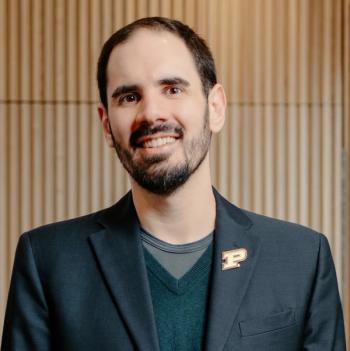
As part of our coverage of this upcoming conference, we sat down with Pavithraa “Pavi” Sundararajan, who is a postdoctoral fellow at the National Aeronautics and Space Administration (NASA), to talk about her upcoming talk at the ACS Fall 2026 Meeting.


Sundararajan’s talk, which is titled “Infrared Spectroscopy of Carbon Grains Formed from Nitrogen substituted Polycyclic Aromatic Hydrocarbons Precursors Under Astrophysical Conditions: Implications for Space Return Samples,” will highlight some of the work that she and her team at the NASA Ames Research Center is working on.2

What is Sundararajan’s core research focus at NASA?

Sundararajan’s research at NASA focuses on hydrocarbons in space, particularly hydrogen and carbon, which form complex organic molecules like polycyclic aromatic hydrocarbons (PAHs). These molecules, which can withstand UV radiation, are prevalent in various celestial objects and are thought to carry aromatic infrared (IR) bands.2 When a carbon in a PAH is replaced with nitrogen, it becomes a nitrogen-substituted PAH (PAH+N), which is easier to detect with radio telescopes.2 These PAH+N molecules condense into nanograins and then dust grains in space.2

Sundararajan will discuss the production and spectroscopic characterization of these dust grains at the ACS meeting, emphasizing their role in identifying organic molecules from space samples.

To view our coverage of the upcoming ACS Fall 2026 Meeting, you can access our previews of upcoming talks here: https://www.spectroscopyonline.com/conferences/acs-fall-meeting

References
  1. Wetzel, W. Why Spectroscopists Should Attend the ACS Fall 2026 Conference. Spectroscopy Online, 2026. https://www.spectroscopyonline.com/view/why-spectroscopists-should-attend-the-acs-fall-2026-conference (accessed August 11, 2026).
  2. Sundararajan, P. Infrared Spectroscopy of Carbon Grains Formed from Nitrogen substituted Polycyclic Aromatic Hydrocarbons Precursors Under Astrophysical Conditions: Implications for Space Return Samples. Presented at the American Chemical Society, Chicago, Illinois, August 26, 2026. Available at: https://acs.digitellinc.com/live/37/session/596644