
News|Articles|December 20, 2023
Researchers Develop Efficient Nitroaromatic Compound Detection Method Using Novel Porous Polymers
Author(s)Spectroscopy Staff
Detecting nitroaromatic compounds is essential to preserve the environment. A recent study out of China saw the development of new conjugated porous polymers (CPPs) that could improve detection of these volatile compounds.
Advertisement
In a recent study published in the Spectrochimica Acta Part A: Molecular and Biomolecular Spectroscopy, lead authors Wenyue Dong and Qian Duan from China introduced a significant advancement in the detection of nitroaromatic compounds utilizing conjugated porous polymers (CPPs) (1).
Nitroaromatic compounds pose serious environmental and safety concerns. These compounds are commonly used in chemical industries and explosives. Sensing applications for nitroaromatic compounds in aqueous media encountered a couple key challenges, such as being limited by poor dispersity and solubility in water (1).
Because of these challenges, the research team developed PSiAn, which were anthracene and tetraphenylsilane-based CPPs (1). They developed these CPPs through conventional Suzuki coupling and Suzuki-miniemulsion polymerization techniques (1). The research team utilized several spectroscopic techniques to characterize the structure, porosity, and morphology of the CPPs, including proton nuclear magnetic resonance (1H NMR), Fourier transform infrared (FT-IR) spectroscopy, N2 sorption isotherm analysis, and transmission electron microscopy (TEM).
Notably, both CPPs exhibited a porous structure, ideal for the adsorption and diffusion of analytes. Particularly, the PSiAn nanoparticles, with a particle size of 10–40 nm, demonstrated exceptional dispersion in aqueous phases (1).
The PSiAn nanoparticles were effective when they were used to conduct photoluminescence (PL) sensing of nitroaromatic explosives in aqueous phases. The nanoparticles demonstrated minimal interference in the presence of other nitro-compounds and high selectivity. The research team achieved a limit of detection (LOD) and limit of quantitation (LOQ) for 2,4,6-trinitrophenol (TNP) at 0.33 μM and 1.11 μM, respectively (1).
Furthermore, the team conducted spike/recovery tests in real water samples, revealing a quantitative recovery of TNP ranging from 100.74% to 101.00% (1). The researchers delineated the PL sensing mechanism by conducting investigations that included electrochemical tests, UV-visible absorption spectra, excitation and emission spectra, and time-resolved PL spectra (1). Notably, they identified the fluorescence inner filter effect as the predominant quenching mechanism during the detection of nitrophenolic compounds like TNP and 4-nitrophenol (4-NP) (1).
This study advances the exploration of finding new ways to conduct nitroaromatic compound detection, as the PSiAn nanoparticles’ morphology and porosity enable their efficient dispersity in water and superior adsorption and diffusion capabilities for nitroaromatic analytes.
This article was written with the help of artificial intelligence and has been edited to ensure accuracy and clarity. You can read more about our
Reference
(1) Sun, X.; Cui, Q.; Dong, W.; Duan, Q.; Fei, T. Anthracene and Tetraphenylsilane-based Conjugated Porous Polymer Nanoparticles for Sensitive Detection of Nitroaromatics in Water. Spectrochimica Acta Part A: Mol. Biomol. Spectrosc. 2024, 308, 123667. DOI:
Advertisement
Related to this article

The launch of SpecAcademy is set to solve some of the current education gaps in analytical spectroscopy. We preview an upcoming roundtable discussion with some of SpecAcademy’s instructors here.

The following articles are the most accessed digital object identifier (DOI) manuscripts for Spectroscopy and LCGC International during the month of August 2026. Ten articles are individually ranked here by DOI page views.

In this “Tutorial Tuesday” clip, we explore one of the spectroscopic techniques that are used to characterize polycyclic aromatic hydrocarbons (PAHs).

Jurgen Popp, Thomas Mayerhofer, and colleagues at Leibniz IPHT and Friedrich Schiller University Jena introduce the Personalized Optical Digital Twin (PODT), a Photonics21 contribution to Europe's Virtual Human Twin ecosystem that connects molecular photonics—Raman blood analysis, coherent Raman tissue imaging, and multimodal endomicroscopy—with longitudinal physiology and clinical data. Drawing on the published multicenter INTELLIGENCE trials, the authors argue that technical feasibility and clinical utility must be evaluated separately as the field moves toward Europe's FP10 research agenda.

The 2026 SciX Conference will offer an assortment of short courses during the conference week in Sparks, Nevada. We highlight these courses below.

The Peter Griffiths Award, named for the legendary infrared spectroscopist, recognizes the best paper published annually in Applied Spectroscopy Practica. Its inaugural recipients, Sara Fraser-Miller and coauthors, will be honored at SciX 2026, and the journal is now accepting 2026 submissions for the third award.

In this Q&A, we explore the advanced techniques, methods, and real-world applications of FT-IR spectroscopy.
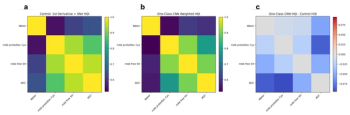
A proof-of-concept study combines a convolutional neural network feature extractor with the conventional hit quality index (HQI) to improve Raman spectral comparison, reducing spurious similarity and improving discrimination between closely related protein and antibody spectra.
Advertisement
Advertisement
Trending on Spectroscopy Online
1
Spectroscopy Top 10 Articles of the Month (August 2026)
2
Beyond the Fingerprint: How Raman Spectroscopy Learned to See Through Noise, Disease, and Deception
3
Advancing Confocal Raman Microscopy Toward Single-Molecule Sensitivity
4
Celebrating National Forensic Science Week
5