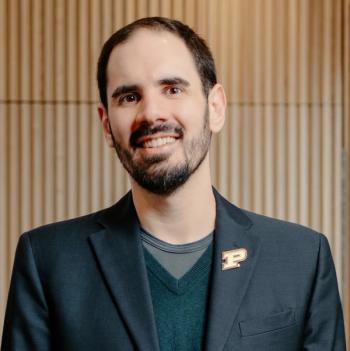
In the second part of our interview with Brandon Boor of Purdue University, he discusses how his team controls experimental variables during cleaning experiments in order to obtain interpretable data.
Spectroscopy is amid a seismic shift. Once considered a mature analytical science, it’s now entering an era defined by automation, artificial intelligence (AI), miniaturization, and rapidly expanding applications across biopharma, materials science, and beyond. But as the technology advances, so too do the challenges facing the scientists and engineers who use it.
Spectroscopy’s State of the Industry in Spectroscopy Survey—a focused poll of more than 50 professionals across research, academia, and industry—reveals a community brimming with opportunity, yet constrained by tight budgets, talent shortages, and slow adoption of next-generation tools. The results paint a nuanced picture: innovation is accelerating, but infrastructure and investment are struggling to keep pace.
So, what does this mean for your career and the future of analytical spectroscopy? Here’s a closer look at the survey’s key findings and what they signal heading into the next year.
When it comes to career momentum, three sectors stand out: pharmaceuticals, biotechnology, and materials science. Each was cited by roughly a quarter of respondents as offering the strongest growth potential for spectroscopy-focused analytical chemists—far ahead of traditional sectors like petrochemicals or forensics.
This shift reflects a broader transformation across science and industry. Spectroscopy has become a cornerstone of precision-driven innovation, powering everything from process analytical technology (PAT) in continuous drug manufacturing to the molecular fingerprinting used in biopharmaceutical characterization and next-generation materials development. As regulators demand greater reproducibility and real-time data, professionals who can apply spectroscopy in complex, high-throughput environments are in especially high demand.
For those planning their next career move, the message is clear: build expertise where data meets application. Skills in PAT, bioanalytical spectroscopy, and materials characterization are opening doors in both established pharmaceutical companies and emerging biotech startups.
Adjacent areas are gaining traction, too. Environmental monitoring (21.6%) and medical diagnostics (17.7%) are growing rapidly as spectroscopy’s non-destructive, data-rich capabilities align with global priorities in sustainability, climate resilience, and healthcare innovation.
Spectroscopy careers are expanding in every direction where speed, accuracy, and real-world impact intersect. Scientists who can translate spectral data into actionable insights—particularly in regulated or data-intensive sectors—will be at the forefront of the next wave of opportunity.
Even as the field grows, a talent bottleneck is holding it back. The survey identified the shortage of skilled personnel (35.3%) as the top challenge, followed closely by cuts to research funding and capital budgets (33.3%). Together, these pressures are creating a widening gap between what spectroscopy teams aspire to achieve and what their resources allow.
For professionals in the field, this gap is both a challenge and an opportunity. Teams most urgently need training in advanced data analysis and chemometrics (50.9%) and method development and validation (41%), signaling that modern spectroscopy is as much about interpreting complex data and automating workflows as it is about running instruments.
Careerwise, this means that scientists who can bridge chemistry with computing, data analytics, and regulatory understanding are increasingly valuable. Professionals who can turn raw spectral data into actionable insights will stand out in a landscape where data fluency is as critical as technical skill.
One area where optimism is high is advanced analytics. Nearly 41% of respondents said they are most excited about artificial intelligence (AI) and analytics reshaping data interpretation by 2026, while 27% highlighted miniaturized, field-deployable devices, suggesting a future where intelligence and portability converge.
Emerging instrumentation trends point in the same direction. Portable and handheld analyzers (56.9%) and AI-driven data analysis tools (52.9%) are capturing the most attention. These developments signal a more distributed, automated, and intelligent spectroscopy ecosystem, with analytical power moving out of the lab and into real-world environments.
Adoption, however, is still uneven. Only 11.8% of organizations report that AI or advanced data analytics are fully integrated into their workflows, while 45% are exploring options, and 23.5% have no plans to use AI. The digital transformation in spectroscopy is underway—but the journey is just beginning.
When it comes to purchasing decisions, scientists remain focused on analytical performance, with 69% citing resolution, sensitivity, and speed as the top priority. Cost of ownership (15.7%) and vendor support/training (9.8%) were distant runners-up.
Yet barriers persist. The up-front capital cost of new instruments is the biggest roadblock (57%), followed by lack of internal expertise or staff training (18%). Even with the desire to upgrade, 43% of organizations have no immediate plans for major instrument purchases, highlighting the ongoing impact of budgetary constraints.
Not all spectroscopy techniques are created equal. Infrared spectroscopy (FT-IR/NIR) leads in cross-industry applicability (33.3%), followed by inductively coupled plasma–mass spectrometry (ICP-MS) (23.5%), with Raman and ultraviolet/visible (UV–vis) tied at 13.7%. Infrared’s versatility spans food quality, polymer analysis, and pharmaceutical formulation, while ICP-MS remains indispensable for trace-element analysis across environmental, biomedical, and industrial sectors.
Looking forward, the strongest demand for spectroscopy services is expected in battery, semiconductor, and advanced-materials R&D (33.3%), followed by clinical diagnostics (23.5%) and pharmaceutical manufacturing (15.7%). These trends align with global R&D investment priorities, emphasizing energy storage, next-gen materials, and high-precision manufacturing.
Simultaneously, spectroscopy’s role in clinical diagnostics and non-invasive testing continues to grow, reflecting broader healthcare trends toward early detection and personalized medicine.
Spectroscopy professionals are guardedly optimistic about 2025–2026. While 31% report being “somewhat confident” in the industry’s economic outlook, 45% remain neutral or unsure, and only 14% are very confident. Supply chain disruptions, inflation, and uneven R&D funding create uncertainty, yet sentiment remains steady rather than pessimistic.
To accelerate innovation, respondents identified funding for capital equipment (47%) as the most critical driver, followed by collaboration with academic or industrial partners (25%) and clearer ROI on new technology (23%). These findings highlight a familiar tension: while spectroscopy’s technical potential is immense, budget and infrastructure constraints often limit its execution. Strengthening partnerships and strategic investments can help close this gap.
The 2025 State of the Industry Survey captures a community at a pivotal moment. Spectroscopy remains an indispensable tool for scientific breakthroughs, yet it is being reshaped by automation, AI, and data-driven thinking. While the survey reflects the insights of a relatively small group of professionals and may not capture every perspective across the global industry, it provides a valuable snapshot of emerging trends, challenges, and opportunities that are top of mind for those driving the field forward.
For spectroscopy to thrive in the next phase, the field will need better integration across disciplines, targeted training programs, and stronger investment in both people and equipment. Professionals who can combine technical expertise with data fluency and adaptability will be best positioned to drive innovation in this exciting, evolving landscape.
We want to hear from you. How do these trends and challenges match your experience in the field? Share your insights, perspectives, or questions with us.
9 months ago
The Big Review VII: More Carbonyl Compounds9 months ago
An Updated USP <1029> With Added Data Integrity?about 7 years ago
How to Choose the Correct Wavelength in ICP-OES