|Webcasts|October 26, 2021

Strategies for Improving Washout and Efficiency Using EPA Method 200.8

Tuesday, October 26, 2021 at 11am EDT| 8am PDT| 4pm BST| 5pm CEST

Register Free: http://www.spectroscopyonline.com/spec_w/washout

Tuesday, October 26, 2021 at 11am EDT| 8am PDT| 4pm BST| 5pm CEST

Event Overview:

Learn strategies from three industry experts to improve your ICP-MS laboratory’s throughput and efficiency whenrunning EPA 200.8. First, we will introduce a new cyclonic spray chamber, designed specifically to improve washout efficiency and maintain optimum ICP-MS analytical performance. To complement this, we will then discuss various techniques and rinse chemistries to reduce carryover of troublesome elements, such as B, Hg, Pb and Sb. We will conclude with microwave digestion tips and best practices for drinking, surface, and ground waters in addition to solid waste samples.

Key Learning Objectives:

  • New cyclonic spray chamber design to improve ICP-MS washout efficiency
  • Suggestions for calibration strategies regarding chemical compatibility
  • Tips to reduce carryover effects from troublesome elements
  • Lowering your cost per sample with microwave digestion

Register free: http://www.spectroscopyonline.com/spec_w/washout


Related to this article

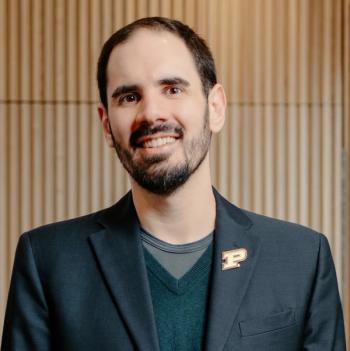
Brandon E. Boor is the Dr. Margery E. Hoffman Associate Professor in the Lyles School of Civil and Construction Engineering at Purdue University. | Photo Credit: © Brandon Boor.
In the second part of our interview with Brandon Boor of Purdue University, he discusses how his team controls experimental variables during cleaning experiments in order to obtain interpretable data.
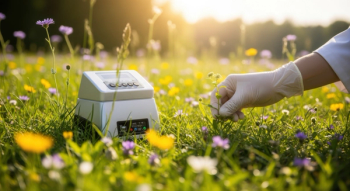
Scientist With Portable Spectrometer in Natural Field Setting ©  By Tika -chronicles-stock.adobe.com
The bulky bench-top NIR spectrometer is quietly being dismantled and rebuilt as a wafer-scale photonic chip, a self-calibrating algorithm, and a sensor small enough to ride in a shirt pocket. What once demanded a grating, a moving mirror, and a climate-controlled lab now fits inside a handheld module, a bioreactor probe, or a drone payload, and it increasingly figures out what it is looking at on its own.
Sizing Up the Nanoscale: Measuring Nanocluster Aerosol in Indoor Air
In the first part of a multi-part Q&A, Brandon Boor, the Dr. Margery E. Hoffman Associate Professor in the Lyles School of Civil and Construction Engineering at Purdue University, describes the instrumentation and methodology behind measuring nanoparticle size distributions at the nanocluster scale (1–3 nm) and outlines the technical challenges of acquiring reliable, real-time data at these dimensions.