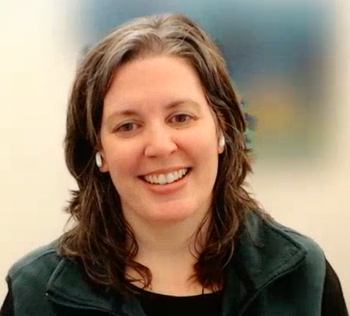
In this interview clip, Kristin L. Wustholz of William & Mary explains how her group judges the fidelity of its blinking-based classifications, why real artworks will call for classification libraries, and where the method fits alongside SERS.
*Live: Tuesday, April 27, 2021 at 10am EDT | 9am CDT | 3pm BST | 4pm CEST* What is the secret of an integrated and streamlined workflow in elemental analysis? Join this webcast to find out more about innovative solutions for ICP-OES and ICP-MS analysis. ***On demand available after airing until Apr. 27, 2022***
Register free:
Event Overview:
The analysis of elemental contaminants and impurities, especially toxic metals, is typically done in the inorganic analysis laboratory, operating inductively coupled plasma–optical emission (ICP-OES) or mass spectrometry (ICP-MS) instruments. Although sample preparation and the elimination of interferences are often the most obvious challenges, the role of software is often underestimated when considering opportunities to improve the overall performance of the laboratory. Important challenges are often related to effective operator cross training between different instruments, batch setup, data evaluation and compliance with data security regulations like 21 CFR Part 11/EU Annex 11. The Thermo Scientific™ Qtegra™ Intelligent Scientific Data Solution is an instrument agnostic software platform controlling a wide range of instruments, such as ICP-OES, ICP-MS and MC-ICP-MS. With its user centric architecture and range of plug-ins, it brings together a wide range of hardware accessories and applications into a well-structured workflow.
This webcast will highlight the key role that software plays in a modern and integrated laboratory for elemental analysis. Attend and learn how the challenges can be easily overcome.
Key Learning Objectives:
Speakers:
Dr. Daniel Kutscher, Product Marketing Specialist, Thermo Fisher Scientific
Julian Wills, Software and Accessories Product Manager, Thermo Fisher Scientific
Time and date: Tuesday, April 27, 2021 at 10am EDT | 9am CDT | 3pm BST | 4pm CEST
On demand available after airing until Apr. 27, 2022.
Sponsor: Thermo Fisher Scientific
Register free: