SPEC PerkinElmer 11.10
|Webcasts|June 3, 2020

Tackling the Environmental Threat of Microplastics Using Raman Spectroscopy

Every year humans ingest thousands of microplastic and nanoplastic particles, and we breathe in significantly more. Through this webcast, you will learn how Raman is helping us understand the extent and risks of microplastic pollution. We will discuss the advantages and challenges of developing Raman microplastic characterization methodologies, with tricks and tips to automate and streamline your analysis. Live: Wednesday, Jun. 3, 2020 at 2pm EDT | 1pm CDT | 11am PDT On demand available after airing until Jun. 3, 2021 Register free

Register Free: http://www.spectroscopyonline.com/spec_w/tackling

Event Overview: 
This webcast will describe the use of Raman spectroscopy for the characterization of microplastics and nanoplastics (plastic particulates <5 mm), which threaten the environment and potentially human health.  An overview of the process of microplastic characterization will be given including a discussion of collection, extraction, detection, and identification methods, with a view to support future legislation and monitoring of microplastic contamination.  The necessary high throughput requirements of microplastics analysis will also be addressed through automation of Raman spectral measurements of large quantities of microplastics.

Key Learning Objectives: 

  • Workflow of microplastics research (collection, extraction, detection, identification) and available techniques

  • Role of Raman spectroscopy in chemical identification of unknown microplastic samples including polymers and additives

  • Automation of Raman measurements for high sample throughput

Speaker: Dr. Bridget O’Donnell, Manager of the Raman Applications, HORIBA Scientific, USA

Time and date: Wednesday, Jun. 3, 2020 at 2pm EDT | 1pm CDT | 11am PDT

On demand available after airing until  Jun. 3, 2021

Sponsor: HORIBA Scientific

Register Free: http://www.spectroscopyonline.com/spec_w/tackling


Related to this article

Monitoring Sugar Consumption and Ethanol Production During Yeast Fermentation Using a Raman Plate Reader and Multivariate Analysis
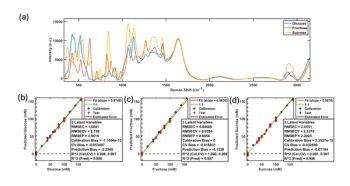
This column shows that a Raman plate reader paired with partial least squares regression can simultaneously quantify glucose, fructose, sucrose, and ethanol in yeast fermentation samples, using turbidity-matched calibration standards to correct for yeast-induced turbidity, and offers a rapid, label-free, high-throughput method for tracking sugar consumption and ethanol production in strain screening, media optimization, and process development.
Highly Substituted Benzene Rings—The Rest of the Story II: Spectra
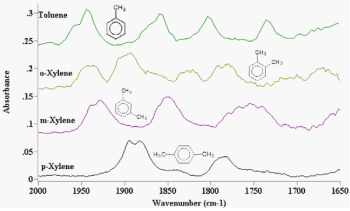
This column, the second installment on highly substituted benzene rings, shows that tri- and tetra-substituted substitution patterns can be distinguished by whether the ring bending peak is present and by the position of the in-phase aryl C-H wagging peak, which shifts according to how many adjacent hydrogens the ring carries.
Healthcare administrator reviewing an insurance policy schedule with a stethoscope on a clipboard, health insurance coverage, medical underwriting, prior authorization, and patient claims processing. | Image Credit: Joi_studio - stock.adobe.com
In a SciX interview, Marc Porter covered a lot of ground, from a student-driven pivot into immunoassays to a baseball analogy for Stokes and anti-Stokes scattering, and shares the open questions he is still chasing.