SPEC PerkinElmer 11.10
|Webcasts|August 27, 2020

Trace Metals Analysis: Strategies to Minimize your Analytical Blank

Author(s)Savillex

Labs performing trace metals analysis are constantly being driven to achieve lower levels of detection which, in turn, places higher demand on the use of effective clean sample preparation techniques. Join Savillex, the leader in fluoropolymer technologies, to learn about important considerations for minimizing contamination and solutions for optimizing your labs overall efficiency. Live: Wednesday, Sept. 30, 2020 at 2pm EDT| 1pm PDT| 11am PDT On demand available after airing until Sept. 30, 2021

Register free: https://www.spectroscopyonline.com/spec_w/analytical_blank

Event Overview:

New regulations, fundamental research needs, and QA/QC requirements are all driving trace metals labs to achieve lower and lower levels of detection. Analytical instrumentation, principally ICP-MS, has continued to develop and improve, placing increased demand on sample preparation and minimizing the analytical blank. This webcast will discuss how to minimize contamination from the labware used during the elemental analysis process, as well as several technologies that can lower your prep blank, improve data quality, and maximize your labs efficiency.


Key Learning Objectives:

  • Selection and maintenance of labware used in trace metals analysis
  • Solutions for minimizing contamination and the analytical blank
  • Technologies for improving data quality, lab efficiency, and lowering costs

Speaker: Tim Michel, Business Development Manager, Savillex

Time and date: Wednesday, September 30, 2020 at 2pm EDT| 1pm CDT| 11am PDT

On demand available after airing until Sept. 30, 2021

Sponsor: Savillex

Register free: https://www.spectroscopyonline.com/spec_w/analytical_blank


Related to this article

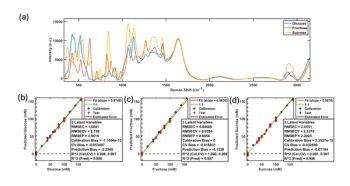
Monitoring Sugar Consumption and Ethanol Production During Yeast Fermentation Using a Raman Plate Reader and Multivariate Analysis
This column shows that a Raman plate reader paired with partial least squares regression can simultaneously quantify glucose, fructose, sucrose, and ethanol in yeast fermentation samples, using turbidity-matched calibration standards to correct for yeast-induced turbidity, and offers a rapid, label-free, high-throughput method for tracking sugar consumption and ethanol production in strain screening, media optimization, and process development.
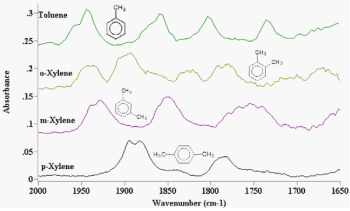
Highly Substituted Benzene Rings—The Rest of the Story II: Spectra
This column, the second installment on highly substituted benzene rings, shows that tri- and tetra-substituted substitution patterns can be distinguished by whether the ring bending peak is present and by the position of the in-phase aryl C-H wagging peak, which shifts according to how many adjacent hydrogens the ring carries.