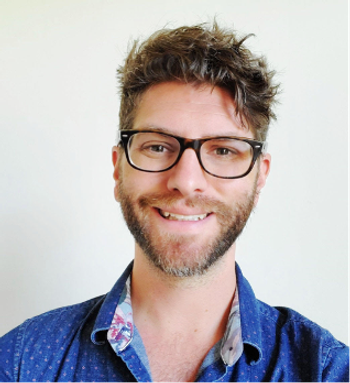
At SciX, Marc Porter explains how a Thanksgiving batting lesson led him to compare a bat meeting a ball to light scattering off a molecule, and how his group is using simulations to test whether the analogy holds.
The American Chemical Society (ACS) has several keynotes planned for their upcoming Fall 2026 conference.
From August 23–27th, analytical chemists, spectroscopists, researchers, vendors, and industry professionals
Spectroscopy programming will include analytical “Advances in Spectroscopy” sessions and physical chemistry symposia on time-resolved optical/THz/X-ray modalities, multidimensional methods, and theory–experiment integration with machine learning and HPC.1
Apart from a technical program that will feature keynotes, technical sessions, networking events, and other social opportunities, ACS Fall 2026 will also celebrate the 150th year of ACS’s existence. Because the conference will celebrate 150 years, ACS has a morning symposium planned that will feature Nobel Laureates spanning
In this article, we highlight some of the keynotes that attendees can look forward to at the conference.
The keynote programming kicks off on Sunday, August 23, from 4:00–6:30 PM CT (doors open 3:30 PM), with the ACS Board of Directors Open Meeting hosting the 2026 ChemLuminary Awards.2 During this keynote, current ACS President Rigoberto Hernandez and President-Elect Christina Bodurow will announce and present awards selected by ACS Divisions and Committees. Immediately afterward, attendees are invited to the ACS Connect Reception from 6:30–8:30 PM, featuring food and dancing.2
The next major keynote will take place on Tuesday August 25th from 9 am to 1 pm in the Skyline Ballroom. This keynote, titled ACS150 JACS Symposium Series: “Chemistry Is Everything,” will feature a gathering of four Nobel Laureates, all of whom will deliver talks.
The four Nobel Laureates who are set to speak include:
The Kavli Lecture Series will feature two talks, one of which will take place on Monday August 24th and the other will take place on Tuesday August 25th. The first talk, which will be delivered by Connor W. Coley of Massachusetts Institute of Technology, will discuss how computational methods, particularly
The second talk, which will be delivered by John C. Warner of Rochester Institute of Technology, will argue that even with strong market and regulatory pressure, the chemical enterprise struggles to deliver products that are high-performing, cost-competitive, and inherently safer, largely because most chemists aren't trained to consider toxicology, environmental fate, and exposure pathways at the design stage, leaving hazard reduction to downstream fixes rather than built-in design choices.2 Drawing on industrial case studies, Warner will trace green chemistry's evolution into practice and show how eliminating hazard from the outset can drive innovation and market advantage without sacrificing performance or cost.2