
The enterprise laboratory software works with more than 1,500 customers in a variety of industries including pharmaceutical and consumer packaged goods.
The enterprise laboratory software works with more than 1,500 customers in a variety of industries including pharmaceutical and consumer packaged goods.
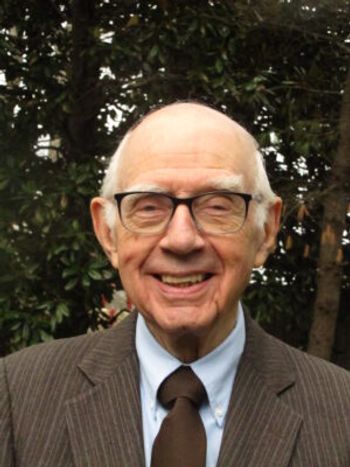
The Vanderbilt chemistry professor was an expert in mass spectrometry and ion mobility studies on synthetic polymers.
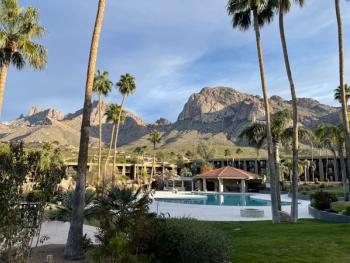
This year’s conference took place in Tucson, Arizona and focused on the latest trends in atomic spectroscopy and more.

Spectroscopy spoke with researchers from the Columbia Climate School about how they are using stimulated Raman scattering microscopy to test for nanoplastics in water bottles.
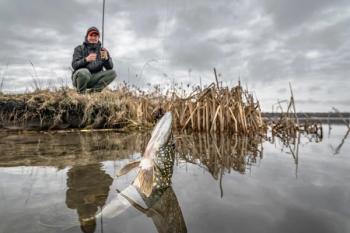
While much is known about arsenic levels in marine fish, not as much research has been done on their freshwater counterparts.

Jörg Feldmann, a professor at the University of Graz, spoke about his team’s research using non-target analysis to analyze per- and polyfluorinated substances (PFAS).
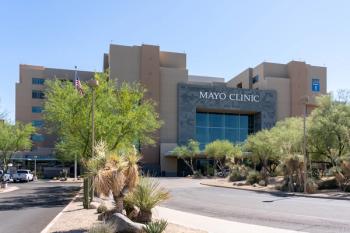
Scientists from the University of Calgary and the Mayo Clinic seeking ways to better understand metal processing in children with Autism.
During a talk at the Winter Conference on Plasma Spectrochemistry, a scientist from the Oak Ridge National Laboratory shared how his team is using laser induced breakdown spectroscopy to analyze TRISO particles.
NanoSIMS is a high-resolution imaging technique for the localization of almost all chemical elements on a surface.

We want to cover the most relevant stories for you. Here’s how we’re doing it.
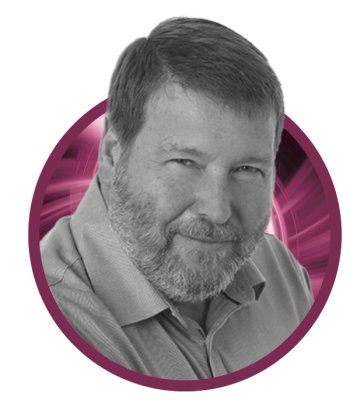
In November, Spectroscopy announced the acquisition of Spectroscopy Europe and Spectroscopy World, two leading publications in the spectroscopy space. We remember Ian Michael, the long-time publisher of both magazines, for the contributions he made to the industry.
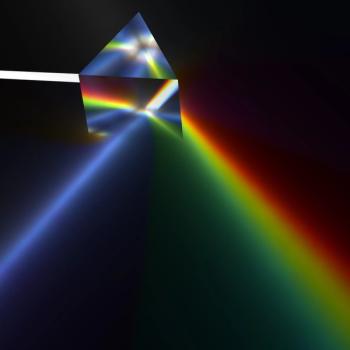
The editors of Spectroscopy retrospect on the most read articles of the past year.
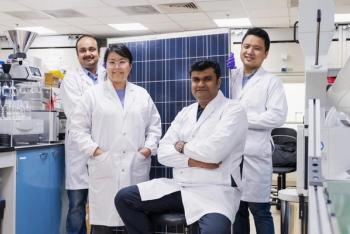
The team devised a method for recovering high-purity silicon from expired solar panels to produce lithium-ion batteries for electric cars.
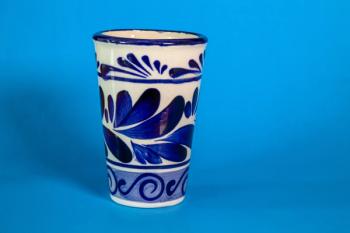
Scientists faced challenges when using XRF on artifacts that contain many layers.

Is it a Rembrandt? Scientists tackling the toughest problems know the answers are never simple.

Getting your finances in order ensures you can be prepared for the unexpected, said Tarshae Drummond, a lab manager and research technician at Fayetteville State University.
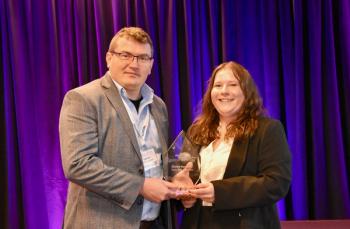
This year’s conference included 12 tracks with sessions highlighting everything from mail security to art analysis and AI.
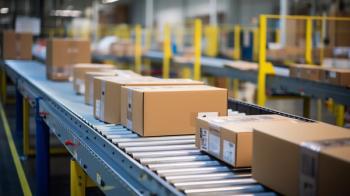
FDA currently has nine satellite laboratory facilities throughout the country, which have been able to support the prevention of 550,689 products entering the country.
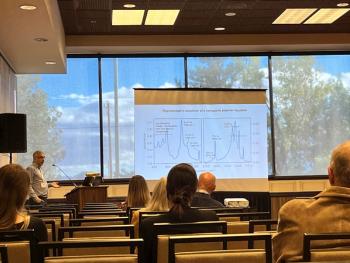
Dennis Hore presented his team’s research on silicone insulators used in the electrical grid and their responses to electrical, chemical, and thermal stress.
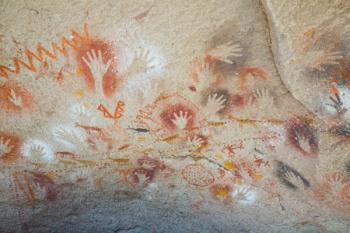
Anastasia Rousaki and her team at Ghent University in Belgium are utilizing advanced Raman spectroscopy techniques, including mobile non-invasive methods, to analyze the composition of art from various historical periods, from prehistoric rock art paintings in Patagonia to 19th to 20th century Greek paintings and 21st-century murals in Reggio Emilia, providing insights for art preservation and historical understanding.
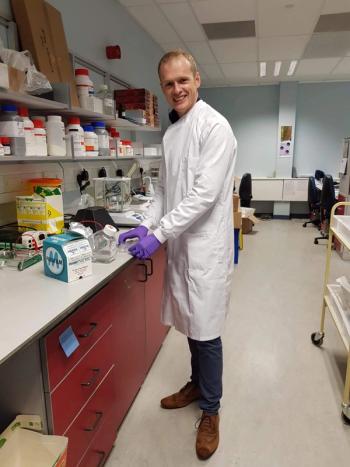
Horrocks and his research group focus on single-molecule and super-resolution microscopy.
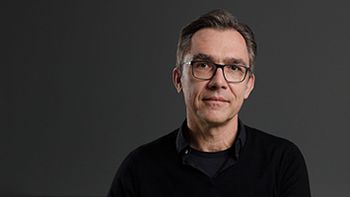
Popp and his team are focused on translating Raman spectroscopy for clinical applications.
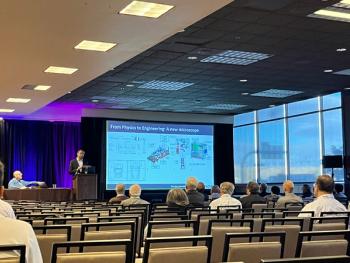
During a talk at SciX, Rohit Bhargava outlined the evolution of Fourier transformation infrared spectroscopy and how it could be used as a method for treating rare diseases like cancer.

Lei Yang, a professor at Hefei University of Technology, outlines how her team is using laser induced breakdown spectroscopy (LIBS) to analyze recycling.
Researchers from the Institute of Atomic and Molecular Physics in China looked at MNC dissolved in water and 1,4-dioxane.

A group of scientists in China are using LIBS technology to help accurately classify recyclable waste.
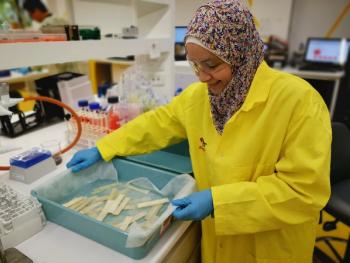
Arzak Mohamed from Macquarie University in Australia broke down how she uses spectroscopy to analyze ancient manuscripts.