
Special Issues
Click the title above to open the Raman Technology for Today's Spectroscopists 2020 special issue in an interactive PDF format.
Special Issues
Click the title above to open the Raman Technology for Today's Spectroscopists 2020 special issue in an interactive PDF format.
Special Issues
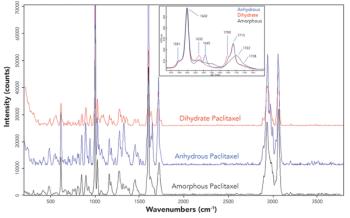
Raman spectroscopy and imaging techniques are well suited for the characterization of surfaces, interfaces, and coatings to support research, development, and manufacturing of medical devices. Here, we describe applications in surface modifications and coatings, differentiation of drug polymorphs, degradation of biomaterials, and forensic identification of unknown materials.
Special Issues
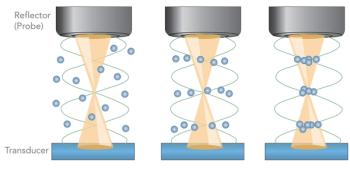
Of the 78 million tons of plastic packaging manufactured every year, approximately one-third ends up in the ocean, the air, and most foods and beverages. To monitor the proliferation of these plastics, an ultrasonic capture method is demonstrated that produces a 1500-fold enhancement of Raman signals of microplastics in water.
![[1].jpg](https://cdn.sanity.io/images/0vv8moc6/spectroscopy/a2dab742ea2699afc0b9759d147265b91dbef0bf-415x60.jpg?w=350&fit=crop&auto=format)
Special Issues
Raman spectroscopy is proving to be a powerful technique for characterizing the structural and morphological properties of nanopowders. Specifically, Raman spectroscopy can provide details of the grain size and thickness of titanium dioxide (TiO2) nanopowder films. These measured film properties affect the efficiency of photovoltaic devices, such as solar cells, and also the effectiveness of nanopowders in catalysis applications.