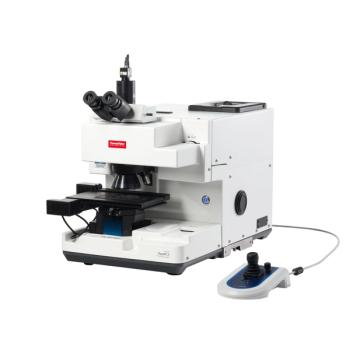
The modular system is intended to help laboratories analyzing microplastics, pharmaceutical formulations, forensic evidence, and other microscopic samples.
From San Francisco to Europe, we explored the most influential spectroscopy conferences of 2025, uncovering key trends, applications, and expert perspectives shaping the field today.
In 2025, one of our major goals was to broaden our coverage of analytical spectroscopy. And the year certainly offered plenty to explore. From San Francisco to cities across Europe, key conferences brought together the global spectroscopy community to discuss emerging trends, compare techniques, and share real-world applications. Through interviews with researchers and industry leaders, we also gained fresh perspectives on how spectroscopy continues to shape fields ranging from photonics and food analysis to biopharmaceutical development.
In this article, we take a step back and look across the year in spectroscopy—revisiting the conversations, innovations, and developments that helped move the field forward in 2025.
We begin our journey in the Bay Area. San Francisco, California, is a major focal point in the tech industry, serving as part of the Silicon Valley area that is driving technological innovation globally. In January, the annual SPIE Photonics West Conference
The conference revolved around three main tracks, focusing on biomedical optics, laser technologies, and optoelectronics, while also featuring networking opportunities, startup pitch competitions, and professional development programs. Some of the highlights from this conference included a keynote from Mei X. Wu of Harvard Medical School. Wu discussed the latest advancements in photodynamic therapy using bacteria-specific pro-photosensitizers that can selectively target and destroy multidrug-resistant bacteria without harming mammalian cells (2,3).
Wu’s research
Another important keynote talk was delivered by Pietro Ferraro, who discussed how Fourier ptychographic microscopy, a label-free imaging technique that combines low NA objectives with angled illumination to achieve high-resolution, multi-scale imaging for biomedical diagnostics and environmental monitoring.
The rise of artificial intelligence in photonics was also addressed. Juergen Popp, the scientific director at the Leibniz Institute for Photonics Technology, delivered a talk titled “Biophotonics Meets AI: Transforming Cancer and Infection Diagnostics,” that discussed this topic, highlighting how label-free spectroscopic approaches can improve tumor margin control.
“Second harmonic generation together with two photon fluorescence allows us to analyze the tumor tissue in real time without any need of a dye or a contrast agent. and this means that surgeons get direct highly precise information about the tumor margins,” Popp
Continuing our journey, we go from the west coast to the east coast. In the month of February, Spectroscopy covered the American Association of Forensic Science (AAFS) Annual Conference in Baltimore, Maryland. This was the first time we covered this show, highlighting our commitment to serving our audience with new, practical information relating to how spectroscopy is being used in various application areas, such as forensic science.
Our editors spoke with three experts in forensic science––Tom Metz of Pacific Northwest National Laboratory, Heidi Eldridge of George Washington University, and Claire Glynn of the University of New Haven. All three delivered talks at the conference and reported back on the key highlights from AAFS 2025.
Metz
“It was very interesting to see where forensic science is deploying molecular measurement capabilities, whether they be mass spectrometry which is what my career has been devoted to for the last 20 plus years, as well as other spectroscopies that might work really well under certain operating conditions and certain sample types and for certain types of molecules,” Metz said in an interview with Spectroscopy (5).
Eldridge, meanwhile,
“There were a lot of really great talks this year that I enjoyed going to,” Eldridge said to Spectroscopy (5). “It seems like there was a maybe an unofficial theme the official theme had to do with AI, but I saw a lot of talks that seemed to center around communicating forensic findings implementing standards calculating and expressing error rates.”
Finally, Glynn
“It’s really such a terrific opportunity for our students at the University of New Haven, both undergraduate and graduate, to showcase their research and to also get excited about their future careers,” Glynn said to Spectroscopy (5).
In early March, Spectroscopy traveled north of Boston, Massachusetts, where Pittcon took place this year. Pittcon is an annual conference that highlights the latest trends, advancements, and instrumentation in separation science. Talks related to chromatography, spectroscopy, and allied sciences took place here.
One of those key talks related to how vibrational spectroscopy is being applied in food analysis. Christian Huck, a professor at the University of Innsbruck, delivered a talk titled, “The Near-Infrared and Imaging Spectroscopy in Food and Bioanalysis: Current and Future Directions” (6). In his talk, Huck
“A major trend that is still going on is the miniaturization of spectrometers,” Huck told Spectroscopy at the
The International Symposium on Molecular Spectroscopy (ISMS), which was held from June 23rd to 27th, 2025 (7), focuses on the
The key highlight of the ISMS Conference is the mini-symposia that take place throughout the week. One of these mini-symposia, titled “Astrochemistry–Laboratory, Computations, and Observations,” detailed how spectroscopy is being used in this space. Brett McGuire, an assistant professor of chemistry at the Massachusetts Institute of Technology (MIT),
“For anything outside our solar system, you can’t go and take samples and bring them back,” McGuire
Our next conference took us to Columbus, Ohio, where Analytica USA launched its first conference stateside. Analytica is a trade show that originated in Munich, Germany, and it continues to bring in thousands of attendees in Munich when the show is hosted.
This conference comprised of several components that made it appealing for spectroscopists and analytical scientists. It combined a large exhibition with a multidisciplinary scientific conference that highlights developments in Raman, infrared (IR), UV-Vis, mass spectrometry (MS), and hyphenated techniques (9).
A key program feature was the session, “
In early October, we traveled to Covington, Kentucky, to cover the annual SciX Conference, which is one of our biggest shows of the year for analytical spectroscopy. At this conference, we
Shi is a biomedical imaging researcher who develops advanced molecular imaging platforms to study metabolic activity in biological tissues. Her work integrates SRS, MPF, FLIM, and SHG microscopy to enable high-resolution, chemically specific imaging in situ (10). She is known for identifying the “Golden Window” for deep-tissue optical imaging and for pioneering deuterium-based metabolic imaging to visualize newly synthesized macromolecules using SRS vibrational signatures (10). At UC San Diego, her lab
Apart from presenting Shi with the Emerging Leader Award, we also hosted a celebratory dinner at Marigold Restaurant in downtown Cincinnati in honor of Shi receiving the Emerging Leader Award.
This was our biggest show for Spectroscopy, as we had the opportunity to interview 13 researchers––Lingyan Shi of the University of California, San Diego; Prashant Jain of the University of Illinois, Urbana Champaign; Steven Bell of Queen’s University Belfast; Yingchan Guo of the University of Florida; Zac Schultz of The Ohio State University; Spencer Witte of The Ohio State University; Nishadi Liyanage of The Ohio State University; Renee Romano of The Ohio State University; Rohith Reddy of the University of Houston; Rob Lascola of Savannah River National Laboratory; Fay Nicolson of Dana-Farber Medical Center and Harvard Medical School; Karl Booksh of the University of Delaware; and Rafael Davalos of Georgia Tech.
This large pool of interviews is a testament to the breadth of the SciX Conference program, which is the main reason why this conference is unique.
“The SciX Conference is great; I enjoy it every year,” Schultz
Finally, the last conference of the year was located just a short drive from our home office in Plainsboro, New Jersey. The Eastern Analytical Symposium (EAS) brought together analytical scientists to celebrate the latest innovation, and research, in the space.
The recent coverage of the Eastern Analytical Symposium (EAS) in highlights how the event spanned everything from pedagogy to cutting-edge research and instrument design. At EAS, Penn State’s Zachary Rhoden shared his
Throughout 2025, we traveled to different corners of the U.S., meeting and chatting with experts whose work spans a wide range of scientific disciplines. Do you know of a conference we shouldn’t miss in the year ahead? Share your recommendations with us—we’d love to hear from you and continue exploring the cutting edge of spectroscopy together!