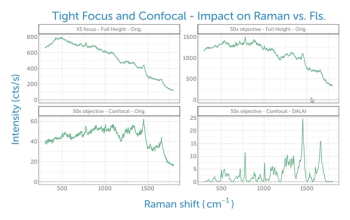
Autofluorescence can obscure or overwhelm the Raman signal in biological samples. Do workaround solutions exist to combat this problem?
Autofluorescence can obscure or overwhelm the Raman signal in biological samples. Do workaround solutions exist to combat this problem?
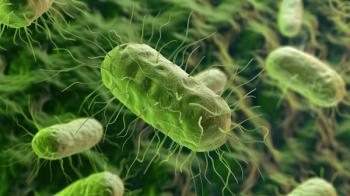
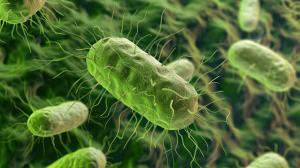
In this study, a glycerol-fed, lab-scale E. coli bioprocess producing representative pharmaceutical compounds was monitored offline with a portable, high-sensitivity Raman spectrometer.
Special Issues
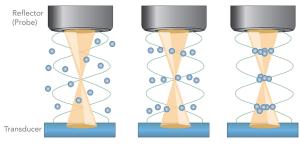
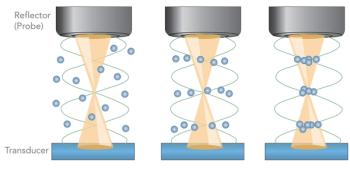
Of the 78 million tons of plastic packaging manufactured every year, approximately one-third ends up in the ocean, the air, and most foods and beverages. To monitor the proliferation of these plastics, an ultrasonic capture method is demonstrated that produces a 1500-fold enhancement of Raman signals of microplastics in water.

Raman spectroscopy’s high analytical selectivity and insensitivity to water is well suited for process monitoring in biotechnology. Here we explore the fermentation of glucose, a common feedstock, with a commonly used microorganism, yeast. Applying multivariate tools, we can monitor the main reactants and products with high sensitivity: glucose, ethanol, and carbon dioxide.
Special Issues
Interference from background fluorescence is a common challenge in Raman analysis. A study of three different types of biological samples was made to compare the ability of 785-nm and 1064-nm excitation to deal with this problem.

February 1st 2020